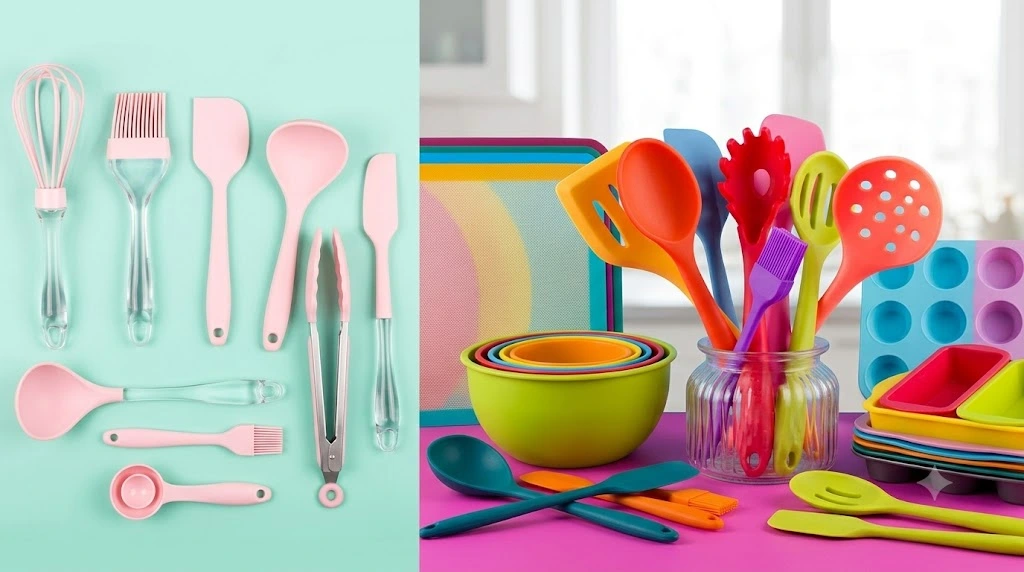
Silicone cookware safety is an essential consideration for health-conscious cooks seeking alternatives to traditional non-stick metal pans coated with forever chemicals like PFAS. While flexible spatulas, muffin molds, and baking mats have revolutionized modern kitchens, evaluating silicone cookware safety reveals critical details about heat thresholds, chemical leaching risks, and product purity.
As silicone becomes a staple in home baking and meal prep, understanding how high temperatures and material fillers impact silicone cookware safety is vital for maintaining a clean, non-toxic kitchen environment.
Table of Contents
Silicone Cookware Safety: Weighing the Advantages and Risks
When assessing silicone cookware safety, it is helpful to look at how these flexible utensils and bakeware perform compared to traditional kitchen materials like cast iron, ceramic, and stainless steel.
Silicone Cookware Performance & Safety Overview
| Kitchen Factor | Food-Grade Silicone Bakeware | Cast Iron / Glass |
| Material Composition | Made from a flexible silicon–oxygen polymer | Cast iron is made primarily from iron; glass is made from silicate materials |
| Heat Resistance | Generally suitable for temperatures up to around 220°C (428°F) | Cast iron and most oven-safe glass can tolerate temperatures above 260°C (500°F) |
| Leaching Potential | Generally low under normal conditions, although migration may increase when exposed to very high temperatures | Glass is highly inert; cast iron can release small amounts of iron into certain foods |
| Cleaning & Storage | Dishwasher-compatible in many cases, but hand washing and thorough drying can help prevent residue or stickiness | Cast iron requires cleaning and seasoning; glass is generally easier to clean and dishwasher-safe |
| Environmental Impact | Usually not accepted in standard curbside recycling programmes and may end up in landfill | Glass can be recycled, while cast iron can be recycled and reused for a long time |
| Durability & Reuse | Flexible, lightweight and reusable when properly maintained | Highly durable, with cast iron offering exceptional longevity and glass providing repeated use |
Chemical Leaching and Siloxane Migration
A central concern regarding silicone cookware safety is whether volatile organic compounds and siloxanes migrate into food during high-heat baking. To maximize silicone cookware safety, home cooks should avoid exceeding manufacturer thermal limits and reserve silicone tools for low-to-medium heat applications.
The “Twist Test”
Evaluating silicone cookware safety requires distinguishing pure food-grade silicone from inferior products diluted with synthetic fillers. Manufacturers often add plasticizers or binding agents to lower production costs, compromising the structural stability and safety of the product.
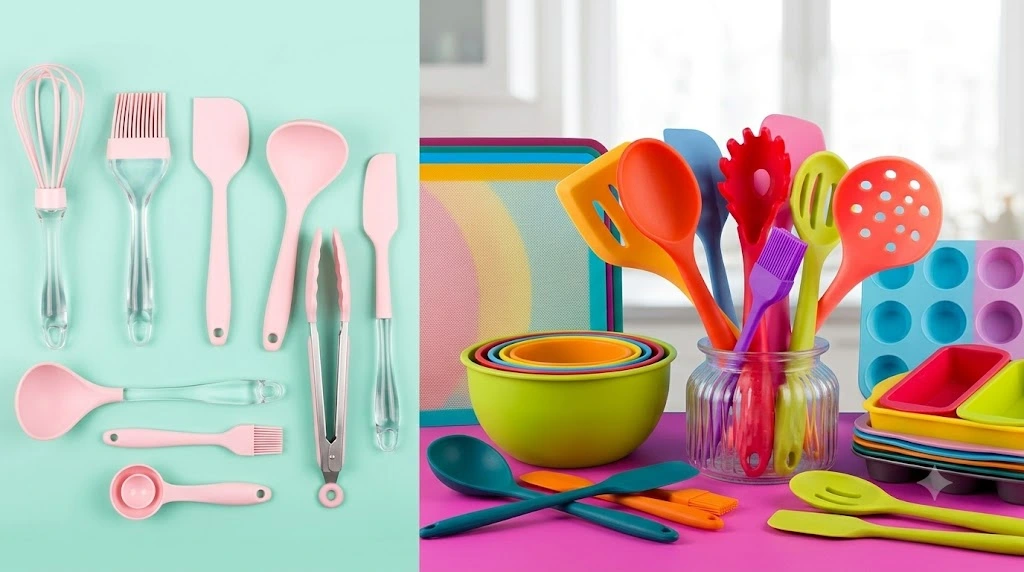
You can perform a simple pinch-and-twist test at home: firmly twist a flat section of your silicone bakeware. If the material turns white along the bend, it contains plastic fillers that may degrade or off-gas during baking; pure silicone retains its uniform color under tension.
Best Care Practices
Maintaining silicone cookware safety depends heavily on proper maintenance and handling. Over time, repeated exposure to grease, extreme oven temperatures, and harsh dishwasher detergent chemicals can break down the surface of silicone molds.
This degradation creates a sticky, discolored film that attracts dust and microbes, making the item difficult to sanitize. Washing silicone cookware by hand with mild soap, drying it completely prior to storage, and discarding worn or pitted items ensures a safer cooking experience.
Final Thoughts
When evaluating silicone cookware safety, quality, heat management, and proper care dictate how safe these products are in your kitchen. While food-grade silicone offers a convenient, non-stick option for cold preparations and moderate baking, utilizing inert alternatives like glass and cast iron remains the gold standard for high-heat cooking.
Looking for reliable, high-grade specialty chemicals and eco-conscious silicone solutions? Discover our product range or contact our expert team today at biopolchemicals.com to upgrade your industrial chemical standards.
Frequently Asked Questions (FAQs)
1. Can silicone cookware be used in the oven at high temperatures?
Yes, food-grade pure silicone is safe in the oven.
2. How can I be sure that there are no toxic fillers in my silicone cookware?
Do the following twist test: pinch the flat side of the silicone cookware and twist. If white streaks appear, there are synthetic fillers in the silicone, which could make it unsafe at high temperatures.
3. Which non-toxic substitutes can be used instead of silicone bakeware?
The best choices are seasoned cast iron, stainless steel, ceramic, and tempered glass cookware.
Also Read