‘Does silicone have microplastics?’ is a critical question for eco-conscious consumers replacing petroleum-based items, but pure silicone is chemically distinct from conventional plastics. Having replaced the countless number of petroleum plastic bags and tools with silicone products that proved to be more flexible, people started wondering whether these alternatives may cause any health hazards to them. Food-grade silicones are widely used in every household nowadays.
As concerns surrounding microplastic pollution grow, understanding whether silicone can release micro-sized particles into our food and environment is essential for maintaining a truly non-toxic home. It is important to figure out whether silicone is capable of shedding tiny bits to know how to ensure a non-toxic home.
Table of Contents
Does Silicone Have Microplastics? Examining the Polymer Structure
If you perform a pinch test on lower-grade kitchen tools, asking “does silicone have microplastics?” helps reveal if hidden plastic fillers are present. To understand how silicone microplastics differ from standard plastic waste, we must examine their underlying chemical structures. Traditional plastics are carbon-based synthetic polymers manufactured directly from crude oil or natural gas. When subjected to both heat and physical degradation, the carbon bonds present in the petroleum substance split and become environmental pollutants. Unlike the above, silicone is a chain of silicon-oxygen bonds, and its major constituent is sand. Consequently, ordinary silicone lacks plastic polymers and hence cannot degrade to microplastics.
Physical Degradation of Synthetic Polymers and Silicone Particle Shedding
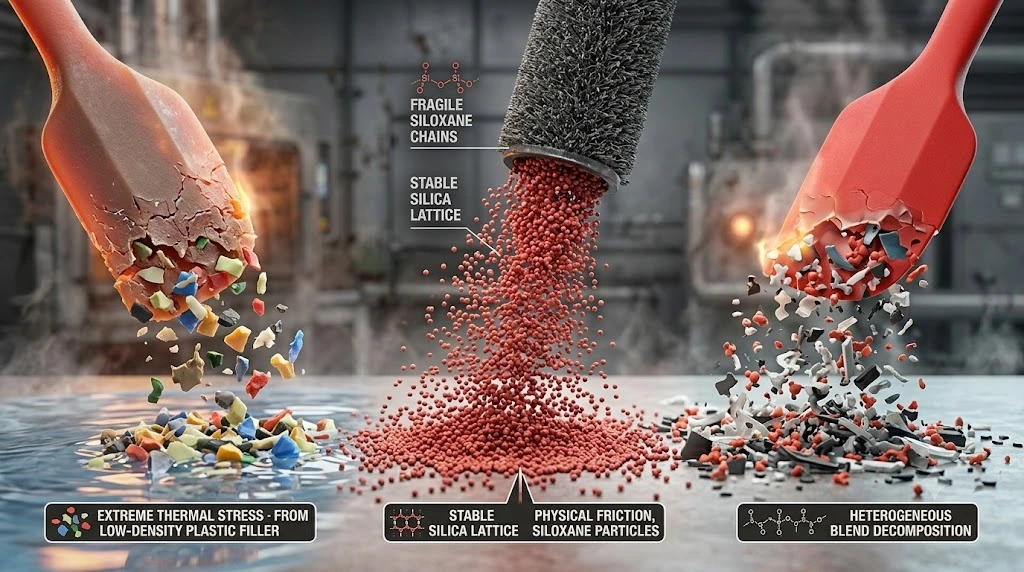
Although top-grade silicone does not contain petroleum-based polymers, scientific research shows that physical wear can cause shedding of silicone particles. This is because, in cases where silicone products are subjected to excessive mechanical pressure, for example, a baby biting on a teether or a heavy spatula rubbing against hot pans, microscopic siloxane particles can be detached from the material. Parents buying baby nipples and teething toys frequently search “does silicone have microplastics?” to prevent chemical and microparticle exposure. Although these particles have a unique chemistry compared to traditional plastics, scientific research on silicone microplastics indicates that synthetic particles in the micro-size range can still get into the environment.
Choosing Safe Silicone
Many shoppers ask: “does silicone have microplastics?” before switching from plastic storage containers to reusable silicone food bags. While pure siloxane does not release plastic polymers, low-grade consumer products frequently cause genuine contamination. Whereas there are generally problems with silicone microplastics due to inferior quality silicon products and low-quality plastic fillers used in them, you will have a non-toxic, long-lasting, and extremely hygienic tool if you use only 100% pure silicone.
The easiest method of checking whether the product is 100% pure is the “twist” method – pinch and twist any part of the product, and if no changes in its color are made, then it is a 100% pure product. Under standard industrial usage, pure silicone fluids undergo physical fluid shear rather than fracturing into persistent carbon-based microplastic pollution. However, utilizing low-grade formulations with uncertified plasticizers can lead to microscopic particle release under extreme stress.
The best guarantee that you buy the safest product possible is to ensure that it meets either the 100% food-grade criteria or European LFGB standards. In the latter case, the product should be tested for chemical leaching and material degradation. Choosing certified food-grade silicone or medical-grade alternatives is the most effective way to protect your household from these hidden additives.
Optimize Your Production with High-Purity Silicone Solutions
If you’re looking to avoid contamination problems and improve your manufacturing processes, then Biopol Chemicals Ltd can help you out with its range of premium-quality silicone oils, food-grade silicones, emulsions, and customized blends that can perform under highly demanding conditions of temperature and mechanics without degrading.
Contact the Biopol Chemicals Technical Team for more information.
FAQs
1. Can silicone microplastics be formed as a result of the breakdown of industrial silicone oils and emulsions?
High-purity industrial formulations, such as pure polydimethylsiloxane (PDMS) fluids and high-grade emulsions manufactured by Biopol Chemicals Limited, consist of siloxane-based synthetic polymers rather than petroleum-based carbon chains.
2. Why does the use of high-grade food-safe silicone protect against the formation of undesirable particles?
Low-cost synthetic rubbers often rely on organic fillers to reduce manufacturing overhead, which degrade quickly under heat or mechanical stress and fuel silicone particle shedding.
3. How can facilities reduce silicone microplastic contamination during high-temperature processes?
The best approach is to purchase heat-stable, high-grade siloxane polymers without any fillers.