Construction restrooms need more than a quick rinse at the end of the day. They are used frequently, often by large crews, and can quickly develop dirt, stains, unpleasant odors and bacterial buildup. This is especially true for portable toilets and temporary restroom units.
Key Takeaways
- Choose chemicals based on the restroom’s specific cleaning needs.
- Use disinfectants to maintain hygienic high-touch surfaces.
- Use odor-control products for portable construction toilets.
- Always follow chemical labels, dosage, and safety instructions.
Choosing the Best Sanitation Chemicals for Construction Restrooms makes routine cleaning easier and helps maintain a cleaner environment for workers. The right products depend on whether you need to disinfect surfaces, remove stains, control odors, clean floors or treat a portable toilet tank.
Why Construction Restrooms Need Proper Sanitation
Construction workers may carry dust, mud, cement residue and other materials into restroom areas. With frequent use, toilets, floors, sinks and door handles can become dirty quickly.
Regular cleaning is important because sanitation is not only about appearance. Construction restrooms should be maintained in sanitary conditions and cleaned regularly to support worker hygiene.
A good restroom cleaning program should cover:
- Toilet bowls and urinals
- Floors and walls
- Door handles and other touchpoints
- Wash basins and taps
- Portable toilet tanks
- Odor control
- Handwashing areas
Best Sanitation Chemicals for Construction Restrooms
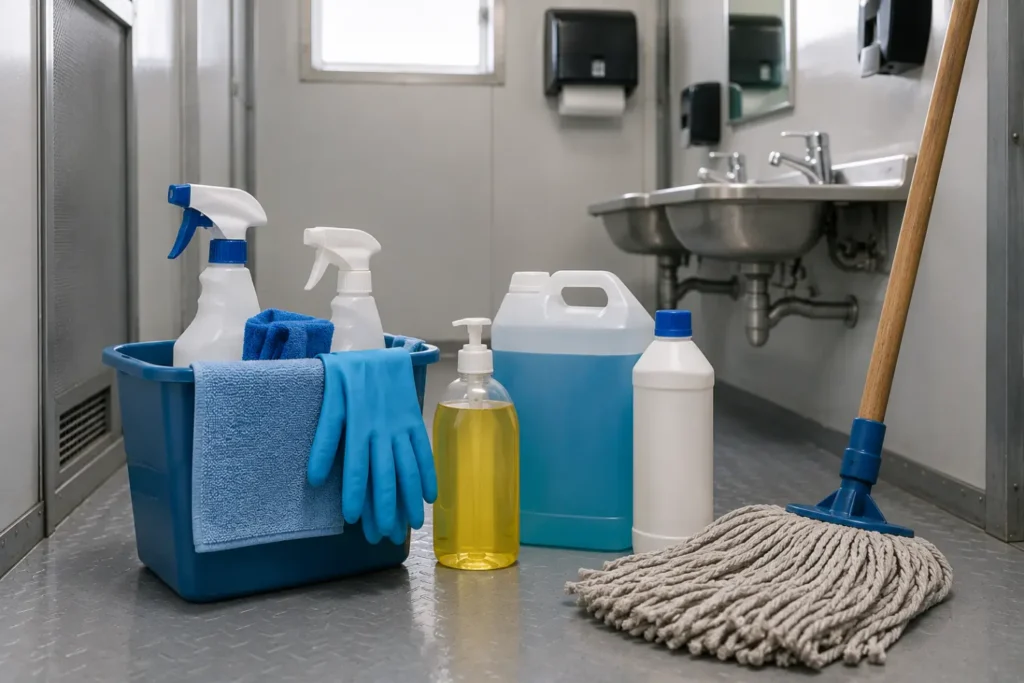
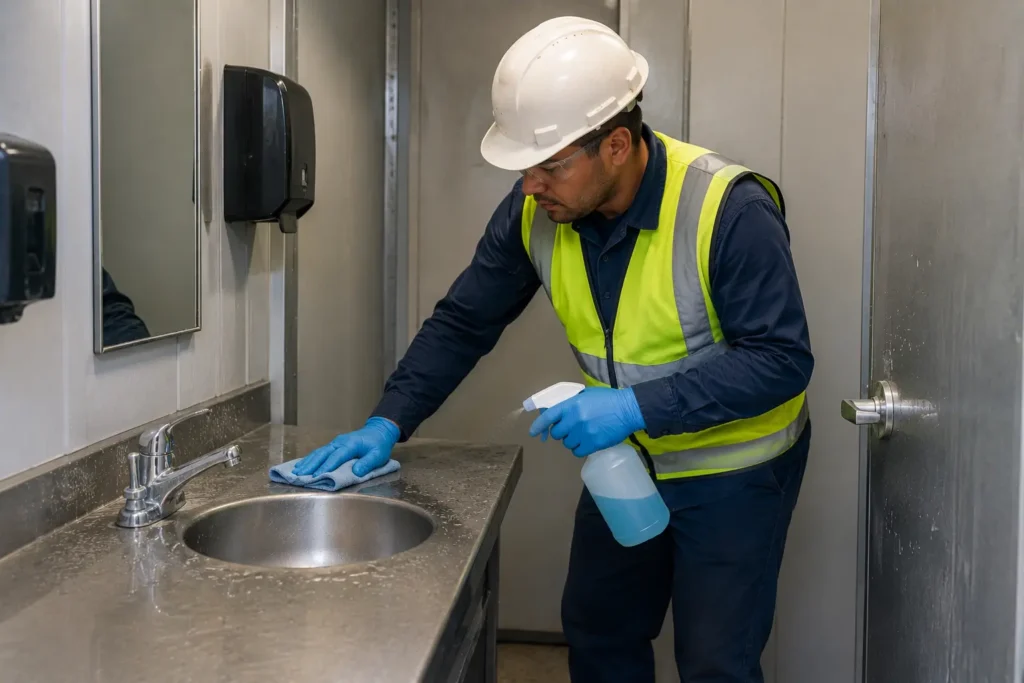
Different cleaning problems require different chemical products. Using one chemical for every surface is not always the best approach. The Best Sanitation Chemicals for Construction Restrooms should be selected according to the type of restroom, surface and cleaning requirement.
| Chemical Type | Main Purpose | Suitable Use |
|---|---|---|
| Disinfectant cleaner | Reduces microorganisms | Seats, handles, sinks and touchpoints |
| Toilet bowl cleaner | Removes stains and deposits | Toilet bowls and urinals |
| Odor-control chemical | Controls unpleasant smells | Portable toilets and restroom areas |
| Enzyme cleaner | Breaks down organic residue | Toilets, drains and waste areas |
| Descaler | Removes mineral deposits | Toilets, taps and wash basins |
| Floor cleaner | Removes dirt and grime | Restroom floors |
| Liquid hand soap | Supports hand hygiene | Handwashing stations |
Also Read: Construction Chemicals Waterproofing
1. Disinfectant Cleaners
Disinfectant cleaners are useful for frequently touched surfaces such as toilet seats, flush handles, taps, door handles and counters. They should be used according to the manufacturer’s instructions, including the recommended concentration and contact time.
Cleaning should generally come before disinfection when a surface has visible dirt or organic contamination. For this reason, disinfectants are an important part of the Best Sanitation Chemicals for Construction Restrooms selection.
2. Toilet Bowl Cleaners
Toilet bowl cleaners help remove urine stains, mineral deposits and other buildup. Some formulations are acidic and work well against hard-water scale.
Because strong toilet cleaners can damage certain surfaces, always check the label before use. Never mix toilet bowl cleaners with bleach or other incompatible chemicals.
3. Odor-Control Chemicals
Odor is one of the most common complaints associated with heavily used construction restrooms. Portable toilets can be particularly challenging because waste is stored inside a tank.
Specially formulated portable-toilet chemicals can help control odors between servicing visits. They should be added at the recommended concentration rather than simply increasing the dosage.
When comparing the Best Sanitation Chemicals for Construction Restrooms, odor-control performance is particularly important for portable facilities.
4. Enzyme-Based Cleaners
Enzyme cleaners can be useful where organic waste and residue are a recurring problem. They help break down organic material and may be suitable for toilets, drains and some waste-handling areas.
Their effectiveness depends on the formulation, temperature, contact time and type of residue being treated.
5. Descaling Chemicals
Hard water can leave white or yellow mineral deposits around toilet bowls, taps and wash basins. Descaling chemicals are designed to dissolve these deposits.
Choose a product that is compatible with the surface being cleaned. Strong acids should not be used casually on sensitive metals, natural stone or other materials that may be damaged.
6. Floor Cleaners
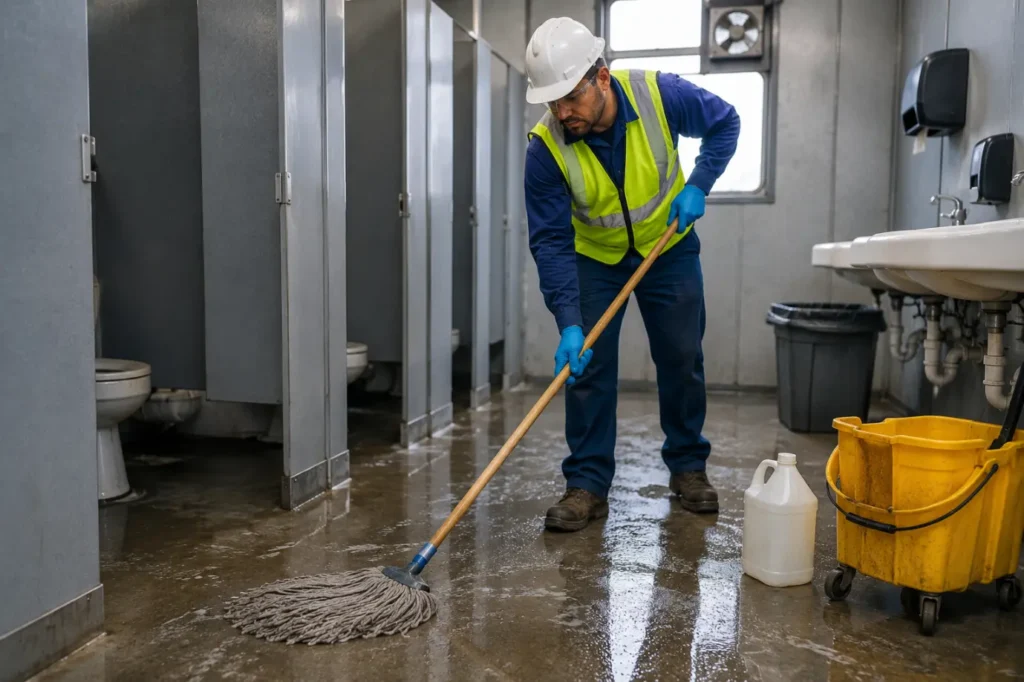
Construction restroom floors often collect mud, dust and other debris. A suitable floor cleaner can remove everyday dirt before the area is disinfected.
The cleaner should match the flooring material and should not leave a slippery residue after use. This is another factor to consider when choosing the Best Sanitation Chemicals for Construction Restrooms for a busy site.
How to Choose the Right Sanitation Chemicals
Before purchasing the Best Sanitation Chemicals for Construction Restrooms, consider:
- Type of restroom: Permanent, temporary or portable.
- Number of users: High-traffic facilities may need more frequent cleaning and servicing.
- Surface material: Check compatibility with ceramic, plastic, stainless steel, concrete and other materials.
- Cleaning problem: Choose products for stains, odors, mineral deposits or microbial contamination based on the actual need.
- Safety requirements: Read the product label and Safety Data Sheet before handling concentrated chemicals.
- Dosage: More chemical does not necessarily mean better cleaning. Follow the manufacturer’s recommended dilution.
- Storage: Keep chemicals properly labelled and stored away from incompatible products.
For portable chemical toilets, proper servicing is just as important as the treatment chemical. A suitable tank treatment can help with odor management, but regular emptying, cleaning and maintenance are still necessary.
Simple Cleaning Routine for Construction Restrooms
A practical routine can include:
- Remove waste and disposable materials.
- Clean visible dirt and organic residue.
- Apply the appropriate toilet or surface cleaner.
- Scrub heavily soiled areas.
- Rinse where required.
- Apply disinfectant according to the product instructions.
- Allow the required contact time.
- Clean and disinfect high-touch surfaces.
- Mop the floor.
- Refill soap, toilet paper and other supplies.
- Inspect the restroom before workers use it again.
A consistent routine helps ensure that the Best Sanitation Chemicals for Construction Restrooms are being used as part of an effective cleaning system rather than as a replacement for proper maintenance.
Cleaning frequency should reflect actual usage. High-use portable toilets may need more frequent cleaning, waste removal and servicing than facilities used by smaller crews.
Final Thoughts
The Best Sanitation Chemicals for Construction Restrooms are those matched to the specific cleaning problem and used correctly. Disinfectants can address high-touch surfaces, toilet cleaners can handle stains and deposits, odor-control products can help with portable toilets, and suitable floor cleaners can manage everyday dirt.
Choosing the Best Sanitation Chemicals for Construction Restrooms should always involve surface compatibility, safety, dosage, restroom type and frequency of use. With the right products and a consistent cleaning routine, construction-site restrooms can remain cleaner, more hygienic and more comfortable for workers.
Frequently Asked Questions
What are the Best Sanitation Chemicals for Construction Restrooms?
The most useful options include disinfectant cleaners, toilet bowl cleaners, odor-control chemicals, enzyme cleaners, descalers, floor cleaners and hand soaps. The right combination depends on the restroom type and cleaning requirements.
What chemicals are used in portable construction toilets?
Portable toilets generally use specially formulated tank-treatment chemicals for odor control and waste management. Always follow the toilet manufacturer’s recommendations for dosage and servicing.
Can bleach be used to clean construction restrooms?
Bleach can be appropriate for certain applications when the product label permits it. However, it must never be mixed with toilet bowl cleaners, acids, ammonia or other incompatible chemicals.
How often should construction restrooms be cleaned?
There is no single schedule that works for every site. High-use restrooms may require cleaning several times during a workday, while servicing frequency should be based on usage, capacity and site conditions.
Are sanitation chemicals enough to maintain a clean construction restroom?
No. Chemicals are only one part of restroom hygiene. Regular cleaning, waste removal, adequate handwashing facilities, soap, water, ventilation and proper servicing are also important.
Also Read:Anti-Termite Chemicals for Construction