Termites can cause serious damage to a building without being noticed for months or even years. They usually move through soil and enter a structure through foundations, cracks, joints, pipes and other openings. Wooden doors, frames, furniture and other materials can then become vulnerable to attack.
Key Takeaways
- Protects foundations from termite entry.
- Helps prevent costly termite damage.
- Works best with proper application.
- Supports long-term building protection.
This is why Anti-Termite Chemicals for Construction are commonly used as part of preventive termite treatment. When the treatment is planned properly and applied at the right stage, it can help create a protective barrier between the building and termite colonies in the surrounding soil.
What Are Anti-Termite Chemicals for Construction?
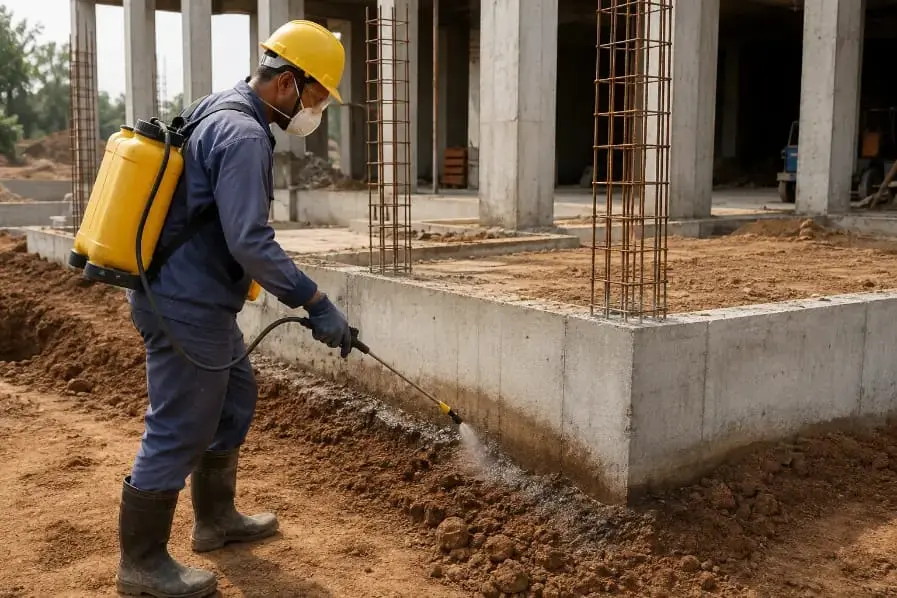
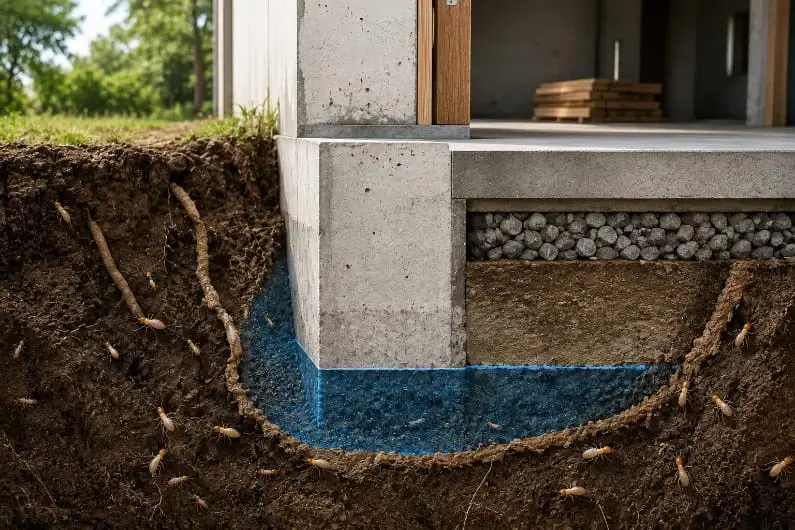
Anti-Termite Chemicals for Construction, also called termiticides, are products used to control termites and reduce the chance of infestation. In construction, they are mainly used to treat soil around foundations, floor areas, plinths and other possible entry points.
The right product should be selected according to its intended use, active ingredient, construction requirements and manufacturer’s instructions. Using more chemical than recommended does not necessarily provide better protection.
Why Are Anti-Termite Chemicals for Construction Important?
Termites often remain hidden underground. By the time mud tubes, damaged wood or other visible signs appear, the infestation may have already spread.
Using Anti-Termite Chemicals for Construction during the building stage can help:
- Reduce the risk of termites entering through the soil
- Protect foundations and ground-floor areas
- Protect wooden components from termite attack
- Reduce the need for expensive repairs
- Treat vulnerable areas before they become difficult to access
- Provide longer-lasting protection when combined with good construction practices
Where Are Anti-Termite Chemicals Used?
The treatment area depends on the building design and construction stage. Common areas include:
- Foundation soil: Soil around and beneath foundations can be treated to create a protective barrier.
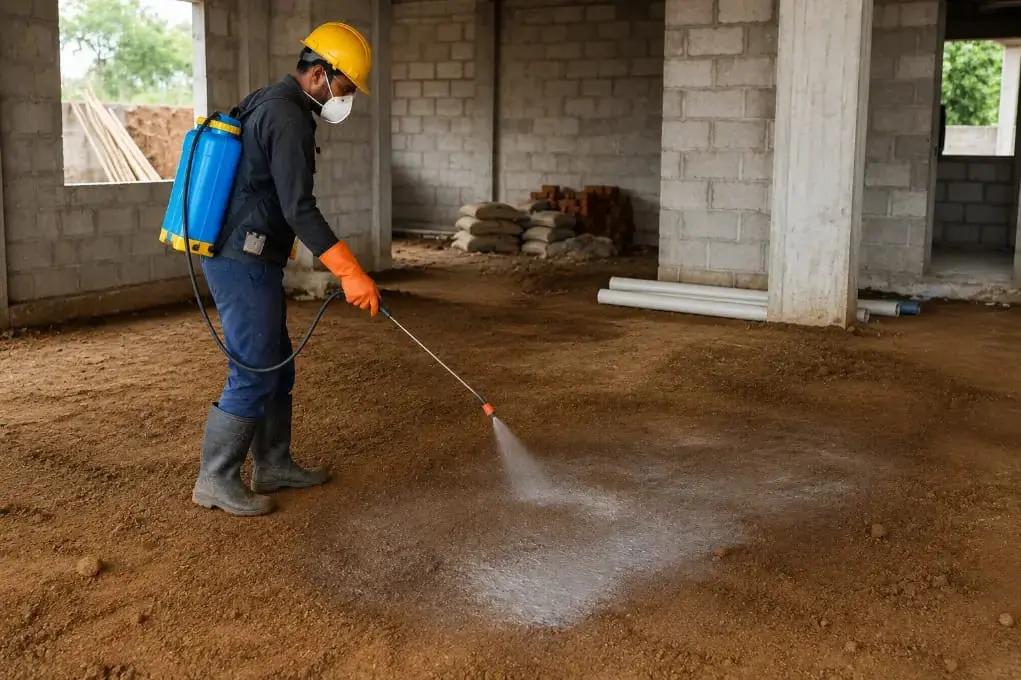
- Floor areas: Treatment may be carried out on prepared soil before the floor is installed.
- Plinth areas: These areas can provide potential routes for termite movement and may require attention.
- Wall and floor joints: Gaps and joints should be properly treated or sealed where appropriate.
- Wooden components: Suitable wood treatment products may be used where recommended by the manufacturer.
Types of Anti-Termite Chemicals for Construction
Different formulations are available for different applications.
| Type | Typical Use | Main Purpose |
|---|---|---|
| Soil termiticide | Soil around foundations and floors | Creates a chemical barrier |
| Water-based formulation | Selected soil treatment applications | Provides termite control with appropriate dilution |
| Emulsifiable concentrate | Soil and other approved applications | Used after dilution according to product directions |
| Wood treatment product | Timber and wooden components | Helps protect wood from termite attack |
The active ingredient and application rate are important when choosing Anti-Termite Chemicals for Construction. Construction professionals should check the product label and relevant local requirements before use.
Also Read:Construction Chemicals Industry
How Does Construction-Stage Treatment Work?
The basic idea is simple: treat vulnerable areas so termites have fewer routes into the building.
A typical process may include:
Site preparation → Foundation treatment → Soil treatment → Floor-bed treatment → Treatment of vulnerable joints and penetrations → Inspection
The exact procedure can vary depending on the building design, soil condition and chemical product.
What Should You Consider When Choosing Anti-Termite Chemicals?
Do not choose Anti-Termite Chemicals for Construction based only on price. Look at:
- Active ingredient and formulation
- Intended application area
- Recommended dilution and coverage
- Product quality and regulatory compliance
- Safety instructions
- Compatibility with the construction system
- Manufacturer’s technical guidance
- Availability of professional application support
Proper application matters just as much as product selection. Poor coverage or incorrect dilution can reduce the effectiveness of the treatment.
Safety Precautions
Termiticides should be handled responsibly because they are pest-control chemicals. Workers should:
- Follow the product label carefully.
- Wear the recommended protective equipment.
- Keep chemicals away from food and drinking water.
- Avoid unnecessary contact with treated areas.
- Store products in their original labelled containers.
- Prevent chemical runoff into drains and natural water sources.
- Use trained personnel for construction-stage treatment.
Final Thoughts
Anti-Termite Chemicals for Construction can provide useful protection against termite entry when they are used correctly during construction. However, chemical treatment should not be considered a complete solution on its own. Good drainage, moisture control, proper sealing of openings and regular inspection also help reduce termite risks.
For a new building, planning termite protection early is usually easier than dealing with an established infestation later. The right product, correct application and proper construction practices together provide a more reliable approach to termite management.
Also Read:Building Construction Chemicals
Frequently Asked Questions
1. What are Anti-Termite Chemicals for Construction?
They are chemical treatments used to control termites and create a protective barrier around vulnerable parts of a building, particularly foundations and soil areas.
2. When should anti-termite treatment be done?
For new construction, treatment is generally carried out at suitable stages before treated soil or areas are covered by flooring or other construction work.
3. Can anti-termite chemicals prevent termites permanently?
No. Their effectiveness depends on the product, application quality, soil conditions and other factors. Regular inspection and maintenance are still important.
4. Where are anti-termite chemicals commonly applied?
They may be applied to soil around foundations, floor-bed areas, plinths and other approved locations where termites could potentially enter.
5. Is professional application necessary?
For construction-stage treatment, professional application is recommended to ensure proper coverage, dilution, safety and compliance with product instructions.