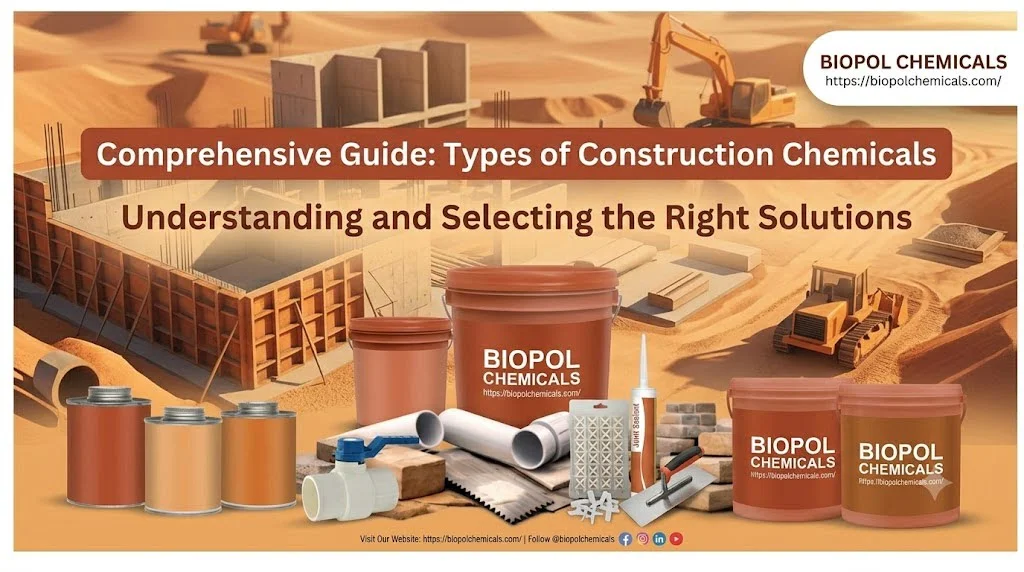
Building construction chemicals are used in many parts of a construction project, from concrete mixing and waterproofing to tile installation, repairs, and surface protection. These products are designed to improve the performance of building materials and help them withstand moisture, weather, heavy use, and other common problems.
Short Key Takeaways
- Construction chemicals improve building material performance.
- Waterproofing chemicals help protect structures from moisture.
- Admixtures can improve concrete properties and workability.
- Proper product selection and application are essential.
Choosing the right construction chemical is important because different materials and applications require different solutions. A product that works well for concrete may not be suitable for tile installation or waterproofing. Understanding the common types and their uses can help contractors, builders, and property owners make better decisions.
What Are Building Construction Chemicals?
Building construction chemicals are specialized chemical products used during construction, repair, and maintenance work. They may be added to materials such as concrete and mortar or applied directly to surfaces.
Depending on the product, they can improve workability, bonding, water resistance, setting time, durability, or surface protection. They are used in residential buildings, commercial properties, industrial structures, roads, bridges, warehouses, and other construction projects.
Common Types of Building Construction Chemicals
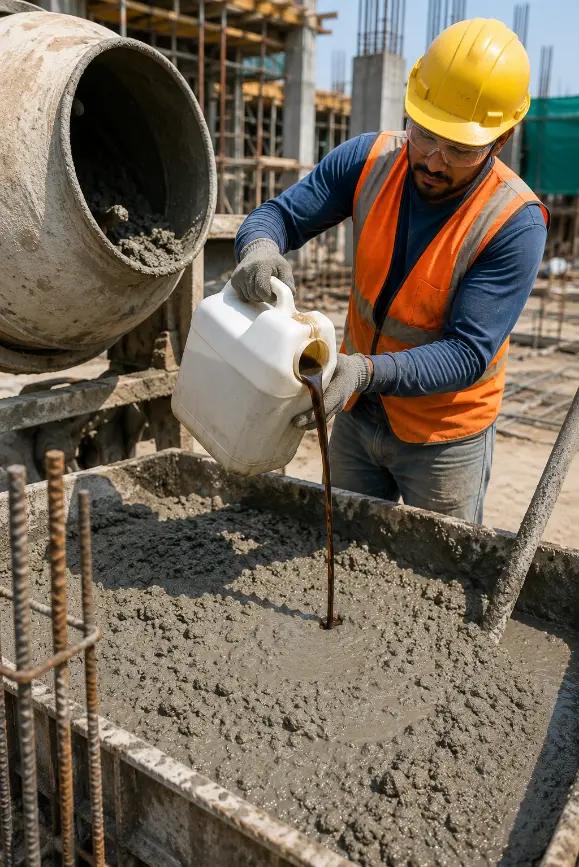
1. Concrete Admixtures
Concrete admixtures are added to concrete in small quantities to change or improve certain properties. Some admixtures reduce the amount of water needed in a mix, while others control setting time or improve workability.
Common examples include plasticizers, superplasticizers, accelerators, retarders, and waterproofing admixtures. The right product depends on the concrete mix, weather conditions, construction method, and required performance.
2. Waterproofing Chemicals
Water can cause serious problems in buildings when it enters roofs, walls, foundations, basements, bathrooms, or terraces. Waterproofing chemicals are used to reduce water penetration and protect these areas.
Products include cement-based waterproofing compounds, liquid membranes, bituminous coatings, crystalline waterproofing materials, and waterproofing admixtures. Proper surface preparation and application are essential because even a good product may fail if it is applied incorrectly.
3. Tile Adhesives and Grouts
Tile adhesives are used to fix ceramic, porcelain, stone, and other tiles to walls and floors. They provide a bonding layer between the tile and the surface.
Grouts are applied between tiles to fill joints and help prevent moisture, dirt, and debris from entering the gaps. The adhesive and grout should be selected according to the tile type, surface, location, and expected level of use.
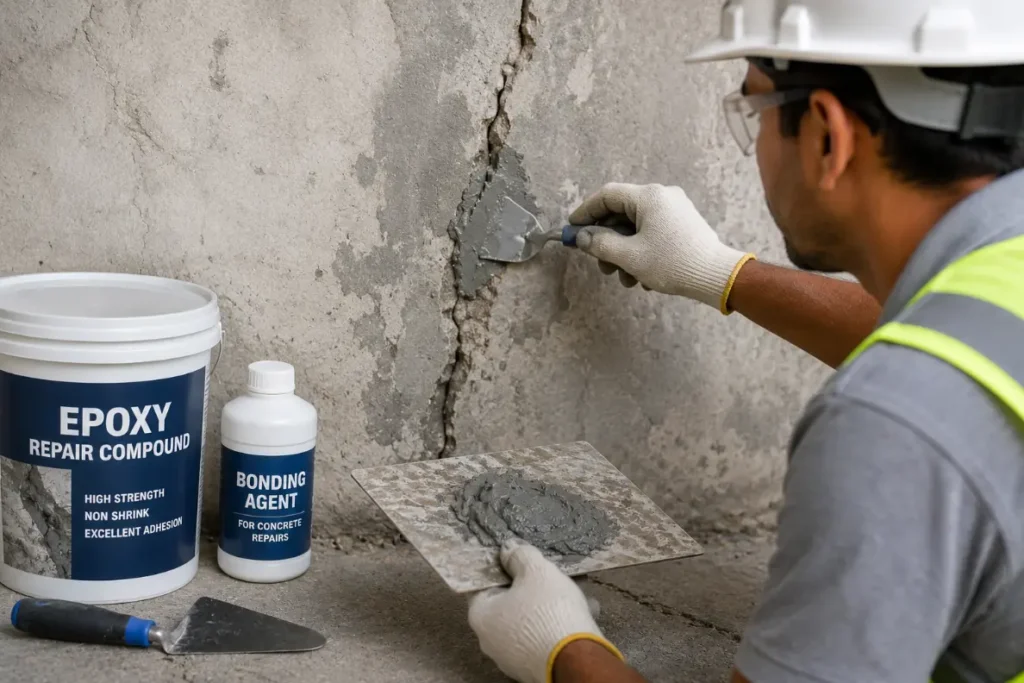
4. Repair Chemicals
Concrete and masonry surfaces can develop cracks, holes, leakage, and other forms of damage over time. Repair chemicals are used to restore these areas and improve their condition.
Epoxy compounds, repair mortars, bonding agents, crack fillers, and grouting materials are commonly used for different repair applications. The cause of the damage should be identified before choosing a repair product.
5. Sealants
Sealants are used to close gaps and joints around windows, doors, facades, bathrooms, expansion joints, and other building areas. They can help prevent water and air from passing through joints while allowing some movement.
Silicone, polyurethane, acrylic, and polysulfide sealants are used for different applications.
6. Flooring Chemicals
Flooring chemicals are used to protect and improve floors in homes, offices, factories, warehouses, and commercial buildings. Epoxy coatings, floor hardeners, self-leveling compounds, and protective coatings are examples.
The suitable product depends on factors such as foot traffic, vehicle movement, chemical exposure, moisture, and cleaning requirements.
Also Read: Construction Chemical Products
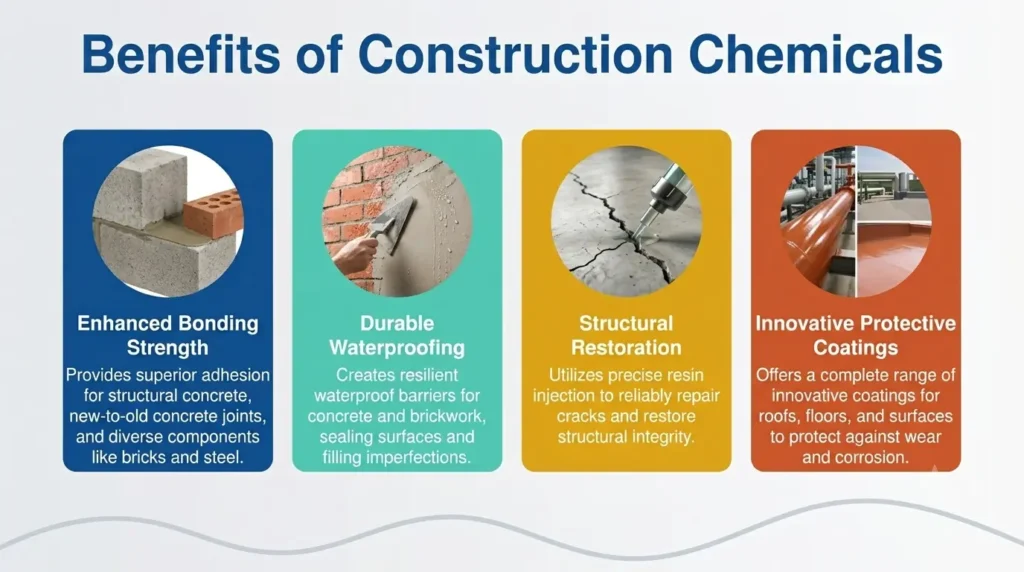
Benefits of Using Construction Chemicals
The correct construction chemical can provide several practical benefits:
- Helps improve concrete workability and performance
- Reduces water penetration in vulnerable areas
- Improves bonding between construction materials
- Helps repair cracks and damaged surfaces
- Protects floors and other surfaces from wear
- Can increase the service life of certain building components
- Makes some construction and maintenance work easier
However, these benefits depend on correct product selection, preparation, mixing, and application.
How to Select the Right Construction Chemical?
Before purchasing a product, consider the exact application and site conditions. Check whether the product is compatible with the surface and surrounding materials. Temperature, moisture, exposure to chemicals, expected load, and curing conditions can also affect performance.
Always follow the manufacturer’s instructions for mixing ratios, coverage, application, curing, and storage. For structural repairs or major waterproofing work, professional assessment may also be necessary.

Also Read: Construction Chemicals for Flooring
Frequently Asked Questions
1. What are building construction chemicals used for?
Building Construction Chemicals are used to improve or protect construction materials. Common applications include concrete mixing, waterproofing, tile installation, joint sealing, surface protection, flooring, and building repairs.
2. Are construction chemicals necessary for every building?
Not necessarily. Building Construction Chemicals uses depends on the design, materials, location, environmental conditions, and specific requirements of a project. Some applications may require specialized products, while others may not.
3. Which construction chemicals are used for waterproofing?
Cement-based compounds, liquid membranes, bituminous coatings, crystalline waterproofing products, and waterproofing admixtures are commonly used. The choice depends on the location and type of water exposure.
4. Can construction chemicals improve concrete?
Yes. Certain admixtures can improve concrete workability, reduce water requirements, control setting time, or provide other specific properties. The product and dosage should be selected according to the concrete mix and project requirements.
5. How should construction chemicals be stored?
Most products should be stored in their original, sealed containers in a dry and suitable environment. Storage requirements vary by product, so the manufacturer’s instructions should always be followed.
6. Why is proper application important?
Even a high-quality construction chemical may not perform as expected if the surface is poorly prepared, the wrong quantity is used, or curing and application instructions are ignored. Proper application is therefore as important as choosing the right product.