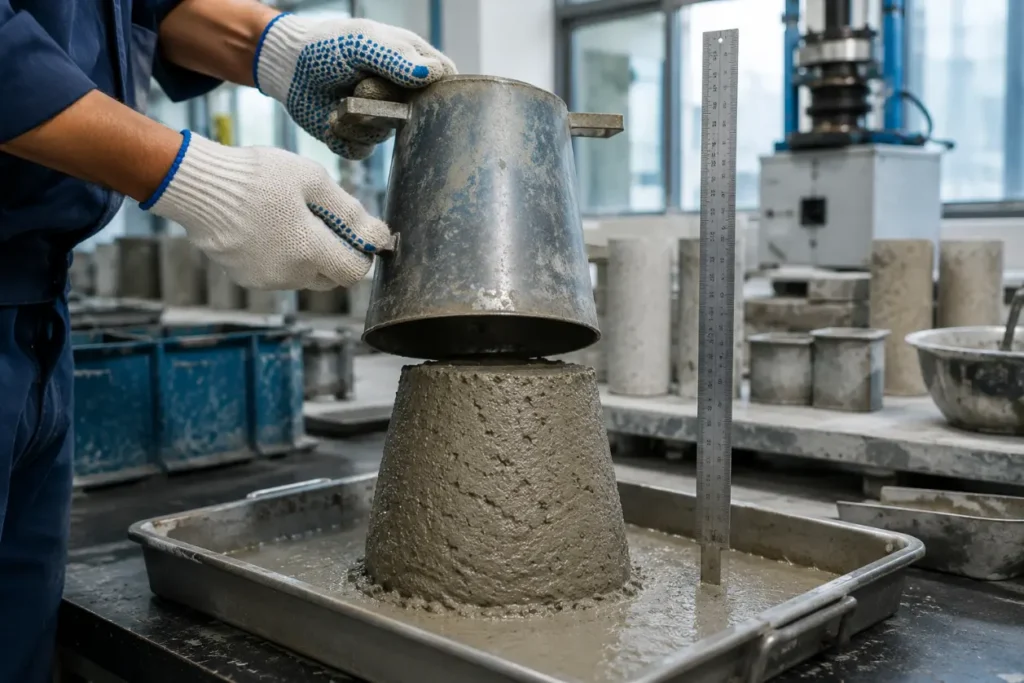
Concrete needs to be workable enough to place and compact, but adding too much water can reduce its strength and durability. This is where a PCE admixture can make a significant difference. PCE stands for Polycarboxylate Ether, a type of high-range water-reducing admixture used to improve concrete workability while keeping the water content under control.
Key Takeaways
- PCE admixture reduces concrete water demand.
- It improves concrete workability and flow.
- PCE supports high-strength concrete mixes.
- It is widely used in modern construction.
PCE admixtures are commonly used in ready-mix concrete, precast concrete, high-rise buildings, bridges, roads, and other construction projects where concrete needs good flow and reliable performance.
What Is PCE Admixture?
PCE admixture is a chemical admixture used to disperse cement particles more effectively in a concrete mix. Cement particles tend to form clusters when water is added. These clusters can trap water and make the concrete harder to work with.
PCE molecules help separate these cement particles, allowing the available water to work more efficiently. This can provide better flow without increasing the water-cement ratio.
In simple terms:
PCE admixture → Better cement dispersion → Lower water requirement → Improved workability
The actual result depends on the cement, aggregates, mix design, dosage, temperature, and other materials used.

Benefits of PCE Admixture
PCE admixture offers several practical benefits when it is correctly selected and dosed.
- Reduces water demand: It can help produce workable concrete with less mixing water.
- Improves workability: Concrete can become easier to place, pump, and finish.
- Supports higher strength: A lower water-cement ratio can contribute to higher compressive strength.
- Improves pumpability: Flowable concrete can be easier to transport through pumping systems.
- Helps produce durable concrete: Lower permeability can improve resistance to water and environmental exposure.
- Suitable for high-performance concrete: PCE is widely used where strength and workability are both important.
- Useful for self-compacting concrete: Its high water-reducing ability can help achieve the flow required for SCC.
Also Read: Waterproofing Admixture
Applications of PCE Admixture
PCE admixtures are suitable for many types of concrete work. Common applications include:
- Ready-mix concrete
- Precast and prestressed concrete
- High-rise buildings
- Bridges and flyovers
- Roads and highways
- Tunnels and infrastructure projects
- Self-compacting concrete
- High-performance concrete
- Pumped concrete
- Industrial and large structural projects
The right PCE formulation depends on the specific requirements of the project.
PCE Admixture for Self-Compacting Concrete
Self-compacting concrete needs to flow through reinforcement and fill formwork without extensive vibration. PCE admixture can provide the high fluidity required for this type of concrete.
However, PCE alone does not make a concrete mix self-compacting. Aggregate grading, cementitious materials, fines, viscosity, and overall mix proportions also need to be properly controlled.
Factors That Affect PCE Performance
PCE admixture does not perform exactly the same way in every concrete mix. Before using it on a large scale, consider:
| Factor | Why It Matters |
|---|---|
| Cement type | Different cement compositions can affect compatibility |
| Dosage | Too little may give poor flow, while excess can affect setting or stability |
| Water-cement ratio | Influences strength and workability |
| Aggregate | Shape, grading, moisture, and fines affect concrete behavior |
| Temperature | Can influence slump retention and setting |
| Mixing process | Mixing time and sequence can affect admixture performance |
| Other admixtures | Compatibility should be checked before use |
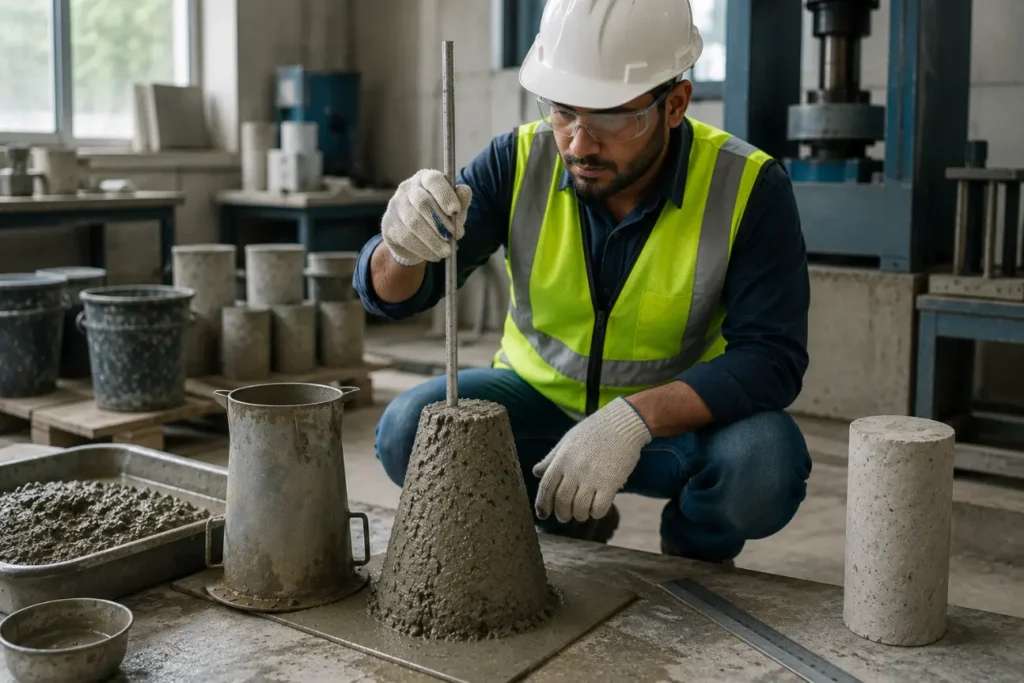
A trial mix using the actual project materials is the best way to determine a suitable dosage.
How to Choose the Right PCE Admixture
When selecting a PCE admixture, look at the requirements of the concrete rather than choosing a product based only on water reduction.
Consider:
- Required concrete grade and strength
- Target slump or flow
- Required slump retention
- Transportation time
- Pumping distance and height
- Ambient temperature
- Cement and supplementary cementitious materials
- Setting-time requirements
- Compatibility with other admixtures
Following the manufacturer’s technical recommendations and conducting trial mixes can help achieve consistent results.
Conclusion
PCE admixture is a useful option for concrete mixes that require better workability without compromising control over water content. It can support applications ranging from ready-mix and precast concrete to self-compacting and high-performance concrete.
For the best results, PCE should be selected according to the cement, aggregates, mix design, required workability, and site conditions. Trial testing is important because the optimum dosage can vary from one concrete mix to another.
Frequently Asked Questions
1. What does PCE stand for in concrete?
PCE stands for Polycarboxylate Ether. It is a high-range water-reducing admixture used to improve concrete workability and reduce water demand.
2. Does PCE admixture increase concrete strength?
It can contribute to higher strength by allowing a lower water-cement ratio while maintaining the required workability. The final strength still depends on the complete mix design and curing conditions.
3. Can PCE be used in ready-mix concrete?
Yes. PCE admixtures are commonly used in ready-mix concrete, particularly when good workability, water reduction, and slump retention are required.
4. Is PCE suitable for self-compacting concrete?
Yes. PCE is widely used in self-compacting concrete because it can provide high flowability without requiring excessive mixing water.
5. Can PCE admixture replace water in concrete?
PCE does not replace water completely. Instead, it can reduce the amount of water needed to achieve a particular level of workability.
Also Read: Waterproofing Admixture