Tiles are widely used on floors and walls because they are durable, easy to maintain, and available in many designs. But good tiles alone do not guarantee a long-lasting installation. The material used to attach the tiles to the surface also plays an important role. This is where tile adhesive comes in.
Key Takeaways
- Tile adhesive provides strong and reliable bonding for different tile types.
- Different adhesive grades are available for specific tiles and applications.
- Proper surface preparation is essential for durable tile installation.
- Choosing the right adhesive can help prevent loose and damaged tiles.
Tile adhesive is made to create a firm connection between a tile and its supporting surface. It can be used on materials such as concrete, cement plaster, screed, and masonry. Depending on the project, different adhesive formulations are available for ceramic, porcelain, vitrified, stone, and other types of tiles.
What Is Tile Adhesive?
Tile adhesive is a specially formulated material used to fix tiles to a prepared substrate. Cement-based adhesives are commonly supplied as a dry powder that is mixed with water before application. Some products also contain polymers and other additives that improve bonding, flexibility, water resistance, and handling properties.
The correct adhesive should be chosen based on the tile, substrate, installation area, and conditions the finished surface will experience.
For example, an adhesive suitable for a standard indoor ceramic wall may not be the right choice for a large porcelain tile installed outdoors.
Why Is Tile Adhesive Used?
Traditional cement mortar is still used for some applications, but tile adhesive offers several useful properties for modern tile installation.
Main advantages include:
- Reliable adhesion: Helps hold tiles firmly against the substrate when correctly selected and applied.
- Consistent composition: Factory-produced adhesive provides a more controlled material than site-mixed mortar.
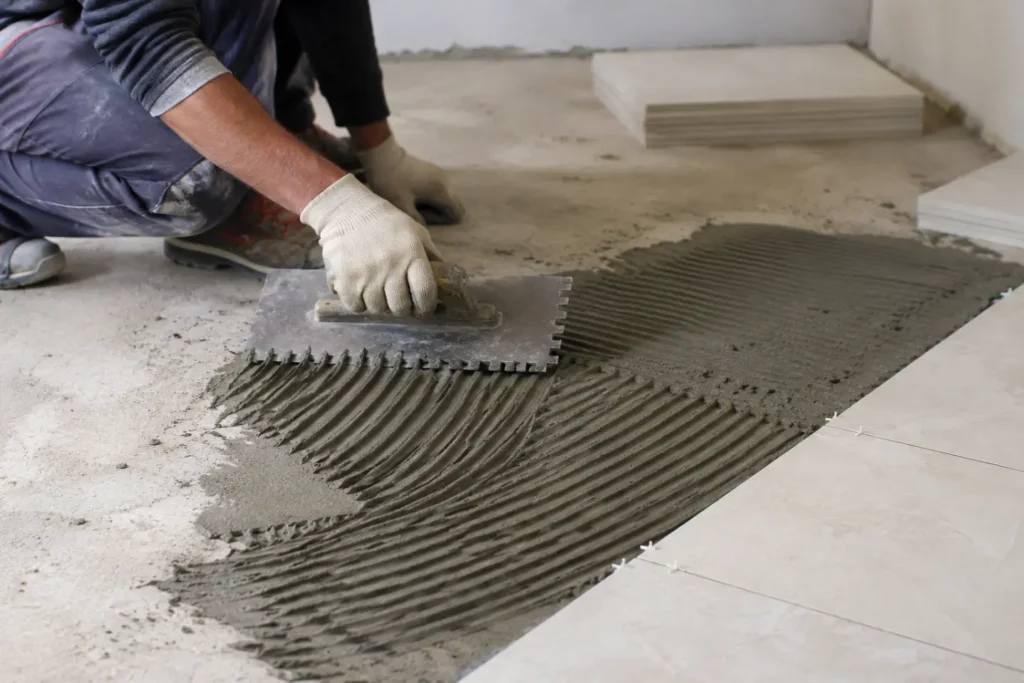
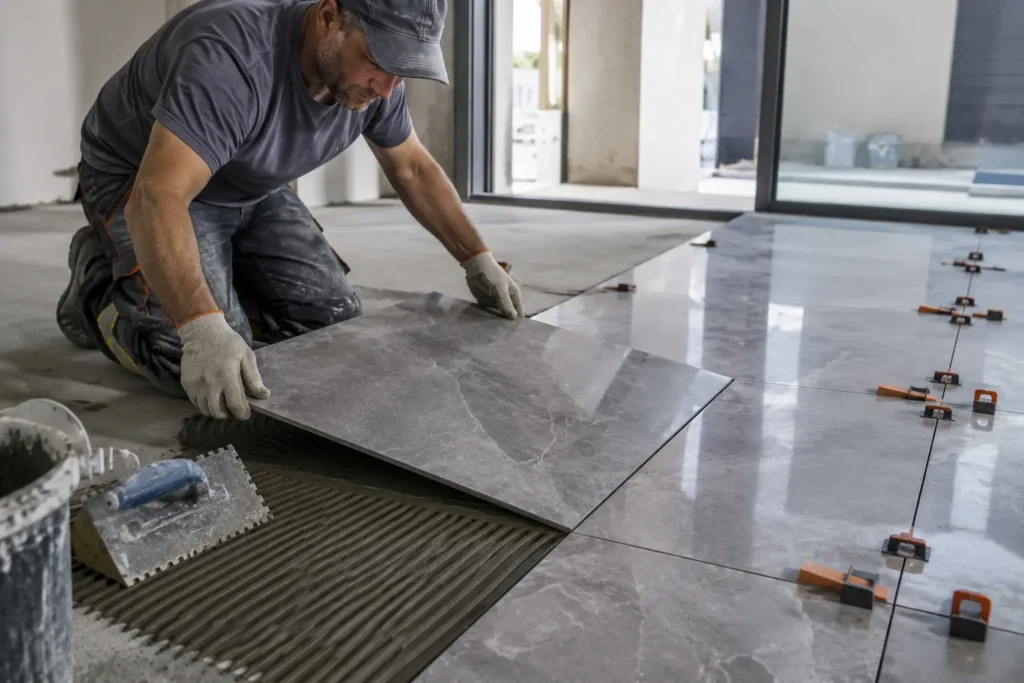
- Easy application: It can generally be spread using a notched trowel.
- Different performance levels: Products are available for basic and demanding applications.
- Suitable for low-absorption tiles: Certain formulations are designed for porcelain and vitrified tiles.
- Better flexibility in selected grades: Some adhesives can handle limited movement between the tile and substrate.
- Suitable for specific environments: Products are available for wet areas and certain exterior applications.
Also Read:PCE Admixture
Different Types of Tile Adhesive
Not every tile installation has the same requirements. Common adhesive categories include:
Cementitious Tile Adhesive
This is a popular option for general tile fixing. It is mixed with water and can be used for various indoor wall and floor applications, depending on the product grade.
Polymer-Modified Tile Adhesive
Polymers can improve adhesion and flexibility. These products are often considered for porcelain, vitrified, and other tiles that have low water absorption.
Flexible Tile Adhesive
Flexible adhesives are designed to tolerate a certain amount of movement. They may be useful on surfaces exposed to temperature changes or minor substrate movement when the product is specified for that purpose.
Fast-Setting Tile Adhesive
These adhesives are formulated to achieve usable strength in a shorter period. They can be helpful for projects where installation schedules are tight.
Common Applications of Tile Adhesive
Tile adhesive can be used in many types of construction and renovation work.
Typical applications include:
- Residential floors and walls
- Bathrooms and kitchens
- Commercial buildings
- Retail and office spaces
- Balconies and selected outdoor areas
- Ceramic tile installations
- Porcelain and vitrified tile installations
- Large-format tile projects
- Renovation work
For areas exposed to continuous moisture, weather, or significant temperature changes, the adhesive should be specifically recommended for those conditions.
Tile Adhesive vs. Cement Mortar
Both materials can be used for tile installation, but their characteristics are different.
| Factor | Tile Adhesive | Cement Mortar |
|---|---|---|
| Composition | Factory-formulated | Usually prepared at the site |
| Bonding | Designed specifically for tile fixing | Depends on mix and workmanship |
| Application | Generally spread with a notched trowel | Usually installed as a mortar bed |
| Thickness | Often applied in a thinner layer | Usually requires a thicker layer |
| Product options | Multiple grades for different uses | Fewer performance variations |
| Low-absorption tiles | Suitable grades are available | May require additional consideration |
| Consistency | More controlled | Can vary with site mixing |
How to Select the Right Tile Adhesive
Selecting an adhesive should not be based only on price or brand name. Look at the actual requirements of the installation.
Consider these points:
- Tile material: Ceramic, porcelain, vitrified, and natural stone tiles can have different bonding requirements.
- Tile dimensions: Large or heavy tiles may require a higher-performance product.
- Surface type: Check whether the substrate is concrete, plaster, screed, masonry, or another material.
- Location: Indoor and outdoor installations may need different adhesive properties.
- Moisture exposure: Bathrooms, kitchens, terraces, and balconies require suitable products.
- Movement: Areas exposed to thermal or structural movement may benefit from an appropriate flexible adhesive.
- Technical specifications: Always check the manufacturer’s instructions for mixing, coverage, application thickness, open time, and setting.
Tips for Proper Tile Adhesive Application
Even a good-quality adhesive can perform poorly if it is installed incorrectly.
For better results:
- Make sure the substrate is clean and structurally sound.
- Remove dust, grease, loose particles, and other contaminants.
- Correct major surface irregularities before tiling.
- Mix the adhesive using the recommended amount of water.
- Do not add extra water to make the mixture easier to spread.
- Use the appropriate notched trowel.
- Maintain adequate adhesive coverage beneath the tiles.
- Follow the recommended open time.
- Allow the adhesive to set before grouting or subjecting the surface to heavy use.
Conclusion
A durable tile installation requires the right combination of tile, substrate preparation, adhesive, and installation technique. Tile adhesive provides a practical bonding solution for many modern flooring and wall applications, with formulations available for different tile types and site conditions.
Before selecting a product, consider the tile, surface, location, moisture exposure, and expected movement. Most importantly, follow the manufacturer’s application instructions. Proper selection and installation can help reduce tile failures and improve the service life of the finished surface.
Also Read:Waterproofing Admixture
Frequently Asked Questions
1.Where is tile adhesive commonly used?
Tile adhesive is used to securely fix tiles to surfaces such as concrete, plaster, screed, and masonry. It is available in different formulations for various tile types and applications.
2. Can tile adhesive be used for porcelain and vitrified tiles?
Yes. Certain tile adhesives are specially formulated for porcelain and vitrified tiles, which generally have low water absorption and require suitable bonding performance.
3. Is tile adhesive suitable for bathroom walls and floors?
Yes, but the adhesive should be specifically recommended for wet-area applications. Proper surface preparation and waterproofing are also important for bathroom installations.
4. Why do tiles come loose after installation?
Tiles may loosen because of poor surface preparation, inadequate adhesive coverage, incorrect mixing, unsuitable adhesive selection, or movement in the underlying surface.
5. How should tile adhesive be applied?
The surface should first be clean, dry, and sound. Mix the adhesive according to the manufacturer’s instructions, spread it with the appropriate notched trowel, and press the tiles firmly into place while maintaining proper coverage.