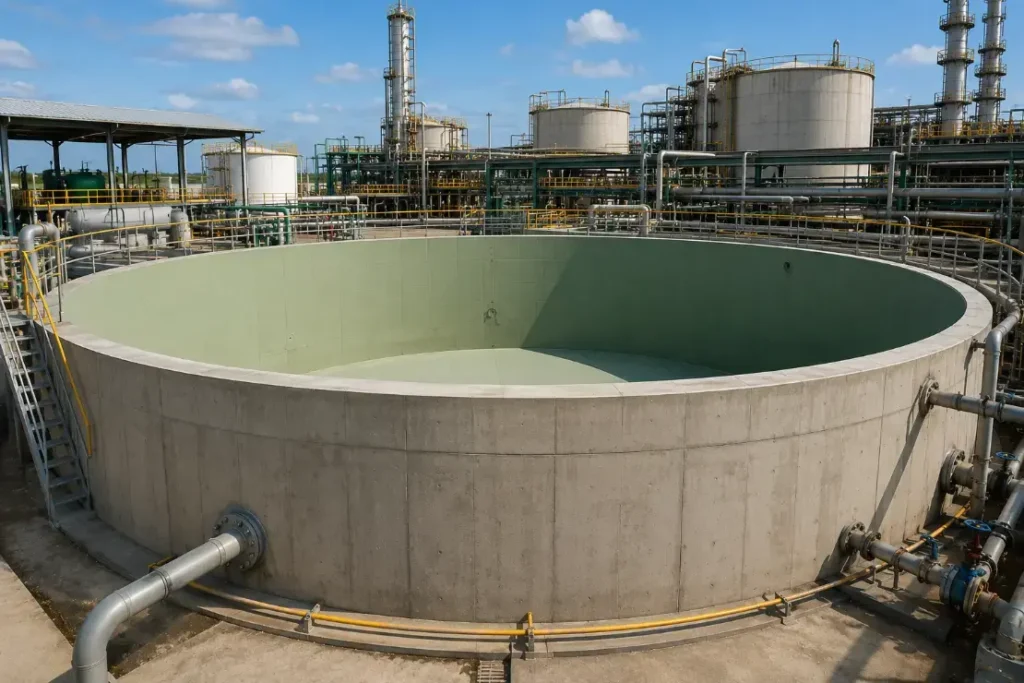
Chemical exposure can cause serious damage to concrete, steel, flooring, tanks, and other building components. This is especially common in chemical plants, factories, laboratories, wastewater treatment facilities, pharmaceutical units, and other industrial sites where acids, alkalis, solvents, oils, and salts are regularly handled.
Key Takeaways
- Chemical-resistant construction protects structures from aggressive chemical exposure.
- Material selection should match the specific chemical and exposure conditions.
- Proper surface preparation is essential for long-lasting protective systems.
- Regular inspection helps maintain chemical-resistant floors, tanks, and structures.
Chemical resistant construction focuses on choosing suitable materials and construction methods that can withstand these aggressive conditions. The right approach can help prevent premature deterioration, reduce maintenance needs, and protect the structure over a longer period.
Also Read:Global Construction Chemicals Market
What Is Chemical Resistant Construction?
Chemical resistant construction refers to the use of specially selected construction materials and protective systems to reduce damage caused by chemical exposure.
The level of protection required depends on several factors, including:
- Type of chemical
- Chemical concentration
- Exposure time
- Operating temperature
- Frequency of chemical contact
- Moisture conditions
- Mechanical traffic and abrasion
- Type and condition of the substrate
There is no single material that can resist every chemical. Material selection should always be based on the actual conditions of the project.
Why Is Chemical Resistance Important?
Concrete is strong and durable, but it is not completely immune to chemical attack. Certain chemicals can penetrate its pores and react with cementitious components, eventually causing cracking, softening, surface erosion, or loss of strength. Steel can also corrode when exposed to moisture and aggressive chemicals.
A chemical resistant construction system can help:
- Protect concrete and steel from chemical deterioration
- Increase the service life of industrial structures
- Reduce repair and maintenance requirements
- Prevent chemical liquids from penetrating surfaces
- Improve the durability of industrial floors and tanks
- Support safer handling and storage of chemicals
- Reduce the risk of contamination and leakage
Materials Used in Chemical Resistant Construction
Different applications require different materials. Common options include:
| Material | Common Application | Key Benefit |
|---|---|---|
| Chemical-resistant concrete | Tanks, foundations, containment structures | Lower permeability and improved durability |
| Epoxy coating | Industrial floors and concrete surfaces | Good resistance to many chemicals and easy cleaning |
| Polyurethane flooring | Factories and processing areas | Chemical, abrasion, and impact resistance |
| Vinyl ester systems | Chemical plants and demanding environments | High resistance to many aggressive chemicals |
| Acid-resistant tiles | Floors, drains, and process areas | Suitable for specific acidic environments |
| Protective membranes | Concrete tanks and containment areas | Creates a barrier against chemical penetration |
The choice should be based on technical data and the chemicals expected at the site rather than on general product claims.
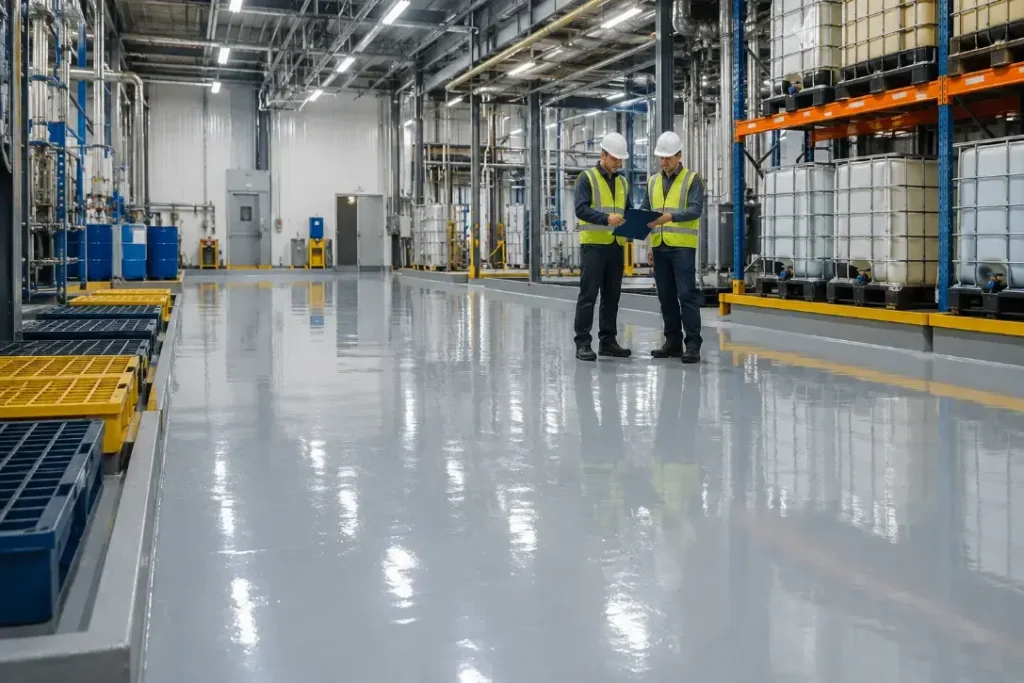
Chemical Resistant Flooring
Industrial floors often face more than chemical exposure. They may also experience heavy equipment, constant foot traffic, impact, abrasion, cleaning chemicals, and temperature changes.
Depending on the conditions, a chemical resistant floor may use:
- Epoxy flooring
- Polyurethane flooring
- Resin mortar
- Acid-resistant tiles
- Protective coatings
- Chemical-resistant screeds
A good flooring system should provide the required chemical resistance while also offering suitable strength, adhesion, slip resistance, and ease of maintenance.
Chemical Resistant Construction Process
A reliable system starts before the protective coating or lining is applied.
1. Assess the Exposure
Identify the chemicals, their concentration, temperature, and expected exposure period.
2. Inspect the Surface
Check the concrete, steel, or masonry for cracks, corrosion, contamination, moisture, and weak areas.
3. Select Compatible Materials
Choose coatings, concrete, membranes, tiles, sealants, or linings that have suitable chemical resistance for the intended environment.
4. Prepare the Substrate
Remove dust, oil, laitance, loose concrete, old coatings, and other contaminants. Proper surface preparation is essential for good adhesion.
5. Repair Defects
Cracks, damaged concrete, joints, and surface imperfections should be repaired before the protective system is installed.
6. Apply and Inspect
Apply the selected system according to the manufacturer’s specifications. Check coverage, thickness, adhesion, curing, and surface condition before putting the area into service.
Where Is Chemical Resistant Construction Used?
Chemical resistant systems are commonly used in:
- Chemical manufacturing plants
- Pharmaceutical facilities
- Effluent and wastewater treatment plants
- Fertilizer factories
- Industrial laboratories
- Food processing facilities
- Battery manufacturing units
- Oil and petroleum facilities
- Chemical storage areas
- Industrial tanks and pipelines
- Containment structures
- Industrial floors and drainage areas
Also Read:http://PCE
Common Mistakes to Avoid
A chemical resistant system can fail even when a high-quality product is used. Common problems include:
- Choosing a material without checking chemical compatibility
- Applying coatings over poorly prepared surfaces
- Ignoring cracks and construction joints
- Using insufficient coating thickness
- Overlooking operating temperature
- Allowing contaminated liquid to remain on the surface
- Starting chemical service before the coating has properly cured
Conclusion
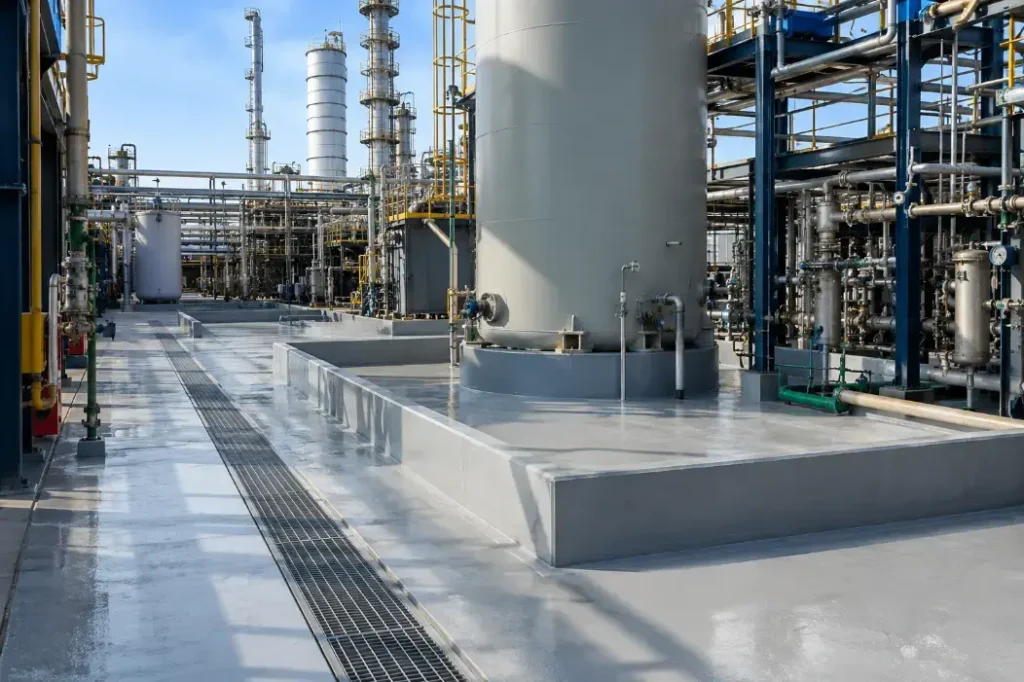
Chemical resistant construction is an important part of industrial building design and maintenance. The right solution depends on understanding the chemical environment and selecting materials that can perform under those specific conditions.
Good surface preparation, proper joint treatment, compatible materials, and careful installation are just as important as the protective product itself. When these factors are considered together, chemical resistant construction can help industrial structures remain durable, functional, and easier to maintain.
Frequently Asked Questions
1. What is chemical resistant construction used for?
It is used to protect concrete, steel, flooring, tanks, and other structures from deterioration caused by acids, alkalis, solvents, salts, oils, and other aggressive substances.
2. Which flooring is best for chemical resistance?
There is no universal best option. Epoxy, polyurethane, vinyl ester, resin mortar, and acid-resistant tile systems may be suitable depending on the chemical, concentration, temperature, and traffic conditions.
3. Can concrete resist chemical attack?
Concrete can perform well in many environments, but prolonged exposure to certain chemicals can cause deterioration. Low-permeability concrete and suitable protective systems can improve its resistance.
4. Is waterproofing the same as chemical resistance?
No. A waterproofing material may prevent water penetration but may not resist a particular acid, solvent, or industrial chemical. Chemical compatibility must be checked separately.
5. How can chemical resistant coatings last longer?
Proper substrate preparation, correct application thickness, adequate curing, suitable joint treatment, and regular inspection can improve the performance and service life of a coating system.