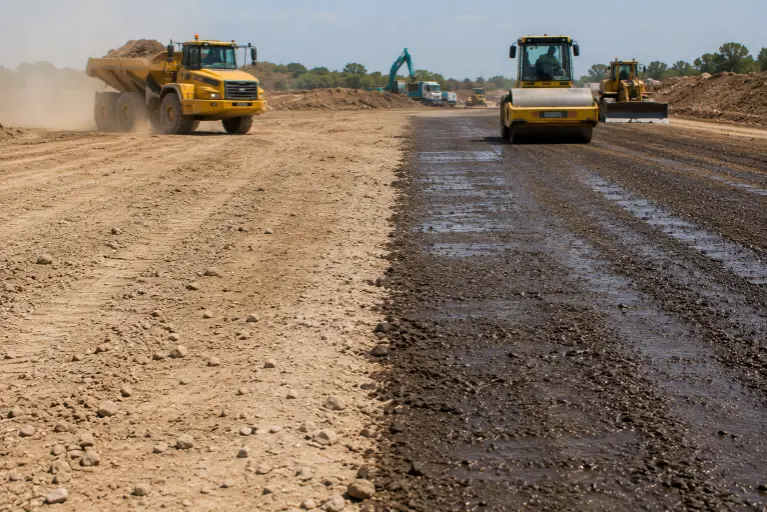
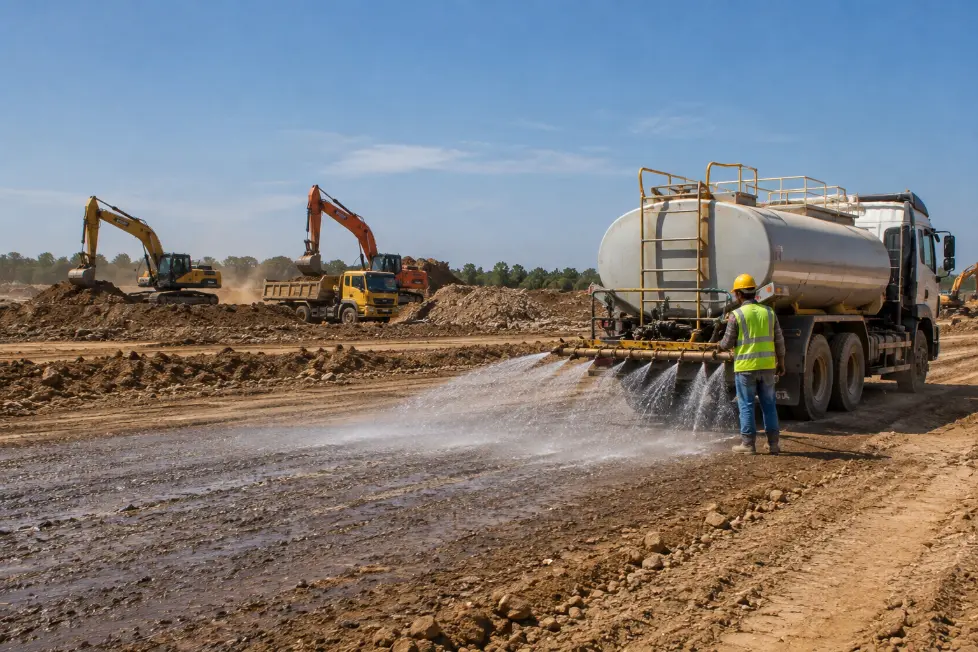
Dust is a normal part of construction work. Excavation, demolition, drilling, cutting, grinding, material handling, and vehicle movement can all release fine particles into the air. On a busy site, uncontrolled dust can become a daily problem, affecting workers, nearby properties, machinery, and the surrounding environment.
Key Takeaways
- Choose dust-control chemicals based on site conditions.
- Calcium chloride helps retain moisture and reduce dust.
- Polymer suppressants bind loose soil particles.
- Follow SDS and recommended application rates.
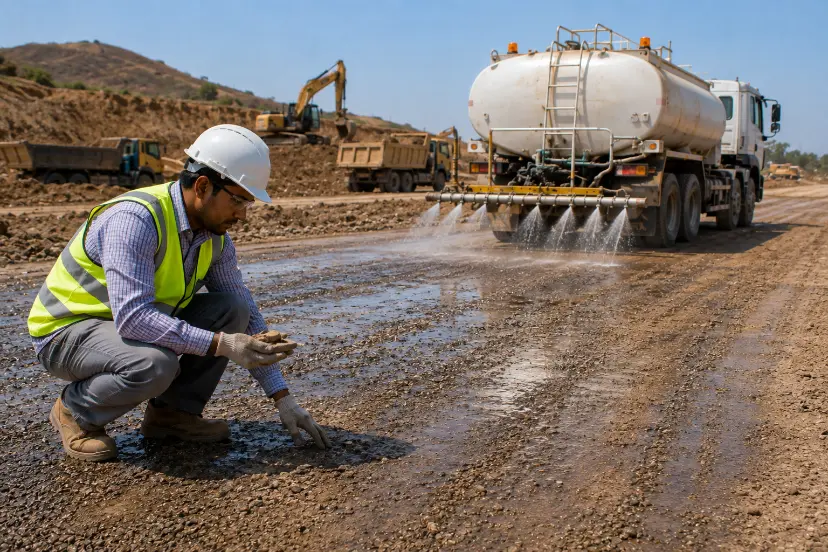
Water spraying is one of the simplest ways to control dust, but it does not always last long, especially during hot, dry, or windy weather. In such situations, Chemicals Used for Dust Control at Construction Sites can provide longer-lasting results by retaining moisture or binding loose particles together.
Also Read: Chemical Resistant Construction
What Are Dust-Control Chemicals?
Dust-control chemicals are products applied to soil, gravel, unpaved roads, stockpiles, and other exposed surfaces to reduce the amount of dust released into the air.
Depending on their formulation, they may work by:
- Holding moisture on the surface
- Binding fine soil particles together
- Stabilizing loose surfaces
- Creating a thin protective layer
- Reducing dust caused by wind and vehicle movement
The right chemical depends on the soil type, traffic conditions, weather, and how long dust control is required. Understanding the Chemicals Used for Dust Control at Construction Sites helps project teams select a treatment that matches actual site conditions.
Common Chemicals Used for Dust Control
1. Calcium Chloride
Calcium chloride is widely used for dust suppression on unpaved construction roads and soil surfaces. It attracts moisture from the air and helps keep the treated surface damp for longer than plain water.
It is commonly used on:
- Temporary access roads
- Gravel roads
- Construction yards
- Haul routes
- Soil surfaces
The application rate needs to be controlled carefully, particularly around vegetation and drainage areas. Among the Chemicals Used for Dust Control at Construction Sites, calcium chloride is often considered for areas where moisture retention is important.
2. Magnesium Chloride
Magnesium chloride works in a similar way by helping retain moisture on exposed surfaces. It can reduce dust generated by vehicle traffic and dry weather.
It is often considered for gravel roads, temporary roads, and construction yards. Its effectiveness depends on factors such as humidity, rainfall, traffic, and surface conditions.
3. Lignosulfonates
Lignosulfonates are used as binding agents that help hold fine soil particles together. Instead of relying mainly on moisture, they improve the cohesion of the treated surface.
They can be useful for:
- Unpaved roads
- Soil stockpiles
- Temporary work areas
- Construction access routes
They are one of the options considered when selecting Chemicals Used for Dust Control at Construction Sites for surfaces where particle binding is required.
4. Polymer-Based Dust Suppressants
Polymer dust-control products bind loose particles and can form a more stable surface after application. They are useful where regular watering is difficult or where traffic creates repeated dust problems.
Different polymers have different performance characteristics, so the manufacturer’s application instructions should always be followed.
5. Acrylic and Copolymer Emulsions
These products can form a protective binding layer over soil or aggregate. They are generally used when a more durable treatment is needed for construction roads, yards, stockpiles, or exposed surfaces.
The selection of Chemicals Used for Dust Control at Construction Sites should always consider the surface material and expected duration of treatment rather than relying on one product for every application.
Where Can Dust-Control Chemicals Be Used?
Dust suppressants can be useful in several areas of a construction project:
- Unpaved roads: Reduce dust from trucks and construction equipment.
- Excavation areas: Help control dust from exposed soil.
- Stockpiles: Reduce windblown particles from stored materials.
- Demolition zones: Help manage airborne dust during site activity.
- Construction yards: Reduce dust caused by vehicle movement.
- Temporary roads: Improve surface stability while reducing dust.
Choosing the appropriate Chemicals Used for Dust Control at Construction Sites for each location can help improve dust management without unnecessarily treating areas that do not require chemical suppression.
Also Read:Tile Adhesive:Types, Uses, and Selection
Water Spraying vs Chemical Dust Control
| Factor | Water Spraying | Chemical Dust Control |
|---|---|---|
| Initial cost | Lower | Usually higher |
| Application frequency | More frequent | Usually less frequent |
| Moisture retention | Short-term | Can be longer-lasting |
| Traffic resistance | Low to moderate | Depends on product |
| Wind resistance | Limited | Generally better |
| Surface stabilization | Limited | Possible with binding products |
| Best suited for | Routine short-term control | Longer-lasting treatment |
Chemical treatment does not necessarily replace water spraying. In many projects, both methods can be used depending on the location and site conditions. The Chemicals Used for Dust Control at Construction Sites can be selected for areas where frequent watering is difficult or where longer surface protection is needed.
How to Choose the Right Chemical
Choosing a dust suppressant should start with the actual conditions at the site. Consider:
- Type and condition of the soil
- Amount of vehicle traffic
- Local temperature and rainfall
- Wind exposure
- Required treatment duration
- Distance from drains and water bodies
- Environmental requirements
- Available spraying equipment
- Product cost and recommended application rate
It is also a good idea to test the product on a small area before applying it across the entire site. This helps determine whether the treatment provides adequate dust reduction without causing unwanted surface or environmental problems.
Before deciding between different Chemicals Used for Dust Control at Construction Sites, site managers should review the manufacturer’s technical information and recommended application procedure.
Safety and Environmental Considerations
Dust-control chemicals should be handled according to the manufacturer’s instructions. Before use, workers should review the Safety Data Sheet (SDS) and wear the recommended protective equipment during mixing and application.
Care should also be taken to prevent chemical runoff from entering drains, streams, ponds, or other sensitive areas. Using more chemical than recommended does not necessarily improve performance and may create unnecessary environmental concerns.
Conclusion
Dust control is an important part of managing a construction site, particularly where dry soil, heavy traffic, or strong winds are common. While water remains a simple and useful option, Chemicals Used for Dust Control at Construction Sites such as calcium chloride, magnesium chloride, lignosulfonates, and polymer-based suppressants can provide longer-lasting dust control in suitable conditions.
The best choice depends on the site’s soil, weather, traffic, environmental requirements, and treatment duration. Proper product selection and application are more important than simply using a higher quantity of chemical.
Frequently Asked Questions
1. What chemical is commonly used for dust control?
Calcium chloride is commonly used on unpaved construction roads because it helps retain moisture. Other options include magnesium chloride, lignosulfonates, and polymer-based products.
2. Is chemical dust control better than water?
Not always. Water works well for short-term dust suppression, while chemical products can reduce the need for frequent watering and may provide longer-lasting control.
3. Can dust-control chemicals be used on construction roads?
Yes. Several dust suppressants are specifically designed for unpaved roads, gravel surfaces, haul routes, and temporary access roads.
4. How often should dust-control chemicals be applied?
There is no fixed schedule. Reapplication depends on the product, traffic, rainfall, temperature, surface condition, and manufacturer’s recommendations.
5. Are dust-control chemicals safe for the environment?
It depends on the product and how it is applied. Always check the SDS and technical information and avoid uncontrolled runoff into soil, vegetation, and water bodies.