In contemporary chemical engineering and advanced manufacturing, material efficiency directly dictates production success. Liquid silicone (frequently processed as Liquid Silicone Rubber or liquid polydimethylsiloxane fluid) has established itself as one of the most reliable synthetic polymers available across global supply chains.
Whether used in precision molding, high-temperature lubrication, specialized coatings, or textile processing, liquid silicone offers structural integrity where traditional polymers fail.
Table of Contents
What is Liquid Silicone?
Liquid silicone is an inorganic-organic polymer with a Si-O backbone and low viscosity. As opposed to the hard-to-disperse high-consistency rubber which requires milling using sophisticated machinery, the liquid silicone exhibits easy flow that allows for its even distribution in solutions or injection molding.
Vulcanization of liquid silicone through addition or heating gives rise to durable elastomers. Liquid silicone is used in applications such as a thermal insulator, lubricant, or release agent.
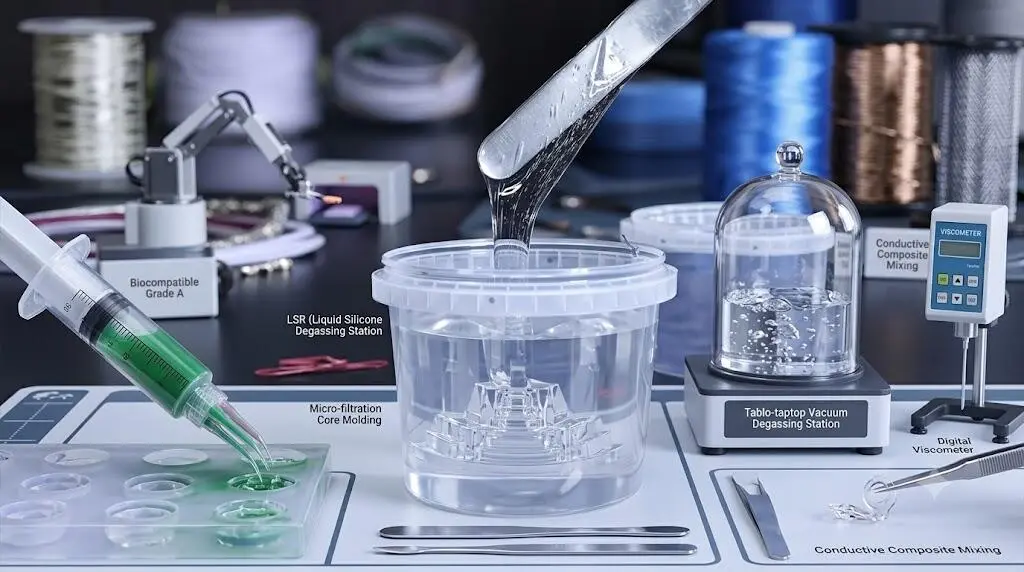
Essential Characteristics of Liquid Silicone
There are certain physical and chemical properties that distinguish liquid silicone from other organic substances:
- Thermal Toughness: Functions reliably over wide ranges of temperatures (usually between sub-zero temperatures and above +200°C), not becoming liquefied, solidified, or unelastic.
- Chemical and Biological Stability: Does not react, is not corrosive, and is not degraded biologically, which makes it safe for contact with sensitive skin and for use as an industrial fluid.
- Small Compression Set: Preserves its form even after long-term compression, suitable for gaskets, seals, and stress dampening.
- Protection against Moisture: Hydrophobic on the surface, thus protecting it from corrosion, electrical faults, and surface wear.
- High Dielectric Strength: An excellent insulator in electrical equipment.
Core Industrial Applications
The cross-industry flexibility of silicone fluid includes:
- Textile and Leather Industry: As a fabric softener and lubricant for threads to improve fabric touch and stitching capabilities.
- Mold Release and Lubrication: Gives a clean release property in die casting, rubber manufacturing, and plastic molding operations to increase mold life.
- Auto Parts: Makes use of high-temperature resistant seals, O rings, and damping fluids for auto components.
- Personal Care Products: Acts as a basis for cosmetic and skin care products.
| Industry Sector | Key Components / Uses | Primary Liquid Silicone Function | Key Property Leveraged |
| Healthcare & Medical Devices | Catheters, surgical implants, seals, fluid valves, respiratory masks | Biocompatible fluid control & sterile long-term device components | USP Class VI purity, tear resistance, sterilization stability |
| Automotive & Transportation | Under-the-hood gaskets, spark plug boots, O-rings, wire harness seals | Extreme temperature fluid/gas sealing & electrical vibration dampening | Thermal stability (-60°C to +200°C), low compression set |
| Consumer Electronics | Waterproof seals (IP67/68), smartwatch bands, earbud tips, keypads | Moisture & dust protection, tactile skin-contact interfaces | Dielectric strength, aesthetic clarity, hydrophobic protection |
| Textile & Leather Finishing | Fabric softening agents, thread lubricants, waterproof textile coatings | Friction reduction, tactile enhancement, and water repelling finish | Low viscosity, high lubricity, hydrophobic surface protection |
| Baby Care & Kitchenware | Pacifiers, bottle nipples, teething rings, baking molds, spatulas | Non-toxic food-contact tools & boil-sterilizable baby gear | Biocompatibility, high heat resistance, chemical & microbial inertness |
| Industrial & Mold Release | Die-casting lubricants, rubber processing release, high-voltage insulators | Clean mold release, surface lubrication, and electrical insulation | Thermal stability, non-reactivity, high dielectric strength |
Sourcing High-Grade Silicone Oil for Your Operations
Maintaining consistent product quality requires sourcing high-purity raw materials backed by dependable manufacturing standards. Variable viscosity or improper formulation can disrupt production runs, leading to excess downtime or compromised end products.
If your facility requires top-tier silicone fluids, emulsions, or custom chemical formulations, Biopol Chemicals Limited provides trusted, high-performance solution grades tailored to your industrial specifications.
FAQs
1. What is fluid silicone used for?
Liquid silicone is employed as an advanced substance in mold release agents, insulation, medical parts, wearables, and industrial lubricants.
2. How does regular silicone differ from liquid organo silicone?
Standard (solid) silicone is high viscosity and cured using heat compression, while liquid silicone is low viscosity, easy to pour, and quick curing by liquid injection molding.
3. How much does liquid organo silicone cost?
Although the initial expense of tooling and materials is greater than that of standard rubber, fast automated production cycles make it extremely economical.
4. Where are liquid silicone rubber mainly applied?
Liquid silicone rubber (LSR) is mainly utilized for precise molded parts such as medical implants, infant pacifiers, car seals, and waterproof electronic gaskets.
Also Read here