
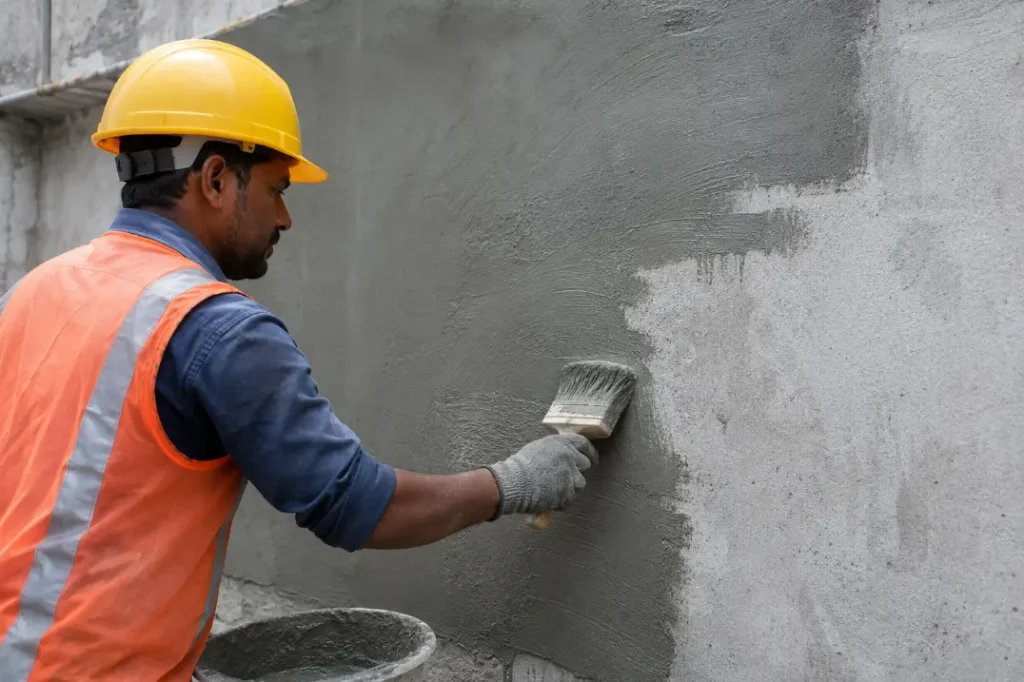
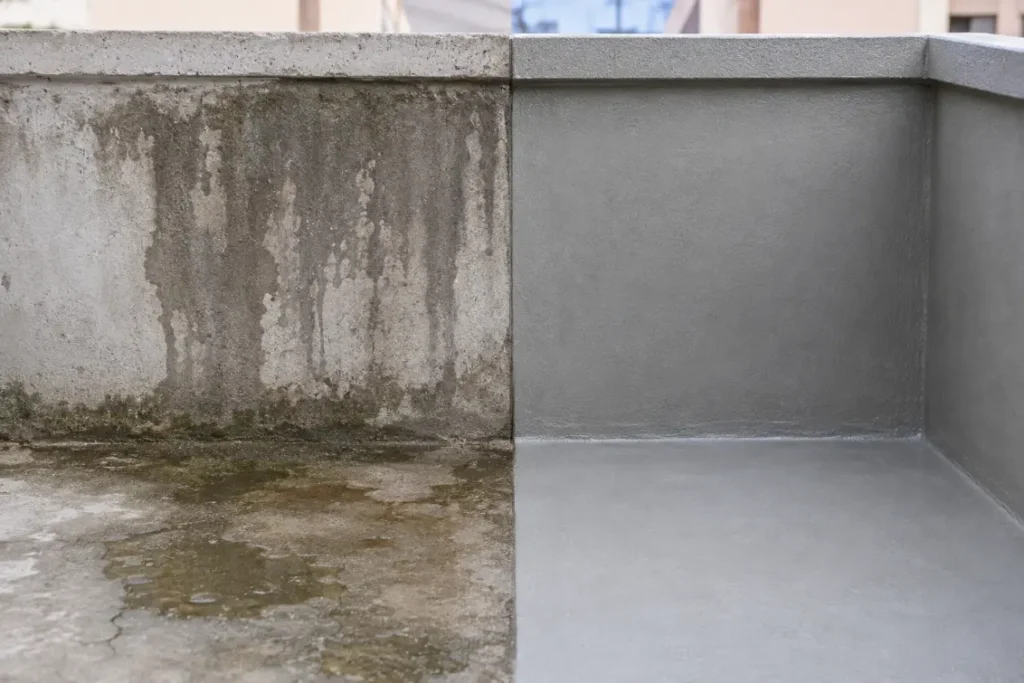
Water is one of the biggest causes of damage in concrete and masonry structures. When moisture enters walls, roofs, basements, bathrooms, terraces, or foundations, it can gradually cause dampness, staining, cracks, peeling paint, and concrete deterioration. In reinforced concrete, long-term moisture exposure can also contribute to corrosion of steel reinforcement.
Key Takeaways
- Cement waterproofing helps reduce water penetration through concrete and masonry.
- It is commonly used in bathrooms, basements, terraces, foundations, and water tanks.
- Proper surface preparation, application, and curing are essential for good results.
- Cracks, joints, drainage problems, and active leaks should be addressed before waterproofing.
Cement waterproofing is a commonly used method for reducing water penetration and protecting cement-based surfaces. It uses cement-based waterproofing materials that are applied to prepared concrete or masonry to create a water-resistant protective layer.
What Is Cement Waterproofing?
Cement waterproofing is a treatment in which a cement-based waterproofing compound is applied to concrete, brickwork, masonry, or similar surfaces. Depending on the product, the material may contain polymers or other additives that improve adhesion, flexibility, and resistance to water.
Once properly mixed, applied, and cured, the coating forms a dense layer over the surface. It helps prevent moisture from passing through pores and minor surface imperfections.
Cement waterproofing can be used during new construction as well as for repairing existing structures.
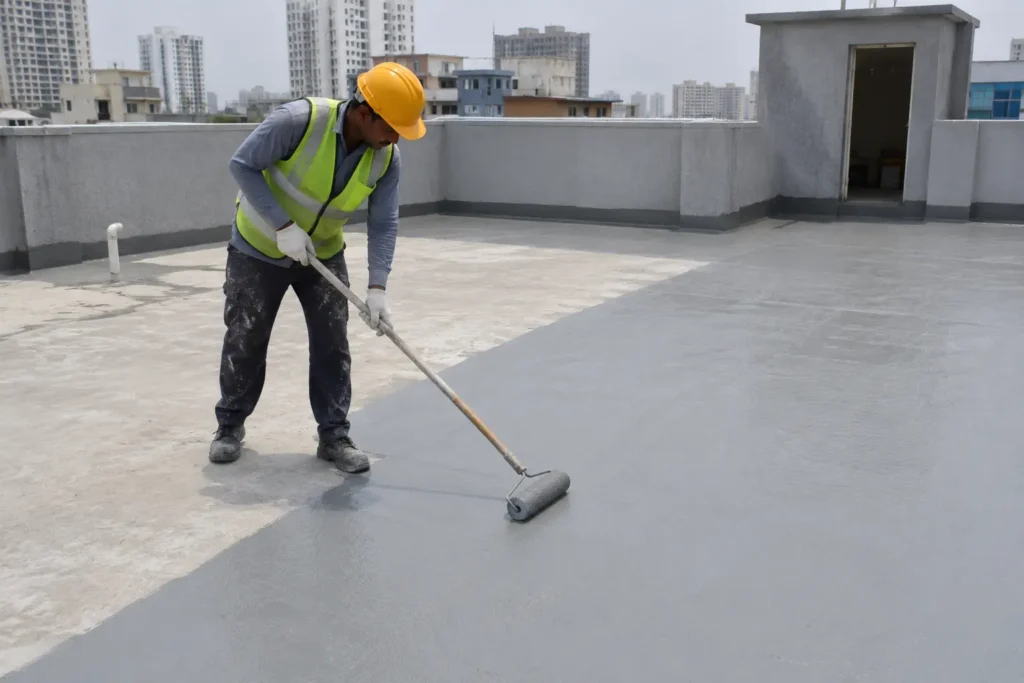
Where Is Cement Waterproofing Used?
Cement-based waterproofing products are suitable for several areas where concrete or masonry is exposed to moisture.
Common applications include:
- Bathrooms and wet areas
- Basements and underground structures
- Water tanks and reservoirs
- Concrete roofs and terraces
- Foundations
- Balconies
- Swimming pools
- Masonry walls
- Industrial floors and structures
- Retaining walls
The right material should be selected based on the type of structure, water exposure, surface condition, and expected movement.
Also Read:Epoxy Flooring: Applications and Installation
How Is Cement Waterproofing Applied?
A good waterproofing result depends heavily on surface preparation. The general application process includes the following steps:
- Inspect the surface: Identify cracks, damaged concrete, joints, holes, and areas affected by water leakage.
- Clean the surface: Remove dust, dirt, oil, loose particles, and weak concrete.
- Repair defects: Fill cracks, holes, honeycombing, and damaged areas with suitable repair materials.
- Prepare the waterproofing mixture: Mix the cement waterproofing product according to the manufacturer’s instructions.
- Apply the coating: Use a brush, roller, or trowel as recommended for the product.
- Apply additional coats: Where required, apply another coat after the first layer has reached the recommended stage.
- Allow proper curing: Protect the coating and allow sufficient curing time before covering or exposing it to water.
Skipping surface preparation or applying the material incorrectly can reduce its performance.
Benefits of Cement Waterproofing
Cement waterproofing offers several practical benefits when used in the right conditions.
| Benefit | How It Helps |
|---|---|
| Water resistance | Reduces moisture penetration through concrete and masonry |
| Strong adhesion | Bonds well with properly prepared cement-based surfaces |
| Easy application | Can generally be applied with basic construction tools |
| Suitable for wet areas | Useful for bathrooms, tanks, basements, and similar locations |
| Surface protection | Helps protect concrete from prolonged moisture exposure |
| Compatible with finishes | Can often be covered with tiles, plaster, or screed after curing |
Another advantage is that cement-based coatings can provide a good bond with concrete, making them useful where the waterproofing layer needs to work closely with the substrate.
Things to Check Before Waterproofing
Waterproofing should not be applied without first understanding the cause of the moisture problem. Before starting the work, check:
- Whether water is coming through cracks or joints
- Condition of the concrete or masonry
- Presence of loose or damaged material
- Existing waterproofing layers
- Drainage and water flow around the structure
- Surface moisture requirements of the selected product
- Areas that may experience movement
Active leaks, large cracks, and moving joints may need separate treatment before applying a cement waterproofing coating.
Common Mistakes to Avoid
Some waterproofing problems are caused by application rather than the material itself. Avoid these common mistakes:
- Applying the coating over dirty or weak surfaces
- Using too much or too little water while mixing
- Applying an uneven or insufficient coating thickness
- Ignoring cracks and construction joints
- Not following curing instructions
- Covering the waterproofing before it has cured properly
- Using a product that is not suitable for continuous water exposure
Always follow the technical instructions provided for the specific waterproofing product.
Also Read: Floor Hardener: Applications and Uses
Conclusion
Cement waterproofing is a practical way to reduce moisture penetration in concrete and masonry structures. It can be used in bathrooms, basements, tanks, terraces, foundations, balconies, and several other moisture-prone areas.
The quality of the final result depends on proper surface preparation, suitable material selection, correct application, and adequate curing. Addressing cracks, joints, drainage, and other sources of water entry is equally important. When these factors are handled properly, cement waterproofing can help protect structures from moisture-related damage and improve their long-term durability.
Frequently Asked Questions
Is cement waterproofing good for concrete?
Yes. Cement waterproofing is commonly used on concrete and masonry surfaces to reduce water penetration and protect the substrate from moisture.
Can cement waterproofing be used in bathrooms?
Yes. Suitable cement-based waterproofing systems can be applied in bathrooms and other wet areas, usually beneath compatible finishes such as tiles.
Can it stop concrete cracks?
It may help with small, stable surface cracks if the product is designed for such use. Larger, structural, or moving cracks generally require separate repair and treatment.
Is cement waterproofing suitable for water tanks?
Yes, but only when the selected product is specifically approved for water-retaining structures. Product specifications should always be checked before application.
How many coats are needed?
The required number of coats depends on the product and application conditions. Many systems require more than one coat, but the manufacturer’s instructions should be followed.