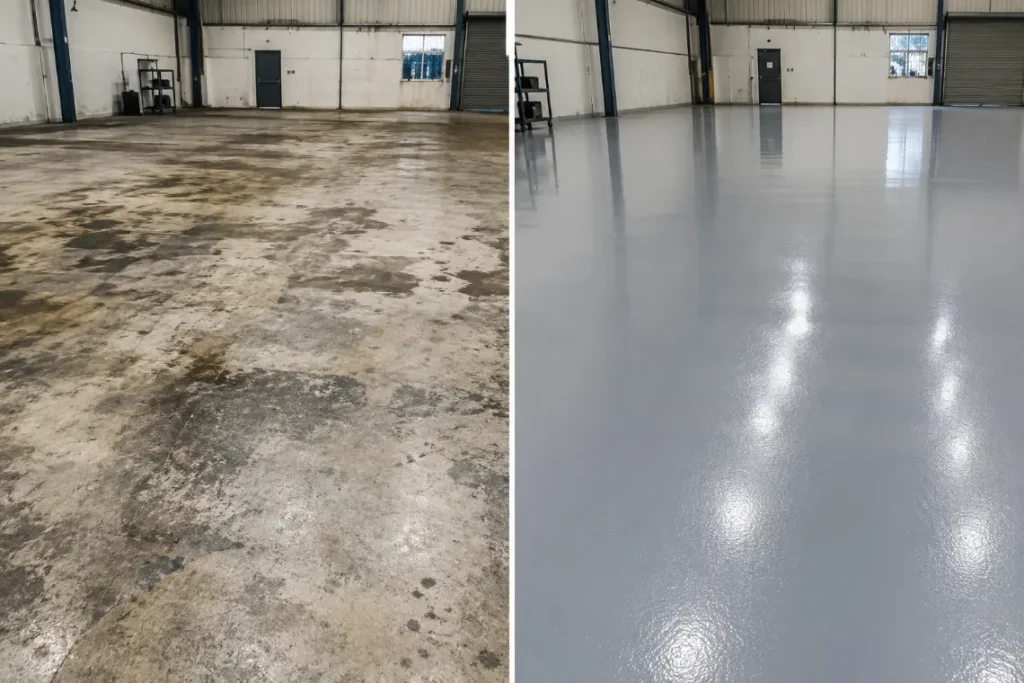
Concrete floors are strong, but they can still suffer from dust, stains, abrasion, chemical exposure, and heavy traffic. Epoxy flooring is one way to protect a concrete surface while giving it a clean and durable finish. It is commonly used in factories, warehouses, garages, workshops, hospitals, commercial buildings, and other areas where floors need to handle regular use.
Key Takeaways
- Epoxy flooring protects concrete from wear, stains, moisture, and many common chemicals.
- Different epoxy systems suit different needs, from garages and offices to heavy industrial floors.
- Proper surface preparation is essential for strong adhesion and long-term performance.
- Regular cleaning and timely repairs can help maintain the floor and extend its service life.
Unlike ordinary floor paint, epoxy flooring forms a hard resin-based surface when the epoxy resin and hardener are mixed and cured. The final performance depends on the product selected, concrete condition, surface preparation, application method, and curing time.
What Is Epoxy Flooring?
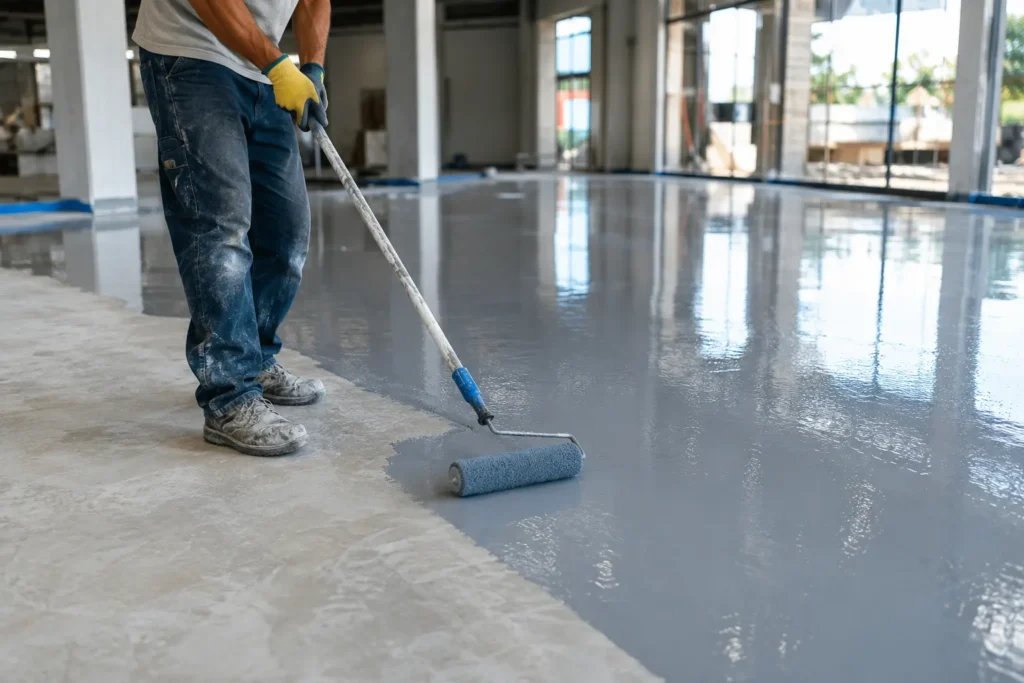
Epoxy flooring is a protective floor coating applied over a properly prepared concrete substrate. The epoxy material bonds with the surface and forms a continuous layer that can resist wear, stains, moisture, and many common chemicals.
Different formulations are available for different requirements. Some are designed for light foot traffic, while others are made for forklifts, machinery, vehicle movement, chemical exposure, or areas where slip resistance is important.
Also Read:Floor Hardener: Applications and Uses
Benefits of Epoxy Flooring
There are several reasons epoxy flooring is used in demanding environments:
- Durability: It can withstand regular foot traffic, vehicle movement, abrasion, and mechanical use when the correct system is selected.
- Chemical resistance: Suitable epoxy systems can protect concrete against many oils, chemicals, cleaning agents, and industrial substances.
- Easy cleaning: The continuous surface has fewer joints where dirt and dust can collect.
- Stain resistance: Epoxy can help prevent oils, grease, and other liquids from penetrating the concrete.
- Custom finishes: It can be available in different colors, textures, and decorative finishes.
- Slip-resistant options: Suitable aggregates can be added when additional traction is required.
- Concrete protection: A properly installed coating can help protect the underlying concrete from everyday wear and exposure.
Common Types of Epoxy Flooring
The right type depends on the conditions of the floor and how the space will be used.
| Type | Common Use | Main Feature |
| Self-leveling epoxy | Commercial spaces, factories | Smooth and uniform finish |
| Epoxy mortar flooring | Heavy-duty industrial areas | High mechanical strength |
| Flake epoxy flooring | Garages, showrooms | Decorative and textured finish |
| Anti-slip epoxy | Workshops, ramps, wet areas | Improved surface traction |
| Epoxy terrazzo | Offices, institutions, public buildings | Decorative and durable surface |
Where Is Epoxy Flooring Used?
Epoxy flooring can be suitable for many indoor and industrial applications, including:
- Manufacturing units and production facilities
- Warehouses, distribution centers, and storage spaces
- Automobile repair and maintenance workshops
- Residential, commercial, and industrial garages
- Hospitals, clinics, and other healthcare facilities
- Research and testing laboratories
- Retail outlets, stores, and product showrooms
- Food processing and packaging units
- Parking lots and vehicle parking facilities
- Workshops, maintenance units, and service centers
Each application has different requirements. A warehouse with forklift traffic, for example, may need a stronger flooring system than a small residential garage.
Epoxy Flooring Installation Process
Good surface preparation is one of the most important parts of an epoxy flooring project. A typical installation involves these steps:
- Inspect the concrete: Check for cracks, weak areas, contamination, unevenness, and moisture.
- Prepare the surface: Remove dust, oil, grease, laitance, old coatings, and loose material. Grinding or shot blasting may be used depending on the substrate.
- Repair damaged areas: Fill cracks, holes, and damaged sections with compatible repair materials.
- Apply primer: A suitable primer can improve bonding between the concrete and epoxy system.
- Apply epoxy: Mix and apply the epoxy according to the manufacturer’s specified ratio and thickness.
- Add surface treatment: Anti-slip aggregates, flakes, or other finishes can be added when required.
- Allow curing: The floor must remain undisturbed for the recommended curing period before being exposed to traffic.
What to Consider Before Choosing Epoxy Flooring
Before selecting an epoxy system, consider:
- Expected pedestrian or vehicle traffic
- Exposure to chemicals, oil, and grease
- Concrete moisture conditions
- Required slip resistance
- Temperature and environmental conditions
- Required coating thickness
- Cleaning and maintenance requirements
- Expected impact and abrasion
Choosing a product based only on appearance or price can lead to problems later. The flooring system should match the actual conditions of the site.
Epoxy Flooring Maintenance
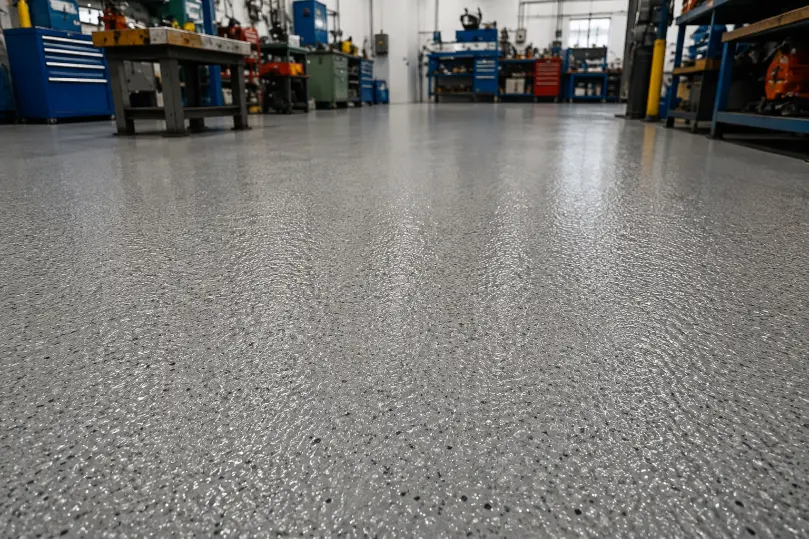
Epoxy floors are relatively easy to maintain. Regular sweeping or vacuuming removes loose dirt and dust, while spills should be cleaned promptly. Use cleaning products recommended for the particular flooring system.
Avoid dragging heavy or sharp objects across the surface unnecessarily. Any damaged area should also be repaired before the problem becomes larger.
Also Read:PS Sealant: Buying Guide
Frequently Asked Questions
1. What is epoxy flooring used for?
Epoxy flooring is mainly used to protect concrete floors from wear, stains, moisture, chemical exposure, and regular traffic. It is common in industrial, commercial, institutional, and garage applications.
2. Is epoxy flooring suitable for heavy traffic?
Yes. Heavy-duty epoxy systems can be designed for areas exposed to forklifts, vehicles, machinery, and frequent movement. The system must be selected according to the expected load and traffic.
3. Can epoxy flooring be applied directly to concrete?
The concrete needs proper preparation before application. Dust, grease, weak material, old coatings, and other contaminants should be removed, and cracks or damaged areas should be addressed.
4. Is epoxy flooring waterproof?
Epoxy can create a dense, low-permeability surface, but it should not automatically be considered a complete waterproofing system. Concrete moisture and water pressure conditions need to be assessed before installation.
5. How long does epoxy flooring last?
Its service life depends on the quality of the product, surface preparation, installation, traffic, chemical exposure, and maintenance.