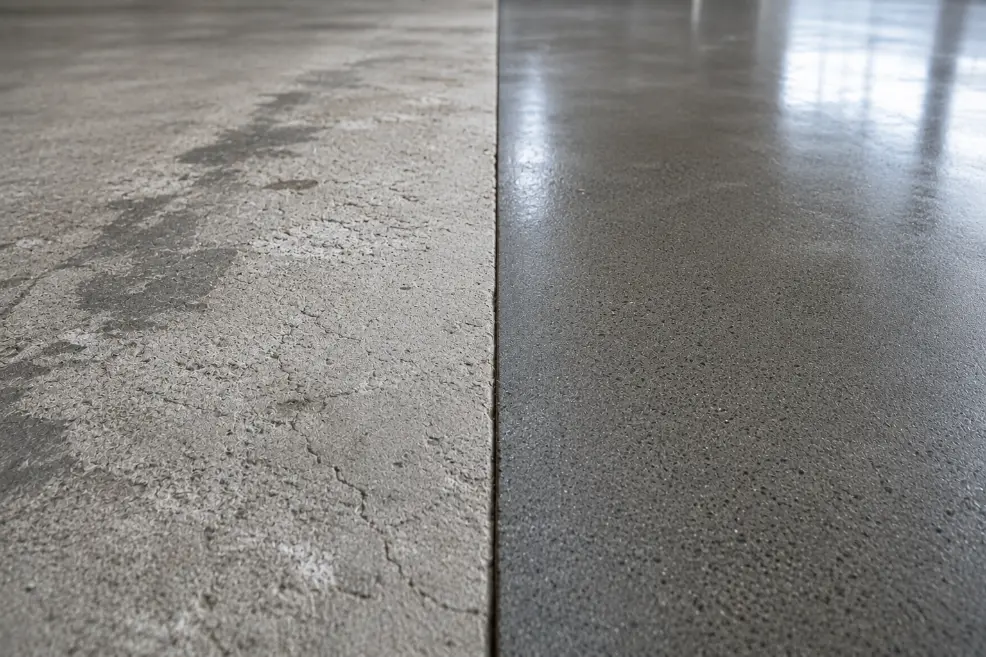
A floor hardener is used to improve the surface strength of concrete and make it more resistant to everyday wear. It is particularly useful in areas where floors need to handle regular traffic and mechanical loads without frequent surface repairs.
Key Takeaways
- Improves surface hardness and concrete floor durability.
- Reduces abrasion and dusting in high-traffic areas.
- Suitable for industrial floors, warehouses, workshops, and parking areas.
- Proper application and curing are essential for long-lasting performance.
Concrete floors are widely used in factories, warehouses, workshops, parking areas, and commercial buildings. While concrete is strong, its surface can wear down when it is exposed to heavy traffic, machinery, impact, and constant movement. Over time, this may lead to surface abrasion, dusting, and general deterioration.
What Is Floor Hardener?
A floor hardener is a material applied to a concrete surface to improve its hardness, durability, and resistance to abrasion. Depending on the product, it may contain cementitious binders, mineral aggregates, metallic aggregates, or other specially selected materials.
Some hardeners are designed for application on fresh concrete, while others are formulated for existing concrete surfaces. The choice depends on the condition of the floor and the level of use it will receive.
Also Read:Industrial Waterproofing Products (IWP)
Why Use Floor Hardener on Concrete Floors?
A normal concrete surface can become worn when subjected to continuous traffic. Adding a suitable hardener can help improve its surface performance.
Key benefits include:
- Higher surface hardness: Helps the floor withstand regular mechanical stress.
- Better abrasion resistance: Reduces surface wear caused by vehicles, equipment, and foot traffic.
- Less surface dust: A denser surface can help reduce concrete dusting.
- Improved durability: Helps the floor remain serviceable for longer under demanding conditions.
- Better appearance: Provides a more uniform and finished surface when properly applied.
- Lower maintenance needs: A stronger surface can reduce the need for frequent surface repairs.
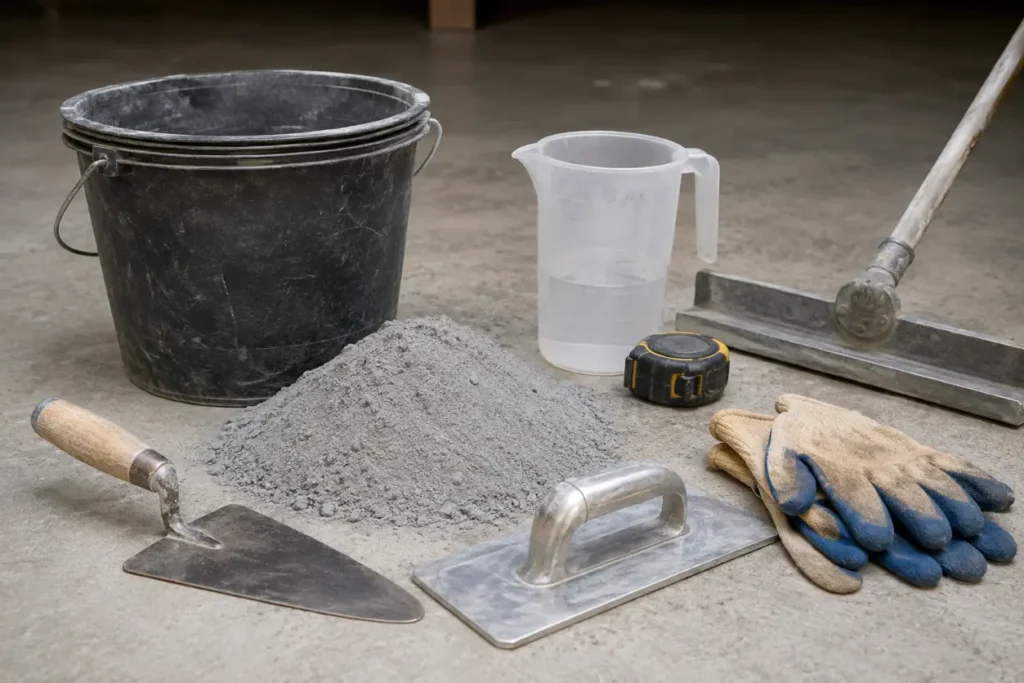
Types of Floor Hardener
Different floor hardeners are suitable for different applications. Common types include:
| Type | Main Characteristics | Typical Applications |
|---|---|---|
| Cementitious floor hardener | Cement-based material with selected aggregates | Warehouses, factories, workshops |
| Non-metallic floor hardener | Uses mineral aggregates for surface strengthening | Commercial and industrial floors |
| Metallic floor hardener | Designed for high mechanical wear and heavy loads | Heavy-duty industrial areas |
The right product should be selected based on traffic, load, abrasion, environmental conditions, and the condition of the concrete.
Where Is Floor Hardener Used?
Floor hardeners are commonly used in places where concrete surfaces experience frequent movement or heavy loads. Typical applications include:
- Manufacturing plants
- Warehouses and storage facilities
- Workshops and garages
- Parking areas
- Loading and unloading zones
- Industrial corridors
- Machine rooms
- Distribution centers
- Commercial buildings
- Agricultural storage areas
In a warehouse, for example, forklift movement can put repeated stress on the concrete surface. A suitable hardener can help the surface withstand this regular use.
How Is Floor Hardener Applied?
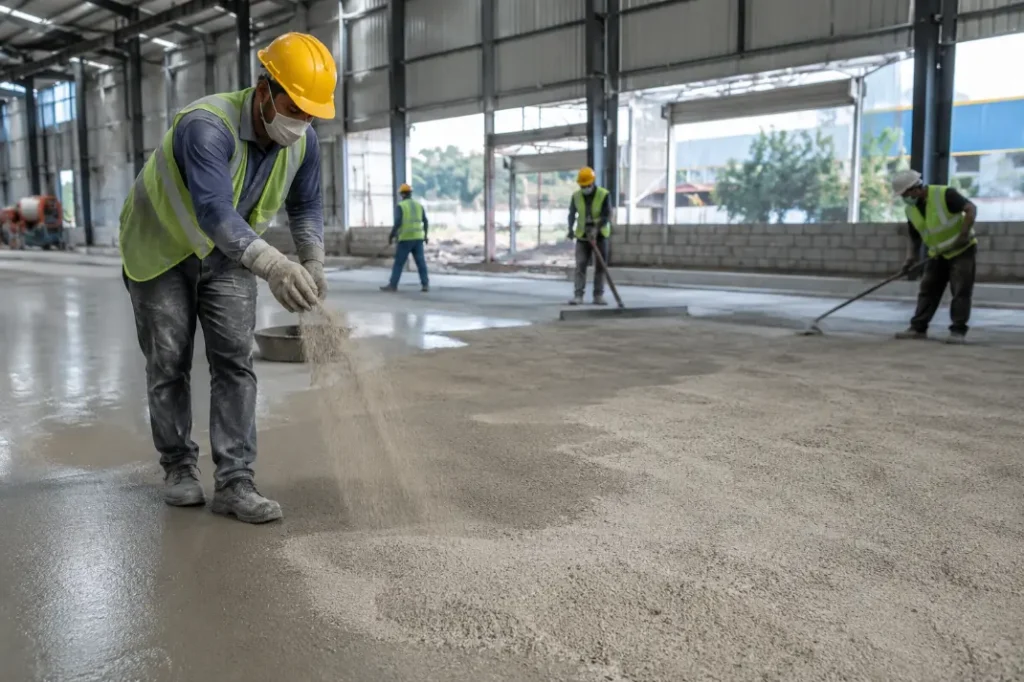
Application varies according to the product and whether the concrete is new or existing. For a typical dry-shake hardener used on fresh concrete, the process generally includes:
- Prepare the concrete: Place, compact, and level the concrete properly.
- Apply the hardener: Spread the recommended quantity evenly over the surface at the correct setting stage.
- Allow moisture to work into the material: Moisture from the concrete helps the hardener bond with the surface.
- Float the surface: Use suitable equipment to work the material into the concrete.
- Finish the floor: Finish the surface to achieve the required texture and appearance.
- Cure properly: Follow the recommended curing procedure to support proper strength development.
Application timing is important. Applying the material too early or too late can affect the final result.
What Should You Consider Before Choosing a Floor Hardener?
Before selecting a product, consider:
- Expected foot and vehicle traffic
- Weight of machinery or stored materials
- Required abrasion resistance
- Exposure to moisture or chemicals
- Type and quality of the concrete
- Whether the floor is new or existing
- Required surface finish
- Application and curing conditions
It is also important to follow the manufacturer’s recommended application rate and installation procedure.
Floor Hardener Does Not Replace Good Concrete
It improves the surface, but it cannot correct problems caused by poor concrete design, inadequate curing, incorrect joint placement, or structural movement. The concrete itself should be properly designed, placed, compacted, finished, and cured.
For heavy-duty applications, the entire flooring system should be considered rather than relying on the hardener alone.
Conclusion
A floor hardener can be a practical choice for concrete floors that need better resistance to abrasion, traffic, and everyday mechanical wear. It is widely used in industrial and commercial settings where ordinary concrete surfaces may experience heavy use.
For reliable results, choosing the appropriate product is only part of the process. Proper concrete preparation, correct application, finishing, and curing are equally important. A well-installed floor hardener system can help create a stronger and more durable concrete surface suited to the demands of the space.
Also Read: Silane Waterproofing
Frequently Asked Questions
1. What is floor hardener used for?
This is used to improve the hardness, abrasion resistance, and durability of concrete floor surfaces.
2. Can floor hardener be used in warehouses?
Yes. It is commonly used in warehouses where floors are exposed to forklifts, storage loads, pallet movement, and regular traffic.
3. Is floor hardener applied to fresh concrete?
Many dry-shake floor hardeners are applied to fresh concrete during the finishing stage. Other products are specifically designed for existing concrete.
4. Does floor hardener prevent cracks?
No. Floor hardener mainly improves surface properties. It does not prevent structural cracks caused by concrete movement, poor joint design, shrinkage, or other underlying problems.
5. How long does floor hardener last?
Its service life depends on the product, concrete quality, installation, traffic, loading, environmental exposure, and maintenance.
6. How do I choose the right floor hardener?
Consider the expected traffic, mechanical load, abrasion level, environmental conditions, concrete type, and required finish. For demanding applications, product selection should be based on the specific project requirements.