Concrete and masonry may look solid, but they are naturally porous materials. Rainwater, moisture, and dissolved salts can gradually enter these pores and cause problems such as staining, surface deterioration, reinforcement corrosion, and cracking. Silane waterproofing is a practical way to reduce water absorption and protect porous construction surfaces from moisture-related damage.
Key Takeaways
- Silane waterproofing reduces water absorption in porous surfaces.
- It penetrates concrete and masonry instead of forming a thick coating.
- Proper surface preparation is essential for effective application.
- Silane is not suitable for active leaks, large cracks, or hydrostatic pressure.
Unlike traditional waterproof coatings that form a layer over the surface, silane waterproofing penetrates into the substrate. It creates water-repellent properties within the pores while generally allowing water vapour to pass through.
What Is Silane Waterproofing?
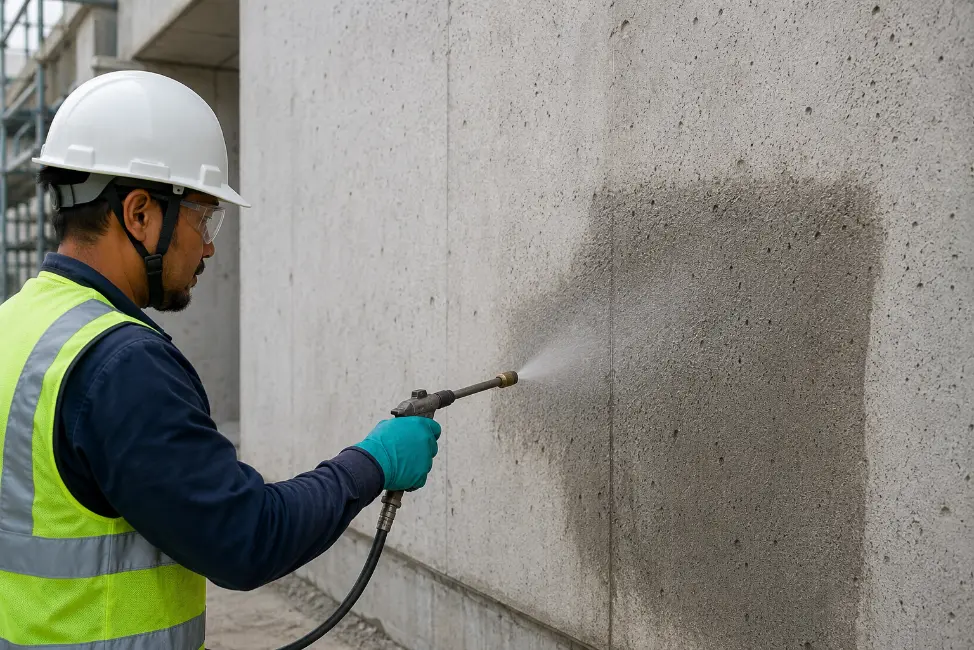
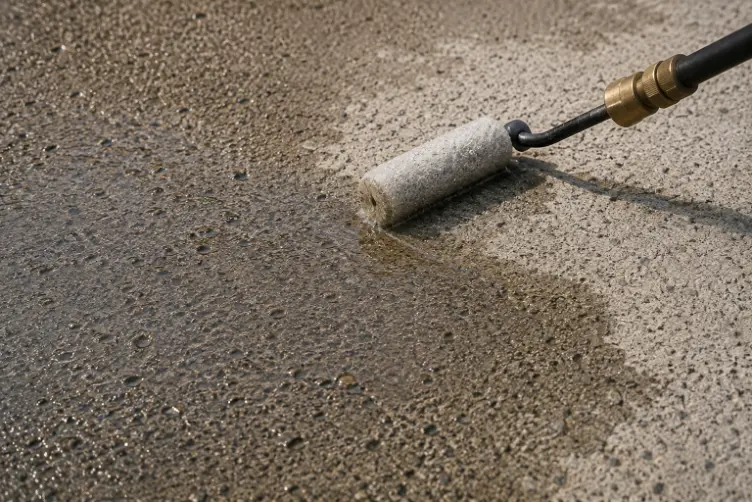
Silane waterproofing is a penetrating treatment used mainly on concrete, masonry, brick, and other absorbent mineral surfaces. The silane compound moves into the pores of the material and reacts with the substrate to produce a hydrophobic effect.
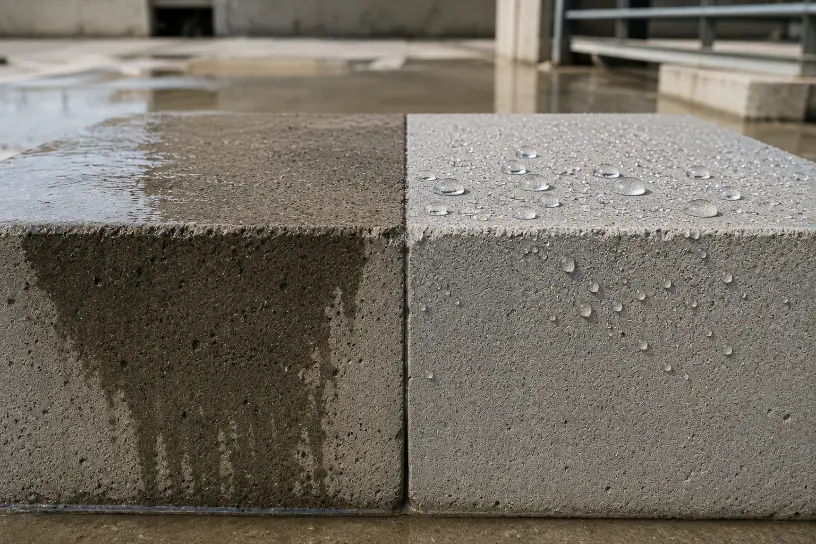
In simple terms, the treatment makes the pores less receptive to liquid water. Rainwater is more likely to bead or run off instead of being absorbed into the surface.
This makes silane useful for structures that need protection from rain and moisture without significantly changing their original appearance.
How Does Silane Waterproofing Work?
The process is based on penetration and chemical reaction rather than the formation of a thick surface coating.
A typical application involves:
- Cleaning the surface: Dust, dirt, grease, loose particles, and other contaminants are removed.
- Repairing defects: Cracks, damaged concrete, and weak areas should be repaired before treatment.
- Applying the silane: The product is applied evenly using the method recommended by the manufacturer.
- Penetration: The silane moves into the pores and capillaries of the substrate.
- Curing: The material reacts within the substrate and develops its water-repellent properties.
The surface should be allowed to cure for the required period before being exposed to rain or other conditions that could affect the treatment.
Where Is Silane Waterproofing Used?
Silane waterproofing is commonly considered for concrete and masonry exposed to weather and moisture.
Common applications include:
- Concrete bridges and flyovers
- Building facades
- Parking decks and garages
- Balconies and terraces
- Retaining walls
- Concrete pavements
- Precast concrete components
- Masonry walls
- Stone surfaces
- Marine and coastal structures
It is especially useful where reducing water and chloride penetration is important for protecting reinforced concrete.
Benefits of Silane Waterproofing
Silane treatment offers several practical advantages:
- Reduces water absorption: It limits the amount of liquid water entering porous surfaces.
- Penetrates the substrate: Protection is provided below the immediate surface rather than only on top.
- Maintains breathability: Properly selected silane treatments generally allow water vapour to escape.
- Preserves appearance: It usually does not create a thick visible film or substantially change the surface finish.
- Helps protect concrete: Lower water and chloride absorption can help reduce conditions that contribute to reinforcement corrosion.
- Suitable for exposed structures: It can be useful for surfaces regularly exposed to rain and splash water.
Silane Waterproofing vs Traditional Waterproof Coating
| Feature | Silane Waterproofing | Surface Waterproof Coating |
|---|---|---|
| Application | Penetrates the substrate | Forms a surface layer |
| Appearance | Usually maintains the existing appearance | May change surface appearance |
| Vapour permeability | Generally maintained | Depends on coating type |
| Crack bridging | Limited | Some systems can bridge small cracks |
| Water absorption | Reduces absorption | Creates a surface barrier |
| Typical use | Concrete and masonry protection | Areas requiring a continuous waterproof layer |
The choice depends on the type of moisture problem, substrate condition, and level of waterproofing required.
Also Read:Repair Mortar:Application and Benefits
Important Application Considerations
Good surface preparation is essential. The substrate should be clean and free from materials that could prevent penetration. Application should also follow the manufacturer’s recommended coverage rate, drying conditions, and curing requirements.
A test area is often useful before treating a large surface. It can help confirm how much product is needed and whether the finished appearance is acceptable.
Silane waterproofing should not be treated as a solution for every type of water problem. Active leaks, large cracks, structural defects, and areas exposed to continuous hydrostatic pressure may require other repair or waterproofing systems.
Also read:PS Sealant: Buying Guide
Conclusion
Silane waterproofing is a useful method for reducing water absorption in concrete, masonry, brick, and other porous surfaces. Its penetrating action makes it different from conventional surface coatings and can provide water repellency without creating a heavy visible layer.
For the best results, the substrate should be properly prepared and the product should be selected according to the exposure conditions and construction material. When used in the right application, silane waterproofing can help improve the long-term durability of moisture-exposed structures.
Frequently Asked Questions
1. What is silane waterproofing used for?
Silane waterproofing is mainly used to reduce the absorption of rainwater and moisture into porous concrete, masonry, brick, and stone surfaces.
2. Does silane waterproofing form a coating?
No. Silane is a penetrating treatment. It enters the pores of the substrate and develops water-repellent properties within the material.
3. Can silane waterproofing seal cracks?
No. Silane does not replace crack repair. Significant cracks and damaged areas should be repaired separately before applying the treatment.
4. Is silane waterproofing suitable for concrete?
Yes. It is commonly used on suitable concrete surfaces, particularly structures exposed to rain, moisture, and chloride-bearing water.
5. Does silane waterproofing change the appearance of concrete?
Generally, a properly selected and applied silane treatment has little effect on the original appearance of concrete or masonry. A small test area is recommended before full application.