Silicone hair beads look like a tiny accessory, yet they can turn a plain braid into a finished style in minutes. They are soft, light and come in more colours than most people can use, which is why parents, stylists and braid fans keep reaching for them.
Before you buy a bag, a few details are worth knowing. The size of the bead opening, the weight of the finished style and the safety of small beads around children all affect how well they work. This guide covers each one in plain language.
Key Takeaways
- Silicone hair beads are soft, flexible beads that slide onto braids, twists, locs and ponytail tails.
- The opening must match your braid. Many craft beads have holes that are far too small for hair.
- Fewer beads look neater and feel lighter than a heavy cluster.
- Tight or weighted styles can strain the scalp, and pain is a sign the style is too tight.
- Loose beads are a choking risk for children under three, so keep them away from toddlers.
- Wash the beads in mild soapy water and dry them fully before storing.
What Are Silicone Hair Beads?
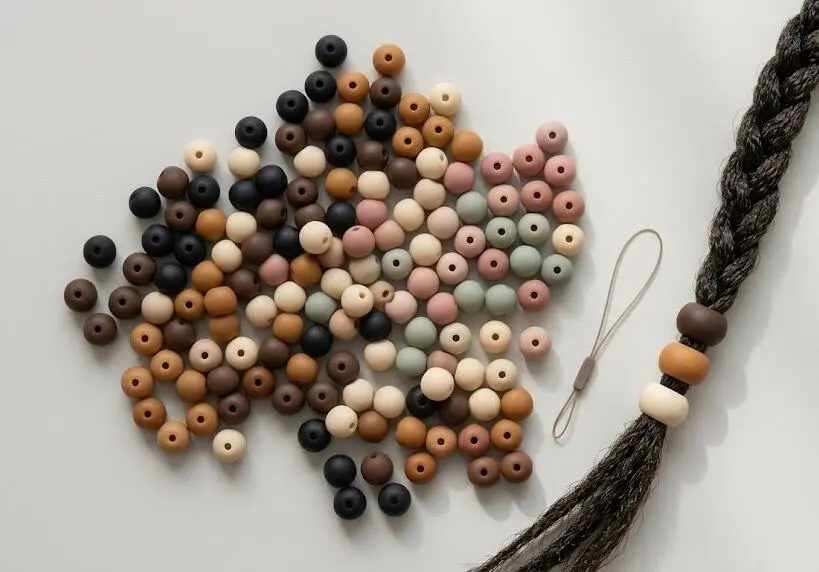
Silicone hair beads are small rubbery beads with a wide hole through the middle. You thread them onto the tail of a braid, twist or loc, then lock them in place with a small elastic band at the end.
Unlike hard plastic or wooden beads, they give a little when pressed. That softness is kinder against the face, neck and pillow. Most sellers describe them as food-grade or BPA-free silicone, but that label is the seller’s claim, so it is worth reading the product details.
You will also see them sold as silicone beads for hair, soft hair beads or rubber hair beads. The idea is the same under every name.
Do not confuse them with silicone-lined micro beads. Those tiny metal rings, lined with silicone, hold hair extensions in place. They share part of the name but do a different job and are not made for decorating braids.
Why People Love Them
Comfort comes first. The material is soft and light, so the beads do not clack loudly or dig into the skin when you lie down.
Colour is the next draw. Silicone beads for hair come in solid shades, pastels and printed designs, so matching an outfit, a team colour or a holiday is easy.
Hair beads for braids are quick to use, too. A set of braids can go from plain to finished in a few minutes, and the same beads can be reused on the next style.
They also suit many hair types. Box braids, cornrow tails, twists, locs, children’s plaits and braided wigs can all carry them, as long as the opening fits.
Silicone vs Acrylic, Wood and Metal Beads
Material changes how soft hair beads feel, how much they weigh and how they age. Here is a quick side-by-side.
| Material | Feel | Weight | Watch out for |
| Silicone | Soft and flexible | Light | Can collect lint and scratch |
| Acrylic | Hard and glossy | Medium | Can chip or crack |
| Wood | Warm, natural look | Medium to heavy | Can splinter or swell when wet |
| Metal | Cool and solid | Heavy | Can snag and pull on hair |
Weight matters more than most people expect. Every extra gram hangs from the end of a braid, so lighter beads are an easier choice for children and for long styles.
How to Choose the Right Size and Opening
Size decides whether a bead fits at all. Round beads of roughly 10 to 12 mm are common, but the opening is the number to check.
Many craft beads have holes of only 1 to 3 mm. That suits string and bracelets, not hair. A braid needs a much wider channel, so look for hair beads for braids or confirm the hole size in the listing before you order.
As a rule, thin children’s plaits suit smaller beads, while thick box braids, twists and locs usually need larger openings. Order a small test pack first. A bead should slide along the braid freely without forcing.
This table gives typical ranges seen in shop listings. Treat it as a starting point and test on your own braid.
| Braid type | Typical bead size | Typical opening | Beads per braid |
| Thin plaits and small braids | 6 to 10 mm | About 5 mm | 1 to 3 |
| Standard box braids and twists | 10 to 12 mm | 5 to 7 mm | 3 to 5 |
| Thick braids and locs | 12 to 14 mm or larger | 7 mm or more | 3 to 5 |
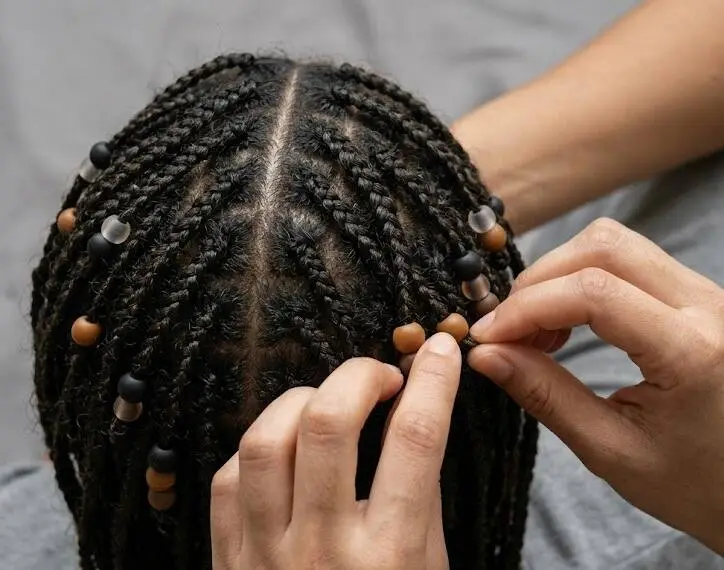
How to Put Silicone Hair Beads in Braids
You need a braid, a few beads, a small elastic band and a threading tool. Most sets include a beader or bead needle.
- Braid the hair first and leave a few inches free at the tail. Keep the braid snug, never tight against the scalp.
- Load a few beads onto the threader in the order you want them.
- Pass the braid tail through the tool, then pull it through the beads.
- Slide each bead up the braid and space them out.
- Close the end with an elastic band just below the last bead so nothing slips off.
No tool at hand? Fold a short piece of thin wire or dental floss into a loop, feed the braid tail through it and pull the beads along.
Two other low-cost methods also work.
- Bobby pin: Hook the braid tail around the bent end of a bobby pin, then use the pin as a tiny pulling tool to draw the hair through each bead.
- Elastic band: Fold a thin band in half, loop the braid tail through the fold and pull the tail through the bead with the band.
Beads Keep Sliding Down? Try This
Slipping usually comes from one of three things: an opening that is too wide for the braid, an elastic band that is too loose, or very smooth, freshly conditioned hair.
- Choose a bead whose opening only just clears the braid.
- Wrap the elastic twice around the braid below the last bead.
- Braid a little further before adding beads, so they sit on a firmer part of the braid.
- Add beads to hair that has some grip, not slippery strands.
- Check them after a few hours and re-secure any that have moved.
Hairstyle Ideas That Work
Simple styles usually look best. Try one of these.
- A single bead at the tip of each box braid for a clean, classic finish.
- Alternating two colours down a set of twists.
- A ponytail with a few beaded braids woven through.
- Beads on two face-framing strands for a lighter, softer look.
Three to five beads per braid is usually plenty. Beyond that, the style starts to look crowded and feels heavy.
Are They Safe for Hair, Scalp and Kids?
The beads themselves are gentle. The style around them decides how kind the whole look is to your hair.
The American Academy of Dermatology warns that tight braids can cause traction alopecia, a type of hair loss from repeated pulling. Its advice includes loosening braids around the hairline, keeping braids shorter because long hair pulls harder, and wearing them for no longer than six to eight weeks.
Extra weight at the ends adds to that pull, especially on children. A simple rule applies: if the style hurts, it is too tight, so take it down.
Young children bring a second concern. Loose beads are small parts and can be a choking hazard for children under three. Keep beads away from toddlers, check the bands often on older kids and cut off any bead that comes loose.
If you notice thinning, soreness or small bumps near the hairline, stop wearing the style and speak to a doctor or dermatologist.
Downsides to Know Before You Buy
- Silicone beads for hair can attract lint, dust and product build-up, especially in grooves on printed or textured beads.
- Surfaces can pick up scratches when they rub against rough items.
- Very cheap beads may have rough edges or a strong chemical smell. Send those back.
- Elastic bands can snap, so beads may slide off during active play.
How to Choose Quality Silicone Hair Beads
A little checking saves a lot of frustration. When shopping for hair beads for braids, look for clear material details, such as food-grade or BPA-free silicone, and confirm the hole size.
Smooth, evenly sized beads thread more easily and look neater. Buy extra elastic bands and a beading tool at the same time so you are not stuck halfway through a style.
How to Clean and Store Silicone Hair Beads
Rinse the beads in warm water with a drop of mild soap. Brush the grooves lightly with a soft brush, rinse well and let them air-dry completely.
Clear any stray hairs from the openings with a pin or a thin tool. Then store the beads by size in a divided box so they stay clean and easy to find.
How to Remove Beads Without Damaging Hair
Never drag a bead down the braid. Use small scissors to cut the elastic band carefully, keeping the blades well away from hair and scalp.
Slide the beads off gently, then detangle the braid ends before you wash your hair.
Faqs
What are silicone hair beads used for?
They decorate braids, twists, locs and ponytail tails. People use them for fun, for school hairstyles and as a finishing touch on protective styles.
Are silicone hair beads safe for kids?
They are fine for most school-age children when the style is gentle and an adult checks the bands. For children under three, skip them completely because loose beads are a choking hazard.
Do silicone hair beads damage hair?
The beads rarely cause harm on their own. Problems come from tight braiding, added weight and leaving a style in too long. Follow the six to eight week guidance from dermatologists and loosen any style that hurts.
How do you put silicone beads in braids?
Braid the hair, thread the beads onto a beading tool, pull the braid tail through and finish with an elastic band below the last bead.
Can you sleep with silicone hair beads in?
Many people do, because the beads are soft and light. Keep the style loose, tie the braids up or wear a satin bonnet, and avoid heavy clusters that pull on the scalp overnight. Take them out if anything feels sore, and skip loose beads at bedtime for young children.
Bottom Line
Silicone hair beads are a low-cost way to give braids personality, as long as you match the bead opening to the braid and keep the style loose. Choose lighter, soft hair beads, use fewer of them, keep little ones safe and take the style down within about six to eight weeks. Do that, and the beads stay a fun finishing touch instead of a source of trouble.