Choosing the right floor becomes especially important in places where the surface has to deal with heavy traffic, machinery, moisture, chemicals, or frequent cleaning. A regular concrete floor may not always provide the protection or finish needed for these conditions. This is where PU flooring can be a useful option.
Key Takeaways
- PU flooring provides durable and seamless surface protection.
- It can resist wear, moisture, chemicals, and temperature changes.
- Different PU systems suit different industrial and commercial needs.
- Proper preparation, installation, and maintenance improve floor performance.
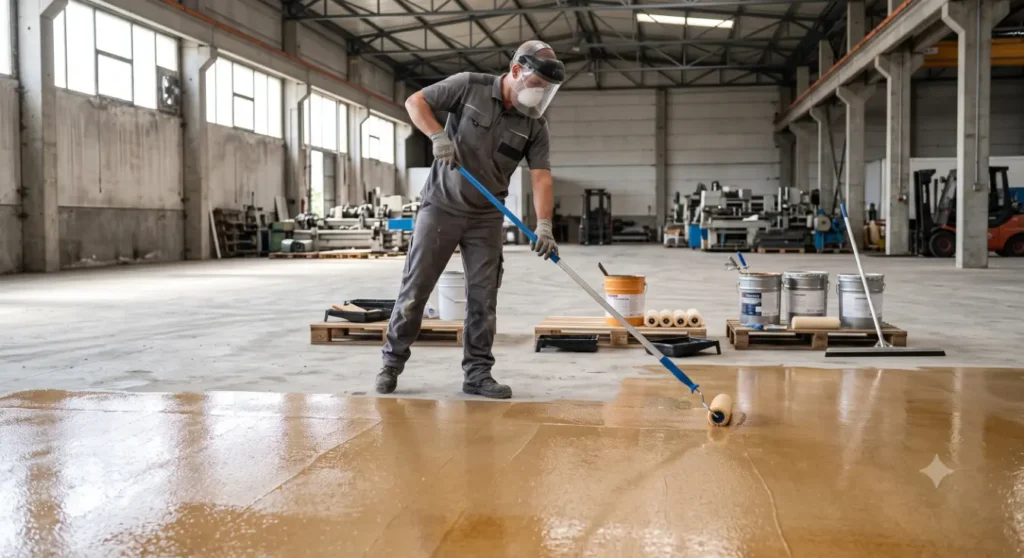
PU flooring, or polyurethane flooring, is a resin-based floor system that is applied over a prepared concrete surface. It creates a continuous protective layer that can be designed for different industrial, commercial, and hygiene-sensitive environments.
Also Read: Floor Hardener: Applications and Uses
What Is PU Flooring?
PU flooring is made using polyurethane resin and other components that are combined to form a tough floor surface. Once applied and properly cured, the system creates a seamless finish over the concrete substrate.
One of its practical advantages is that it does not have the regular joints found in tiled floors. This can make cleaning easier and reduce places where dirt or moisture can collect.
However, the performance of a PU floor depends on more than the material itself. The condition of the concrete, surface preparation, product selection, application technique, and curing conditions all have an effect on the finished floor.
Why Choose PU Flooring?
PU flooring is used in demanding spaces because it can offer several useful properties.
- Handles daily wear: It can withstand regular movement of people, carts, and equipment when the appropriate system is selected.
- Resists abrasion: The surface can withstand repeated use and mechanical wear.
- Offers chemical resistance: Certain formulations can tolerate exposure to oils, cleaning agents, and specific chemicals.
- Suitable for wet areas: Properly specified systems can perform well in environments where water and moisture are common.
- Tolerates temperature changes: Some PU systems are designed for areas where the floor experiences changing temperatures.
- Easy to maintain: The seamless finish makes routine sweeping and washing relatively straightforward.
- Slip-resistant finishes available: A suitable texture can be incorporated where the working environment requires additional grip.
- Clean appearance: PU flooring can provide a neat, uniform surface in both industrial and commercial settings.
Different Types of PU Flooring
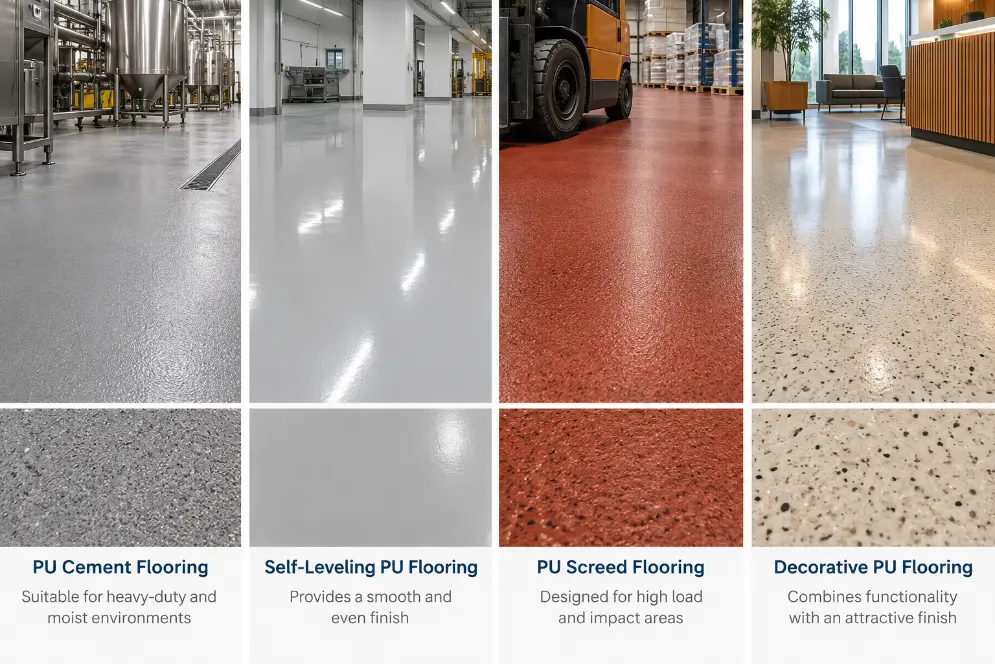
There is no single PU flooring system that works for every application. The formulation and thickness are usually selected according to the conditions at the site.
| PU Flooring Type | Where It May Be Used | Suitable For |
| PU Cement | Food plants and industrial facilities | Moisture, chemicals and heavy use |
| PU Screed | Manufacturing and heavy-duty areas | High loads and impact |
| Self-Leveling PU | Commercial and industrial interiors | Smooth, even surfaces |
| Decorative PU | Offices, showrooms and commercial spaces | Appearance with functional performance |
A flooring specialist can assess the site and recommend the appropriate system based on traffic, temperature, chemical exposure, moisture, and substrate condition.
Common Applications of PU Flooring
PU flooring is found in many places where floors need to remain functional under demanding conditions. Typical applications include:
- Food and beverage processing units
- Commercial and industrial kitchens
- Pharmaceutical facilities
- Hospitals and laboratories
- Warehouses
- Manufacturing plants
- Workshops and service areas
- Cold storage facilities
- Chemical processing areas
- Commercial buildings
For example, a food processing floor may need to cope with regular washing and moisture, while a manufacturing floor may need greater resistance to machinery and impact. These different requirements influence the choice of flooring system.
PU Flooring Compared With Epoxy Flooring
PU and epoxy floors are often considered for similar projects, but their characteristics are different.
| Feature | PU Flooring | Epoxy Flooring |
| Surface characteristics | Tough with some flexibility | Hard and rigid |
| Temperature variation | Suitable systems handle thermal changes well | May be less tolerant of movement |
| Wear resistance | Good, depending on formulation | Generally high |
| Chemical resistance | Depends on the selected system | Generally strong |
| Typical applications | Demanding industrial and wet environments | Industrial and commercial areas |
The decision should be based on actual site conditions. Factors such as moisture, thermal movement, chemical exposure, impact, and expected traffic should be considered before selecting either system.
How Is PU Flooring Installed?
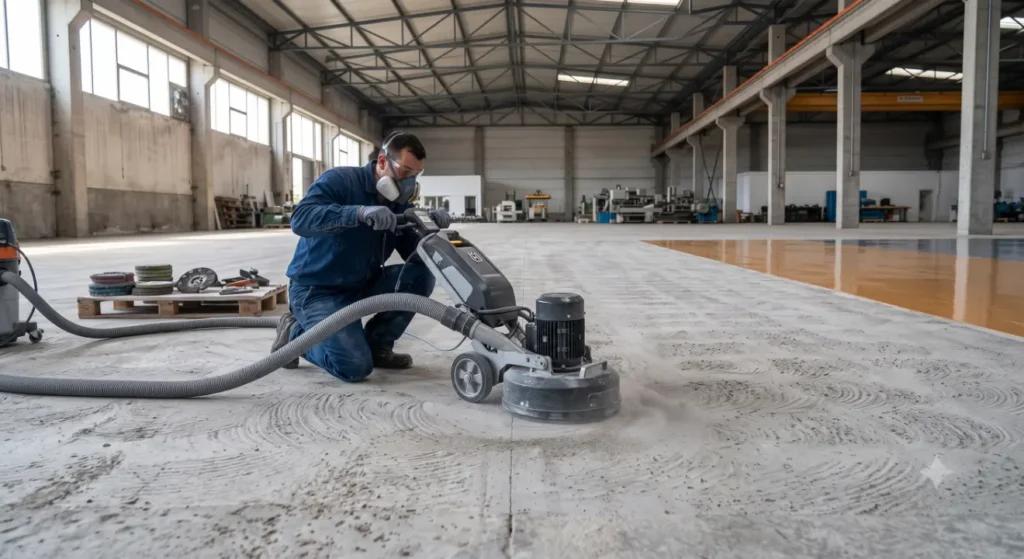
A successful installation starts with the concrete underneath the flooring. The substrate needs to be properly assessed and prepared before any resin is applied.
The process generally includes:
- Inspecting the existing concrete
- Removing dust, grease, loose material, and other contaminants
- Mechanically preparing the surface
- Repairing suitable cracks and damaged areas
- Applying the recommended primer
- Installing the PU flooring system
- Adding the required finishing layer or texture
- Allowing sufficient curing time
- Inspecting the finished floor before putting it into service
Poor preparation can lead to problems such as weak adhesion, blistering, cracking, or premature deterioration. For this reason, installation should follow the flooring manufacturer’s technical requirements.
Also Read: Construction Chemicals Grout
Maintaining a PU Floor
PU flooring does not mean maintenance can be ignored. Simple, regular care can help keep the surface in good condition.
- Remove dust and loose particles regularly.
- Clean spills without unnecessary delay.
- Use cleaning chemicals that are compatible with the flooring.
- Avoid abrasive cleaning methods unless recommended.
- Inspect areas that experience heavy traffic.
- Address cracks or damaged sections promptly.
- Follow the maintenance schedule provided for the specific flooring system.
Frequently Asked Questions
1. What does PU flooring stand for?
PU flooring stands for polyurethane flooring. It is a resin-based flooring system generally applied over a prepared concrete substrate.
2. Where is PU flooring commonly used?
It is commonly used in factories, warehouses, food processing facilities, kitchens, hospitals, laboratories, pharmaceutical units, workshops, and other areas with demanding flooring requirements.
3. Is PU flooring suitable for wet environments?
Certain PU systems are designed to perform well in wet or frequently washed areas. The specific product should be selected according to the level of moisture and cleaning involved.
4. Can PU flooring withstand heavy machinery?
Yes, some PU systems are designed for heavy-duty applications. The flooring thickness and formulation should be chosen according to the equipment, load, impact, and traffic expected.
5. How should PU flooring be cleaned?
Regular sweeping followed by cleaning with a compatible detergent is generally suitable. The manufacturer’s cleaning recommendations should always be followed.