Silicone nose pads for glasses are the best solution for people who experience constant slipping of their glasses, sore and red marks on their bridge, and continuous pressure throughout the day. Despite the fact that these items are rather tiny, they become the major contact between the face and the glasses. Thanks to an excellent ability to distribute the weight of the frame and the natural high grip of this material, silicone makes your eyewear stay in place. Opticians frequently recommend silicone nose pads for glasses for patients with sensitive skin prone to friction irritation or allergies.
Table of Contents
Choosing Silicone Nose Pads for Glasses
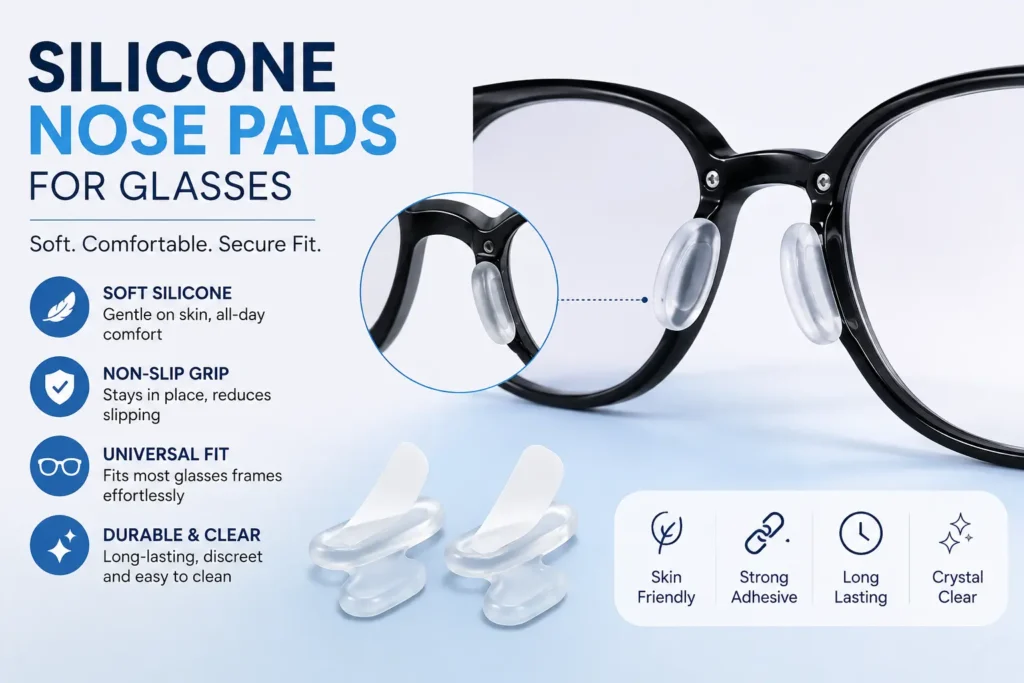
Although the nose pad is made of hard plastics such as Polycarbonate (PC) and Rigid PVC, the material of choice for daily wearing is silicone. High-grade silicone nose pads are specially designed to prevent red marks and uncomfortable skin indentation.
- Excellent Cushioning: The soft and flexible silicone conforms to the natural curve of the nasal ridge, thus avoiding deep pressure grooves.
- Anti-Slippery Grip: Due to its high friction coefficient, silicone resists slipping off the frame when sweating or bending forward.
- Safety for Hypersensitive Skin: The high-quality silicone causes less skin irritation; therefore, it is recommended for sensitive and allergy-prone individuals.
Comparing Eyeglass Nose Pad Materials
If your wire frames feel uncomfortable after long hours of work, fitting silicone nose pads for glasses offers instant pressure relief. Upgrading your eyewear with silicone nose pads provides instant relief from heavy frames resting on your nasal bridge.
Some of the common materials used in nose pads are as follows:
| Material Type | Flexibility & Softness | Grip & Anti-Slip | Durability | Best Suited For |
| Silicone | High (Malleable & Cushioning) | Excellent (High Friction) | Moderate (Requires periodic cleaning) | Daily wearers, active lifestyles, and sensitive skin |
| Polycarbonate (PC) | Rigid (Hard plastic) | Low (Smooth surface) | High (Porous-resistant & tough) | Wearers seeking long-lasting, ultra-light hard pads |
| PVC | Moderate (Soft or hard variants) | Medium | High (Resists oil and dirt buildup) | Standard budget frames requiring low maintenance |
Common Nose Pad Shapes & Their Functions
Upgrading to silicone nose pads for glasses helps eliminate painful red indentations caused by hard plastic alternatives.
However, not all nose pads are equal, and the choice of a correct nose pad may influence the way the glasses sit:
- Teardrop / Pear: The most conventional shape. The tapered tip and broader base help balance weight evenly along the sides of the nose. Perfect for regular metal frames.
- Oval / Round: Provides symmetry and minimal visibility. The round nose pads give a small area of concentration of the weight and are perfect for light or rimless glasses.
- D-Shaped / Symmetrical: Has a flat inner surface and curved outer surface. This shape helps to avoid the problem of pinching and provides additional support for heavy lenses.
- Strap / Saddle (One Piece): Consists of one continuous bridge piece that goes across both sides of the nose. Helps to spread the weight of the frame across the whole bridge of the nose.
Common Mounting Types
People with active lifestyles often switch to silicone nose pads for glasses because the skin-gripping material prevents frames from slipping during movement. You can choose from screw-in, push-in, or stick-on nose pads depending on your specific frame structure.
- Screw-in: Held to the frame arm through a small optical screw. Very prevalent in traditional metallic frames.
- Push-in / Snap-in: Has a rectangular notch which gets snapped directly onto the frame box without micro screws.
- Adhesive / Stick-on: The peel-and-stick adhesive pads which attach themselves to the pre-fabricated frame bridges.
Final Thoughts
For manufacturers and optical components processors, producing durable, non-irritating, and tear-resistant nose pads requires exceptionally high-grade raw polymers. Biopol Chemicals is a leading supplier of high-purity silicone materials and specialty polymer compounds engineered for optimal biocompatibility, flexibility, and mechanical strength.
Whether you are producing medical-grade components or soft optical accessories, sourcing raw polymers from Biopol Chemicals ensures consistent quality, superior tactile softness, and long-lasting durability for consumer applications.
Frequently Asked Questions
1. What makes the silicone nose pads become yellow after a while?
This is due to the process of oxidation of the silicone, which results from the absorption of facial oils, sweat, sunlight, and makeup after prolonged use.
2. How frequently should I replace the silicone nose pads for glasses?
They should be replaced after 6 to 12 months for hygiene, effectiveness, and comfort. Athletes and outdoor enthusiasts often prefer silicone nose pads because they maintain a tight, non-slip hold even during intense sweat production.
3. Are silicone nose pads compatible with acetate (plastic) frames?
The answer is yes because they are placed directly on plastic frames to give additional lift and grip.
4. How do I clean my silicone nose pads?
The process is easy; one needs to wipe the pads using a microfiber cloth and warm soapy water.
Also Read here