Construction projects rely on more than cement, sand, aggregates, and water. In many cases, chemical additives are needed to improve the performance of concrete, mortar, grout, and other building materials. Construction chemical additives can help control setting time, improve workability, reduce water requirements, increase durability, and protect structures from moisture and environmental damage.
Key Takeaways
- Improve Concrete Performance: Additives can improve workability, setting time, water reduction, and durability.
- Protect Against Moisture: Waterproofing chemicals help protect concrete, walls, roofs, foundations, and other structures.
- Support Repairs: Repair compounds, grouts, and bonding agents help restore damaged concrete and structural surfaces.
- Choose Carefully: Product selection, correct dosage, compatibility, and proper application are essential for reliable results.
Choosing the right product is important because every construction project has different material, weather, and performance requirements.
What Are Construction Chemical Additives?
Construction chemical additives are specialized substances added to construction materials or applied to surfaces to change or improve their properties. Some are mixed directly into concrete, while others are used as coatings, sealants, bonding agents, repair materials, or waterproofing systems.
Also Read: Chemical Hazards in Construction
Common Types of Construction Chemical Additives
There are several categories of construction chemicals, each designed for a specific purpose.
| Type | Main Purpose | Common Applications |
| Plasticizers | Improve workability and reduce water | Concrete and mortar |
| Superplasticizers | Provide high workability with less water | High-strength concrete |
| Accelerators | Speed up setting and early strength development | Cold weather and urgent repairs |
| Retarders | Delay setting | Hot weather and large concrete pours |
| Waterproofing chemicals | Reduce water penetration | Basements, roofs, tanks |
| Repair compounds | Restore damaged concrete | Cracks, spalling, surface repairs |
| Grouting chemicals | Fill gaps and provide support | Foundations, machinery, structural work |
| Sealants | Protect joints from water and air | Expansion joints, windows, facades |
1. Concrete Admixtures
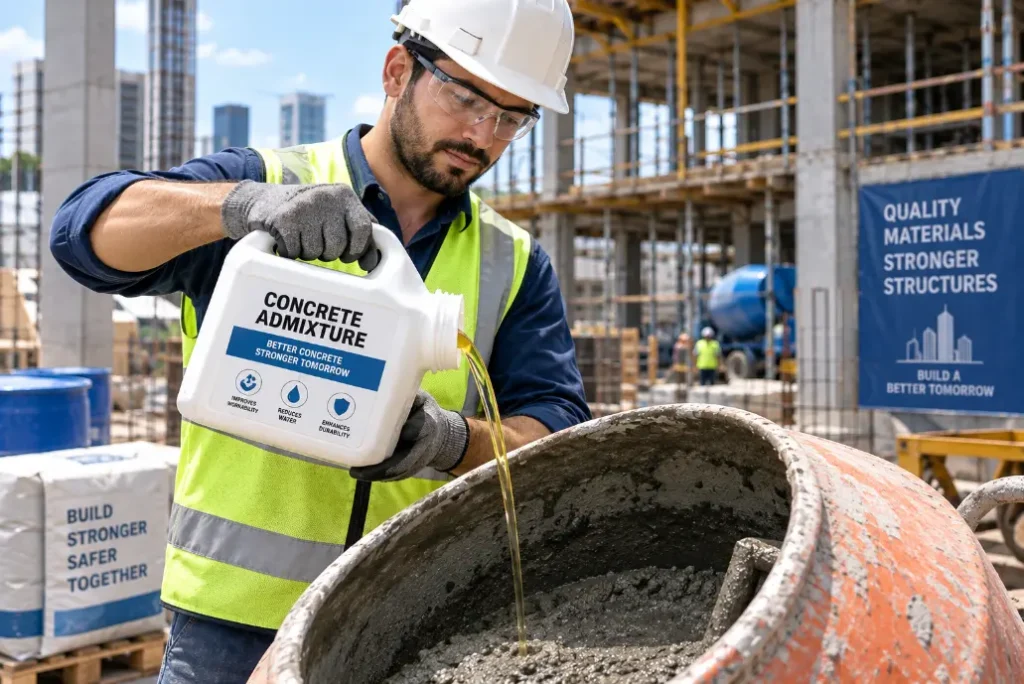
Concrete admixtures are added during mixing to change the behavior of fresh or hardened concrete. Plasticizers and superplasticizers can improve workability while allowing the mix to use less water.
Accelerating admixtures can help concrete develop strength sooner, while retarders can slow setting when workers need more time to place and finish concrete. The correct product and dosage depend on the concrete mix and site conditions.
2. Waterproofing Chemicals
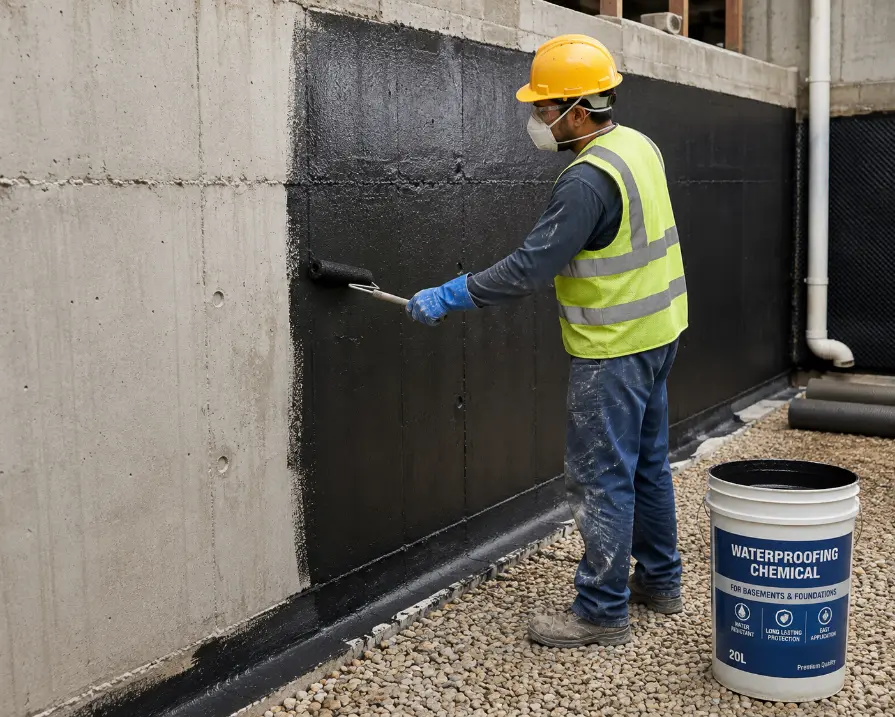
If moisture and water penetrate various parts of a building, issues such as dampness, cracks, fungal growth, and concrete deterioration can occur. Waterproofing chemicals are used to mitigate these problems. They help protect concrete, walls, roofs, basements, and foundations from water-related damage.
They may be used in:
- Basements and foundations
- Bathrooms and wet areas
- Roof slabs
- Water tanks
- Tunnels
- Swimming pools
- Concrete retaining structures
The waterproofing system should be selected according to the source of moisture and the condition of the surface.
3. Concrete Repair Chemicals
Concrete can deteriorate because of moisture, corrosion, poor workmanship, heavy loads, chemical exposure, or natural aging. Repair chemicals help restore damaged areas and improve the bond between old and new materials.
Common products include repair mortars, epoxy compounds, bonding agents, crack fillers, and corrosion protection materials.
4. Grouting and Sealants
Grouting chemicals are used to fill voids and gaps beneath machinery, structural components, and foundations. They can also be used for anchoring and certain repair applications.
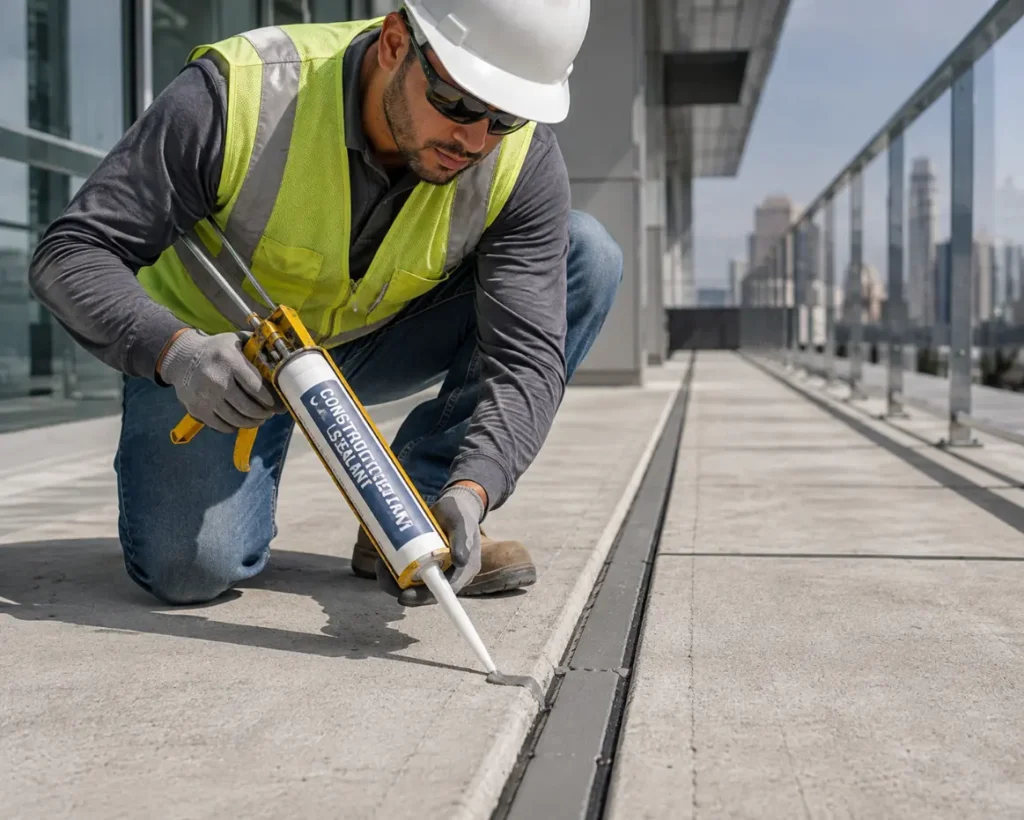
Sealants, on the other hand, are mainly used to protect joints from water, dust, and air while allowing controlled movement. They are often found around windows, building facades, expansion joints, and concrete structures.
Benefits of Construction Chemical Additives
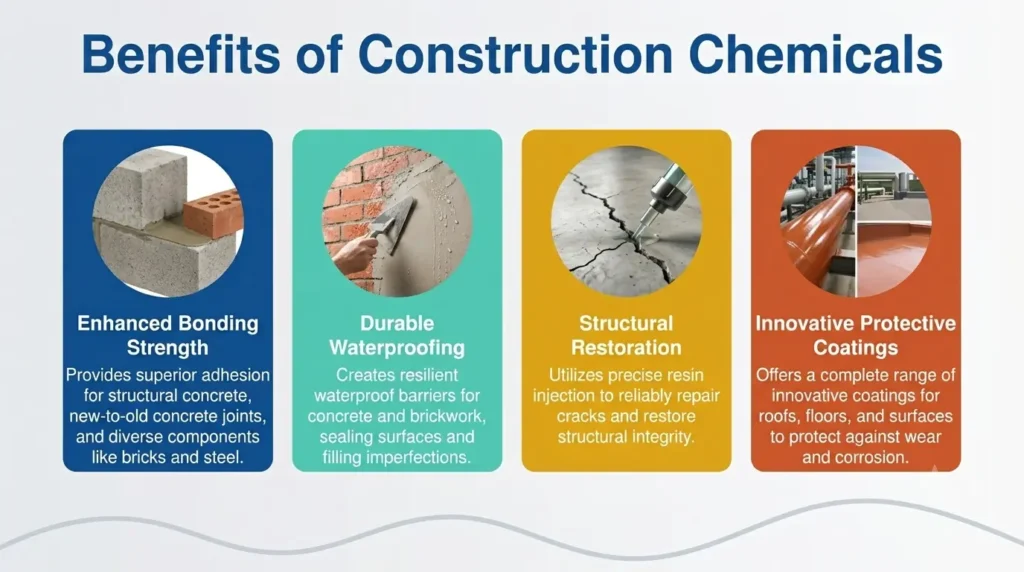
When properly selected and applied, construction chemicals can offer several benefits:
- Better concrete workability
- Lower water requirements
- Improved setting control
- Better resistance to moisture
- Stronger bonding between materials
- Support for concrete repair
- Improved joint protection
- Better durability in demanding environments
- Longer service life for certain construction systems
However, chemical additives cannot compensate for poor mix design, inadequate curing, unsuitable materials, or improper installation.
How to Select the Right Additive
The right construction chemical depends on the project’s specific requirements. Before selecting a product, consider:
- Material: Check whether the product is compatible with the concrete, mortar, cement, or substrate.
- Application: Determine whether it will be mixed into the material or applied to the surface.
- Site conditions: Temperature, humidity, water exposure, and chemical exposure can affect product performance.
- Required performance: Consider workability, setting time, water resistance, bonding, strength, or durability requirements.
- Dosage: Follow the manufacturer’s technical instructions carefully.
- Testing: For important projects, trial mixes and compatibility testing can help confirm suitability.
Why Proper Application Matters
Even a high-quality construction chemical may not perform properly if it is incorrectly mixed, stored, or applied. Contractors should follow the manufacturer’s instructions for preparation, dosage, surface treatment, application, curing, and storage.
Proper workmanship is particularly important for waterproofing, concrete repair, joint sealing, and structural grouting because small application errors can affect long-term performance.
Also Read: Construction Chemical Types
Conclusion
Construction chemical additives have become an important part of modern building and infrastructure work. From concrete admixtures and waterproofing chemicals to repair compounds, grouts, and sealants, these products help address specific construction challenges.
Frequently Asked Questions
What are construction chemical additives used for?
They are used to modify the properties of concrete, mortar, grout, and other construction materials. They can improve workability, setting behavior, water resistance, bonding, repair performance, and durability.
Are concrete admixtures and construction chemicals the same?
No. Concrete admixtures are one category of construction chemicals. The wider construction chemical category also includes waterproofing materials, repair compounds, grouts, sealants, coatings, and bonding agents.
Can construction chemicals improve concrete durability?
Yes. Certain products can improve resistance to moisture, environmental exposure, and other causes of deterioration. Their effectiveness depends on proper product selection, dosage, mix design, and application.
Are construction chemical additives necessary for every project?
No. Their use depends on the project’s requirements. Standard concrete may not require specialized additives, while demanding applications may benefit from specific chemical solutions.
How should construction chemicals be stored?
Storage requirements vary by product. In general, products should be kept according to the manufacturer’s instructions, protected from unsuitable temperatures, moisture, contamination, and direct exposure when required.