Grouting is a common part of construction, but choosing the right grout can make a big difference in how well a structure performs over time. Construction chemicals grout is used to fill gaps, repair concrete, support heavy equipment, seal cracks, and improve the connection between different construction elements.
Key Takeaways
- Chemical grout fills gaps, cracks, and structural voids.
- Different grout types suit different construction needs.
- Proper selection improves strength and durability.
- Correct preparation and curing ensure better results.
Unlike basic cement and water mixtures, chemical grouts are formulated for specific jobs. They can offer better strength, flow, bonding, water resistance, and durability depending on the product and application.
What Is Construction Chemicals Grout?
Construction chemicals grout is a specially formulated material used to fill spaces, voids, cracks, joints, and gaps in concrete and other structural components. It can be used in both new construction and repair work.
Common grout formulations include:
- Cement-based grout
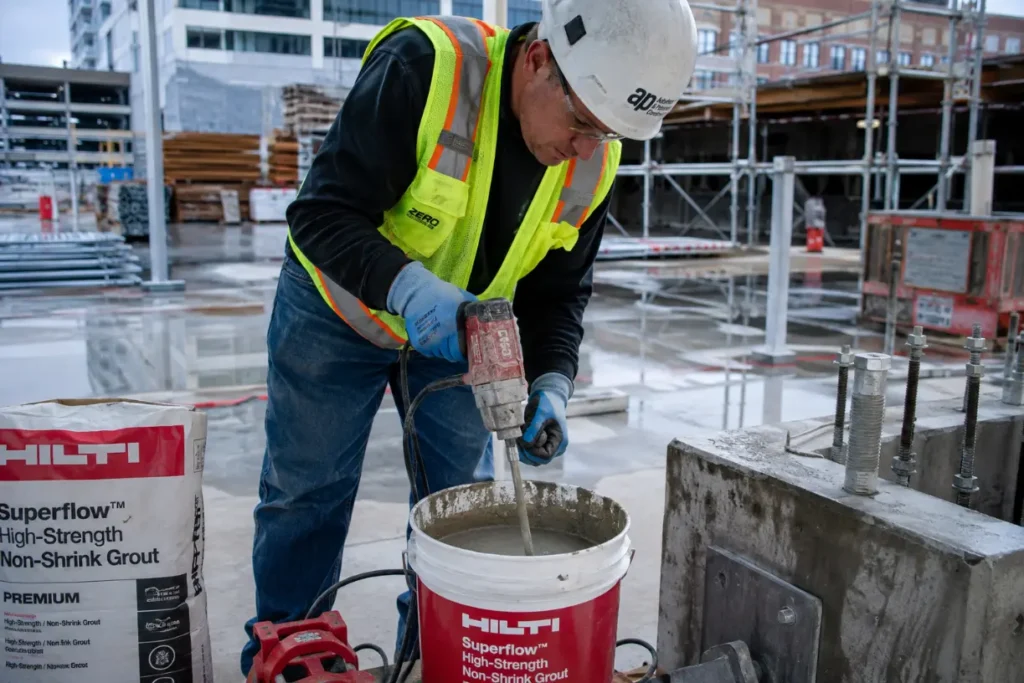
- Non-shrink grout
- Epoxy grout
- Polyurethane grout
- Injection grout
- High-strength grout
Each type has different properties, so the right choice depends on where it will be used and what conditions it needs to withstand.
Also Read: Chemicals Used in Road Construction
Types of Construction Chemical Grout
1. Cement-Based Grout
Cement-based grout is widely used for general construction work. It is often used for filling gaps, supporting structural elements, and installing precast components.
It is suitable for applications where standard strength and durability are required.
2. Non-Shrink Grout
Non-shrink grout is designed to maintain good contact with the surrounding surfaces after curing. It is commonly used below machinery, steel columns, and structural base plates.
Typical applications include:
- Machinery foundations
- Steel column base plates
- Bridge bearings
- Equipment supports
- Precast concrete connections
3. Epoxy Grout
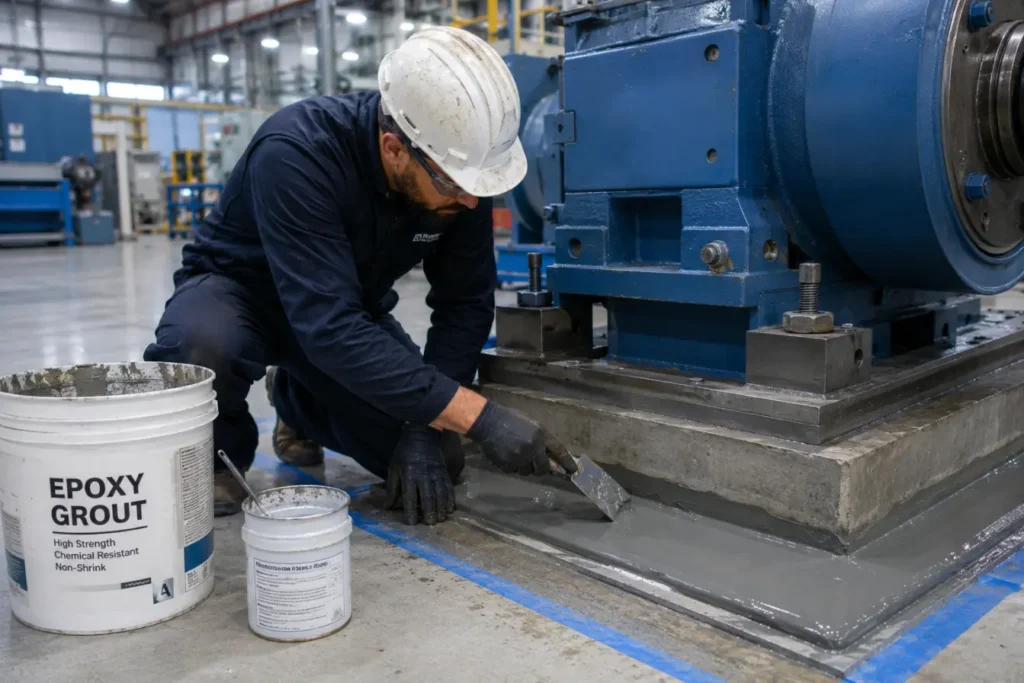
Epoxy grout contains resin and a hardener. It is known for its high strength, strong adhesion, and resistance to many chemicals.
It is often selected for industrial environments, heavy equipment foundations, and areas where ordinary cement grout may not provide enough resistance.
4. Injection Grout
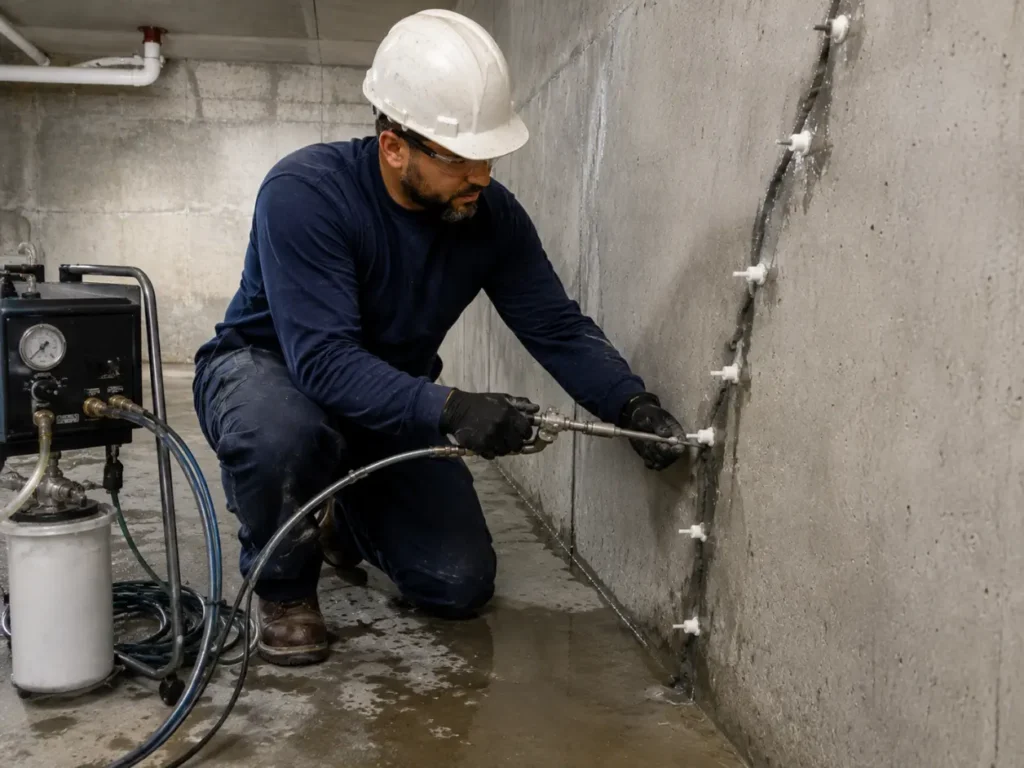
Injection grout is used to treat cracks, leaks, and difficult-to-reach voids. The material is injected through ports or other suitable systems so it can reach areas that are not easily accessible.
It can be used in:
- Basements
- Tunnels
- Concrete structures
- Water-retaining structures
- Underground construction
Major Applications of Construction Chemicals Grout
Construction chemical grout is used in many types of projects. Some common applications include:
Machinery foundations: Grout provides support between machinery and its concrete foundation and helps ensure proper load transfer.
Base plate installation: Structural columns and equipment often require grout beneath their base plates to provide continuous support.
Concrete repair: Specialized grout can be used to fill voids and damaged sections in concrete.
Crack injection: Injection grout can help seal certain cracks and control water leakage.
Waterproofing: Some chemical grout systems are designed to react with water or form a sealed barrier, making them useful for underground and damp areas.
Benefits of Construction Chemical Grout
The main benefits depend on the formulation, but commonly include:
- High compressive strength
- Strong adhesion
- Low or controlled shrinkage
- Good flow into narrow spaces
- Resistance to moisture
- Chemical resistance in suitable formulations
- Faster setting options
- Improved support for heavy loads
- Long-term durability when correctly selected and installed
Choosing the Right Grout
Not every grout is suitable for every project. Consider the following factors before making a selection:
| Factor | What to Check |
| Strength | Required load-bearing capacity |
| Application | Repair, foundation, waterproofing, or filling |
| Shrinkage | Whether non-shrink performance is needed |
| Exposure | Water, chemicals, temperature, or vibration |
| Flowability | Whether the grout must reach narrow spaces |
| Setting time | Available working and curing time |
| Substrate | Concrete, steel, masonry, or another surface |
It is also important to follow the product manufacturer’s instructions for mixing, surface preparation, placement, and curing.
Tips for Better Grouting Results
Good grout performance depends on more than the product itself. Before application:
- Clean the surface and remove dust, oil, loose concrete, and other contaminants.
- Check that the substrate is suitable for the selected grout.
- Follow the recommended water-to-powder or resin-to-hardener ratio.
- Mix thoroughly without adding unnecessary water or other materials.
- Place the grout carefully to avoid trapped air and unfilled areas.
- Allow adequate curing time before applying heavy loads.
Conclusion
Construction chemicals grout is an important material for both construction and repair work. From supporting heavy machinery to filling concrete voids and treating water leaks, different grout formulations solve different problems. Selecting the right product and applying it correctly can help create a stronger, more durable connection and reduce the risk of future repairs.
Also Read: Construction Chemical Additives: Types, Uses, Benefits, and Applications
Frequently Asked Questions
What is construction chemicals grout used for?
It is used for filling gaps and voids, supporting machinery and structural elements, repairing concrete, sealing cracks, and addressing certain waterproofing requirements.
What is the difference between cement grout and epoxy grout?
Cement grout is generally used for conventional construction applications, while epoxy grout is often chosen when higher chemical resistance, adhesion, or mechanical performance is required.
Why is non-shrink grout used under machinery?
Non-shrink grout helps maintain contact between the machinery base and foundation, providing stable support and helping transfer loads effectively.
Can chemical grout be used for waterproofing?
Yes. Certain polyurethane and other injection grout systems are designed for sealing water leaks and cracks. The appropriate product depends on the type and severity of the water problem.
How do I choose the best grout?
Look at the required strength, exposure conditions, application method, shrinkage requirements, setting time, and substrate. Product technical data should always be checked before application.
Grouting is a common part of construction, but choosing the right grout can make a big difference in how well a structure performs over time. Construction chemicals grout is used to fill gaps, repair concrete, support heavy equipment, seal cracks, and improve the connection between different construction elements.
Unlike basic cement and water mixtures, chemical grouts are formulated for specific jobs. They can offer better strength, flow, bonding, water resistance, and durability depending on the product and application.
What Is Construction Chemicals Grout?
Construction chemicals grout is a specially formulated material used to fill spaces, voids, cracks, joints, and gaps in concrete and other structural components. It can be used in both new construction and repair work.
Common grout formulations include:
- Cement-based grout
- Non-shrink grout
- Epoxy grout
- Polyurethane grout
- Injection grout
- High-strength grout
Each type has different properties, so the right choice depends on where it will be used and what conditions it needs to withstand.
Types of Construction Chemical Grout
1. Cement-Based Grout
Cement-based grout is widely used for general construction work. It is often used for filling gaps, supporting structural elements, and installing precast components.
It is suitable for applications where standard strength and durability are required.
2. Non-Shrink Grout
Non-shrink grout is designed to maintain good contact with the surrounding surfaces after curing. It is commonly used below machinery, steel columns, and structural base plates.
Typical applications include:
- Machinery foundations
- Steel column base plates
- Bridge bearings
- Equipment supports
- Precast concrete connections
3. Epoxy Grout
Epoxy grout contains resin and a hardener. It is known for its high strength, strong adhesion, and resistance to many chemicals.
It is often selected for industrial environments, heavy equipment foundations, and areas where ordinary cement grout may not provide enough resistance.
4. Injection Grout
Injection grout is used to treat cracks, leaks, and difficult-to-reach voids. The material is injected through ports or other suitable systems so it can reach areas that are not easily accessible.
It can be used in:
- Basements
- Tunnels
- Concrete structures
- Water-retaining structures
- Underground construction
Major Applications of Construction Chemicals Grout
Construction chemical grout is used in many types of projects. Some common applications include:
Machinery foundations: Grout provides support between machinery and its concrete foundation and helps ensure proper load transfer.
Base plate installation: Structural columns and equipment often require grout beneath their base plates to provide continuous support.
Concrete repair: Specialized grout can be used to fill voids and damaged sections in concrete.
Crack injection: Injection grout can help seal certain cracks and control water leakage.
Waterproofing: Some chemical grout systems are designed to react with water or form a sealed barrier, making them useful for underground and damp areas.
Benefits of Construction Chemical Grout
The main benefits depend on the formulation, but commonly include:
- High compressive strength
- Strong adhesion
- Low or controlled shrinkage
- Good flow into narrow spaces
- Resistance to moisture
- Chemical resistance in suitable formulations
- Faster setting options
- Improved support for heavy loads
- Long-term durability when correctly selected and installed
Choosing the Right Grout
Not every grout is suitable for every project. Consider the following factors before making a selection:
| Factor | What to Check |
| Strength | Required load-bearing capacity |
| Application | Repair, foundation, waterproofing, or filling |
| Shrinkage | Whether non-shrink performance is needed |
| Exposure | Water, chemicals, temperature, or vibration |
| Flowability | Whether the grout must reach narrow spaces |
| Setting time | Available working and curing time |
| Substrate | Concrete, steel, masonry, or another surface |
It is also important to follow the product manufacturer’s instructions for mixing, surface preparation, placement, and curing.
Tips for Better Grouting Results
Good grout performance depends on more than the product itself. Before application:
- Clean the surface and remove dust, oil, loose concrete, and other contaminants.
- Check that the substrate is suitable for the selected grout.
- Follow the recommended water-to-powder or resin-to-hardener ratio.
- Mix thoroughly without adding unnecessary water or other materials.
- Place the grout carefully to avoid trapped air and unfilled areas.
- Allow adequate curing time before applying heavy loads.
Conclusion
Construction chemicals grout is an important material for both construction and repair work. From supporting heavy machinery to filling concrete voids and treating water leaks, different grout formulations solve different problems. Selecting the right product and applying it correctly can help create a stronger, more durable connection and reduce the risk of future repairs.
Frequently Asked Questions
What is construction chemicals grout used for?
It is used for filling gaps and voids, supporting machinery and structural elements, repairing concrete, sealing cracks, and addressing certain waterproofing requirements.
What is the difference between cement grout and epoxy grout?
Cement grout is generally used for conventional construction applications, while epoxy grout is often chosen when higher chemical resistance, adhesion, or mechanical performance is required.
Why is non-shrink grout used under machinery?
Non-shrink grout helps maintain contact between the machinery base and foundation, providing stable support and helping transfer loads effectively.
Can chemical grout be used for waterproofing?
Yes. Certain polyurethane and other injection grout systems are designed for sealing water leaks and cracks. The appropriate product depends on the type and severity of the water problem.
How do I choose the best grout?
Look at the required strength, exposure conditions, application method, shrinkage requirements, setting time, and substrate. Product technical data should always be checked before application.