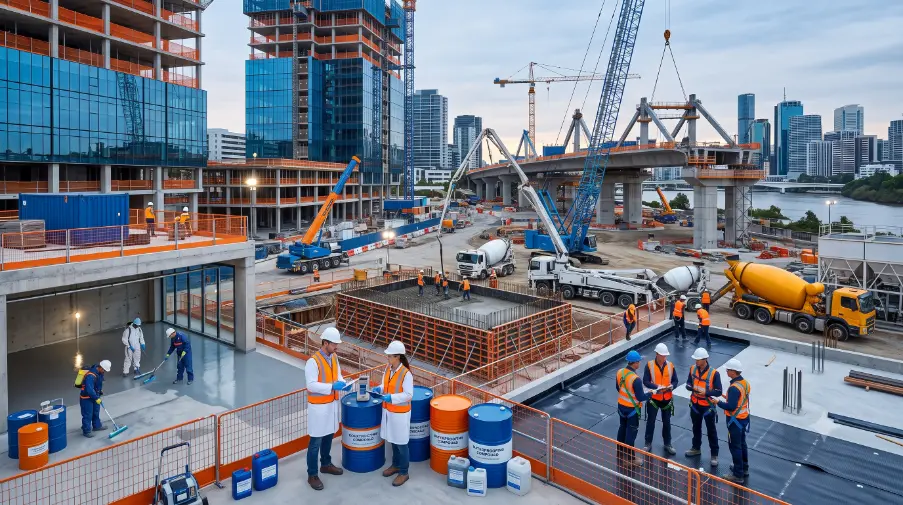
Evaluating key construction chemical types is essential for structural engineers and contractors seeking to improve workability, concrete strength, and environmental resistance. Excellent modern construction requires materials that are built for supreme resilience, strength, and effectiveness. Even though high-quality cement, steel, and aggregates are the basis of any structure, the role played by construction chemicals in modern engineering cannot be ignored. Waterproofing membranes remain one of the most critical construction chemical types for protecting subterranean basements from water ingress.
The application of high-performing chemical additives in construction provides protection against the adverse impact of the environment, facilitates repairs, and increases the lifespan of buildings. When creating either residential facilities, commercial sites, or infrastructure, it is important to select appropriate construction chemicals. Let’s find out more about construction chemicals here.
Table of Contents
Understanding Construction Chemical Types
Construction chemicals refer to specialised chemical compounds that are used to enhance the performance, longevity, ease of use, and protection of construction materials. These are applied during the process of construction as well as maintenance and repair. From liquid admixtures to protective sealants, understanding different construction chemical types ensures that every stage of a building project meets high quality and durability standards.
The main applications include:
- Enhancing the performance of concrete
- Increasing the durability of construction
- Protection of surface
- Water proofing
- Increasing bond strength
- Maintenance and rehabilitation
- Increasing service life
With the evolving technology in construction, construction chemicals have become essential for creating durable constructions.
Types of Specialty Building Chemicals and Formulations
Various construction projects have varying materials required for various reasons such as structural needs and environmental concerns. Comparing different construction chemical types helps contractors select the right superplasticizers for high-workability concrete pours.
1. Concrete Admixtures
These chemicals are added to concrete during mixing of concrete to make it workable, set, increase its durability, or make it stronger.
Some of the uses of concrete admixtures include:
- Residential building structures
- Bridges
- Road construction
- Industrial floorings
- High-rise constructions
2. Waterproofing Chemicals
These chemicals are used to waterproof and prevent any damage to buildings from water entry.
Uses of waterproofing chemicals include:
- Roofs
- Basements
- Bathrooms
- Water tanks
- Building foundations
- Balconies
3. Tile Adhesives
These chemicals are used to ensure a strong bond is formed when laying of tiles.
These include:
- Ceramic tiles
- Porcelain tiles
- Natural stones
- Wall tiles
- Floor tiles
4. Grouts
Grout fills gaps, fixes structural members, and helps in load transfer. Tile adhesives and grouts represent essential construction chemical types used extensively for both interior and exterior finishing work.
Usual applications are:
- Joints between tiles
- Machine foundations
- Structure fixings
- Bridge bearings
- Fixing works
5. Sealants
Sealants are used to form flexible joints that allow movement and prevent dust, water, and air penetration. Specifying appropriate construction chemical types early in project planning prevents structural cracking and extends building lifespans.
Applications are:
- Expansion joints
- Glass fixing
- Window frames
- Door frames
- Facade joints
6. Repair Mortars
Repair mortars are specially designed materials used for repairing and strengthening the concrete surface. Industrial flooring projects often combine several construction chemical types, including epoxy hardeners and self-leveling compounds.
Applications are:
- Repairing cracks
- Concrete repair works
- Structure repair
- Surface protection
7. Protective Coatings
Protective coatings protect construction materials from environmental and chemical attack.
Application fields are:
- Concrete surfaces
- Steel surfaces
- Industrial flooring
- Parking areas
- Water treatment plants
Types of Structural Chemical Formulations at a Glance
Quality testing across various construction chemical types ensures compliance with rigorous international building and safety standards. Modern eco-friendly construction chemical types reduce carbon footprints while maintaining superior bonding and compressive strength.
| Construction Chemical | Primary Application |
| Concrete admixtures | Improve concrete workability and strength |
| Waterproofing chemicals | Prevent moisture and water penetration |
| Tile adhesives | Bond tiles securely to surfaces |
| Grouts | Fill joints and provide structural support |
| Sealants | Seal movement joints and prevent leakage |
| Repair mortars | Restore damaged concrete structures |
| Protective coatings | Protect surfaces from weathering and chemicals |
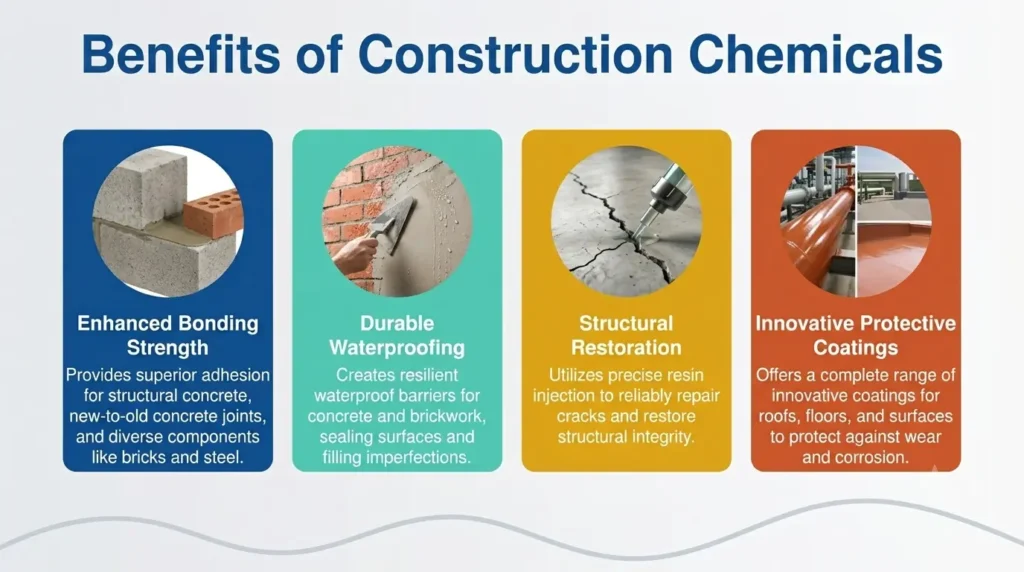
Benefits of Construction Chemicals
The use of construction chemicals offers several practical advantages throughout the construction lifecycle.
| Benefit | How It Supports Construction |
| Improved durability | Helps structures withstand environmental conditions |
| Better workability | Makes concrete easier to place and finish |
| Water resistance | Reduces moisture-related damage |
| Stronger bonding | Improves adhesion between construction materials |
| Lower maintenance | Minimises repair requirements over time |
| Faster construction | Supports efficient installation processes |
| Enhanced structural performance | Improves long-term reliability |
| Extended service life | Increases the lifespan of buildings and infrastructure |
Choosing the Right Concrete Auxiliaries & Additives
Choosing the right construction chemical requires consideration of the particular needs of the construction job at hand.
The following should be taken into account:
- Nature of the construction job
- Environmental factors
- Surface material
- Structural considerations
- Moisture or chemical exposure
- Application procedure
- Industry guidelines and specifications
- Long-term maintenance needs
It is helpful to work with knowledgeable suppliers and manufacturers in this regard.
Final Thoughts
It is imperative to have an understanding of the various construction chemicals that will be used in order to build construction works that are durable and safe. This is because these specialized products are important in modern-day construction work, whether it is the case of concrete improvement, protection from water, repairs, or any other surface protection.
Ready to elevate your next construction project with high-grade chemical solutions? Explore our complete range of specialized products and expert advice at Biopol Chemicals.
Frequently Asked Questions
1. Why are construction chemicals important in contemporary construction?
Construction chemicals enhance the quality, efficiency, longevity, and durability of construction materials, making structures more resistant to environmental conditions.
2. What construction chemical is most often used for waterproofing purposes?
Waterproofing chemicals, including coatings, membranes, and other special-purpose chemicals, are frequently used in roofing, basement waterproofing, bathroom waterproofing, foundation waterproofing, and water-retaining structures waterproofing.
3. Are there several construction chemicals applied within one construction process?
Yes. Most construction processes involve the application of different types of construction chemicals.
4. How do construction companies determine which construction chemical is to be used?
Depending on the application of the construction process, environmental conditions, construction requirements, and substrate.
Also Read