When installing tiles, most attention goes to choosing the right tile and adhesive. Grout often gets less attention, even though it has an important role in the finished surface. It fills the spaces between tiles, helps protect the joints, and gives the installation a neat appearance.
Key Takeaways
- It fills and protects joints between tiles.
- Different projects require different grout types.
- Proper application improves The durability.
- It does not replace waterproofing or tile adhesive.
The type of grout required depends on the location and conditions of the project. A residential bathroom may need a different product from a commercial kitchen, swimming pool, or industrial facility. Understanding these differences makes it easier to choose a grout that will perform well over time.
What Is Grout?
It is a material used to fill joints, gaps, and openings in construction work. It can be made from cement-based materials, epoxy resins, polymers, fine aggregates, and other additives, depending on its intended use.
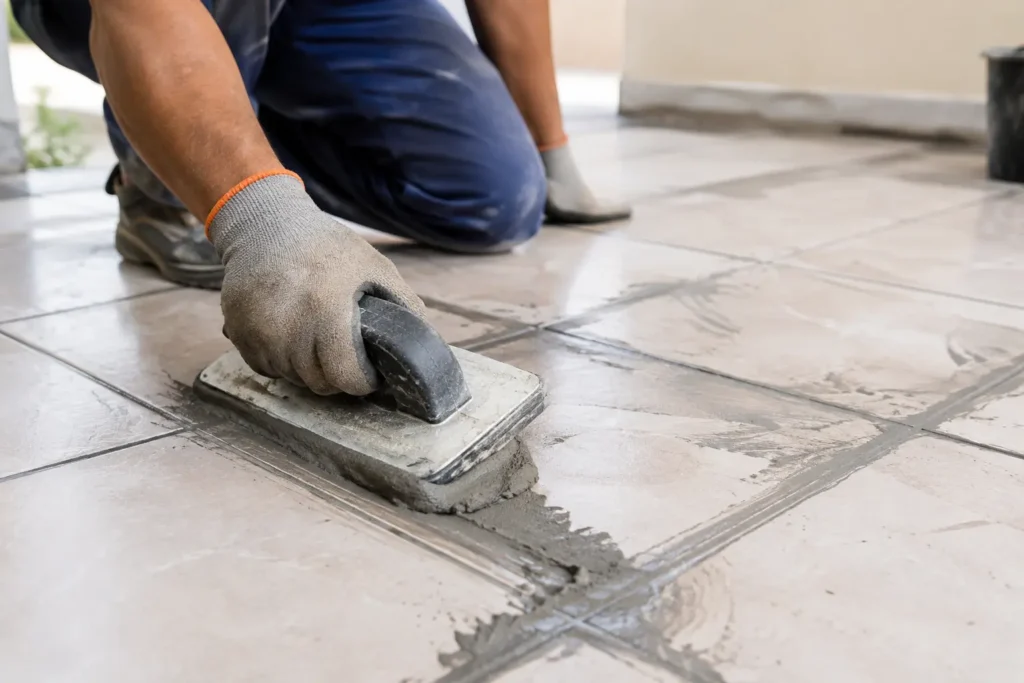
In tile work,It is placed into the joints between tiles after the tiles have been fixed. It helps keep the joints filled and protects the edges of the tiles from dirt and moisture.
Specialized grouts are also used in construction and industrial applications. These products can be designed for high strength, low shrinkage, chemical exposure, or heavy loads.
Also Read:Waterproofing Admixture
Main Types of Grout
There are several options available, and each has its own purpose.
| Grout Type | Suitable Applications | Key Features |
| Cement-based | Homes, offices, walls, and floors | Practical and cost-effective |
| Epoxy | Pools, kitchens, hospitals, and industrial areas | Resistant to stains, moisture, and many chemicals |
| Non-shrink | Machinery, base plates, and structural work | Maintains dimensional stability |
| High-strength | Equipment foundations and structural areas | Designed for high load-bearing requirements |
| Chemical-resistant | Chemical and processing facilities | Designed to withstand aggressive exposure |
Where It IsUsed?
It is used in a wide range of construction environments. Some common applications include:
- Ceramic and porcelain tile joints
- Bathroom and kitchen surfaces
- Floor and wall tile installations
- Balconies and terraces
- Swimming pools
- Restaurants and commercial kitchens
- Hospitals and laboratories
- Industrial floors
- Machinery foundations
Benefits
A properly selected grout can provide several practical benefits.
Protects Tile Joints
Filled joints are less likely to collect dirt, dust, and other debris. It also helps protect the exposed edges of tiles.
Helps Control Moisture
Certain formulations offer good resistance to water and can reduce moisture movement through tile joints. However, It should not be treated as a replacement for proper waterproofing.
Creates a Finished Appearance
It gives tiled surfaces a uniform look. It is available in various shades, so it can either blend with the tiles or create a visible contrast.
Improves Durability
The right type can withstand regular cleaning, foot traffic, moisture, and other conditions expected in the installation area.
Supports Construction Components
Specialized non-shrink and high-strength grouts can provide stable support beneath machinery, steel structures, base plates, and other components.
How to Apply Grout
Good installation practices are just as important as choosing the right product.
- Prepare the joints: Remove loose particles, dust, and excess adhesive.
- Mix the material: Use the manufacturer’s recommended mixing ratio. Avoid adding more water than specified.
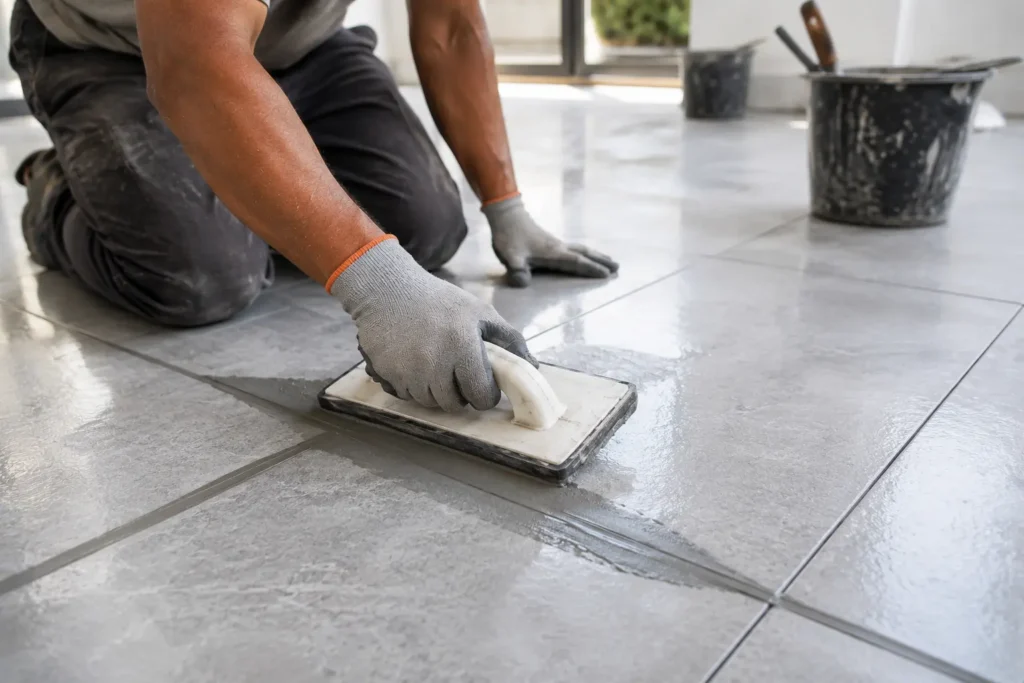
- Fill the joints: Work the grout firmly into the spaces between the tiles.
- Remove excess grout: Clean the tile surface before the material becomes difficult to remove.
- Finish the joints: Use a damp sponge carefully so that the remains properly packed inside the joints.
- Allow sufficient curing: Keep the surface protected for the recommended curing period.
Following the product instructions is particularly important when working with epoxy, chemical-resistant, or structural grout.
Grout vs Tile Adhesive
These two materials are often used together but perform different jobs.
| Point of Comparison | Grout | Tile Adhesive |
| Primary function | Fills tile joints | Bonds tiles to the substrate |
| Position | Between tiles | Beneath the tiles |
| Main purpose | Joint filling and protection | Tile fixing |
| Application stage | After tile installation | Before tile installation |
| Common options | Cement, epoxy, specialty grout | Cementitious and polymer-modified adhesives |
Using the correct material in the correct location is essential for a reliable tile installation.
Final Thought
Grout is more than a finishing material. It helps protect tile joints, contributes to the appearance of the surface, and, when correctly selected, can provide resistance to moisture, stains, chemicals, and wear.
For the best results, consider the tile type, joint width, exposure conditions, expected traffic, and maintenance requirements before choosing a type . Proper preparation, mixing, application, and curing are equally important in achieving a durable finish.
Also Read:Chemicals Used for Dust Control at Construction Sites
Frequently Asked Questions
1. What is grout used for?
This is mainly used to fill the joints between tiles. Specialized formulations are also used for structural and industrial applications.
2. Which is suitable for wet areas?
A moisture-resistant is generally preferred for bathrooms, kitchens, pools, and similar areas. The product should be selected according to the level of water exposure.
3. Does grout make tiles waterproof?
No. It can help reduce moisture penetration through tile joints, but it does not replace a properly installed waterproofing system beneath the tiled surface.
4. Why does grout crack?
Cracking can result from several factors, including excessive water during mixing, movement in the substrate, incorrect joint preparation, unsuitable selection, or inadequate curing.