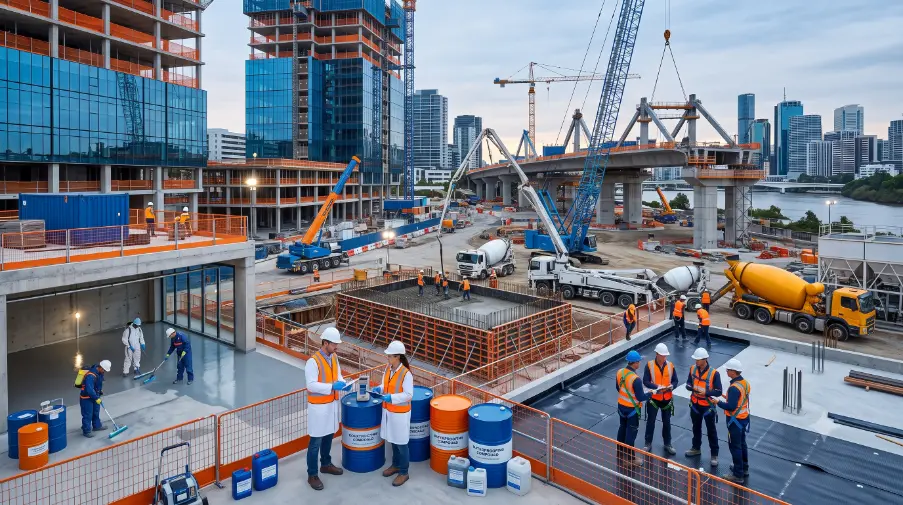

Concrete structures are rarely built in one continuous pour. Work may stop because of site conditions, working hours, structural requirements, or the size of the project. When fresh concrete is placed against hardened concrete, a Chemicals Used for Construction Joints is created.
Key Takeaways
- Epoxy agents help create strong bonds between old and new concrete.
- Polyurethane sealants are useful where joints experience movement.
- Waterstops and PU injection materials help control water leakage.
- Proper joint design, surface preparation, and chemical selection are essential for durability.
These joints need proper treatment because they can become weak points if water, chemicals, or repeated movement affect the connection. Different construction chemicals are used to improve bonding, seal joints, control water leakage, and protect concrete from deterioration.
What Is a Chemicals Used for Construction Joints ?
A Chemicals Used for Construction Joints is a planned connection between two sections of concrete that are poured at different times. You can find them in buildings, bridges, basements, water tanks, tunnels, parking structures, industrial floors, and other concrete structures.
A joint does not automatically mean there is a problem. The important thing is how it is designed, prepared, and treated.
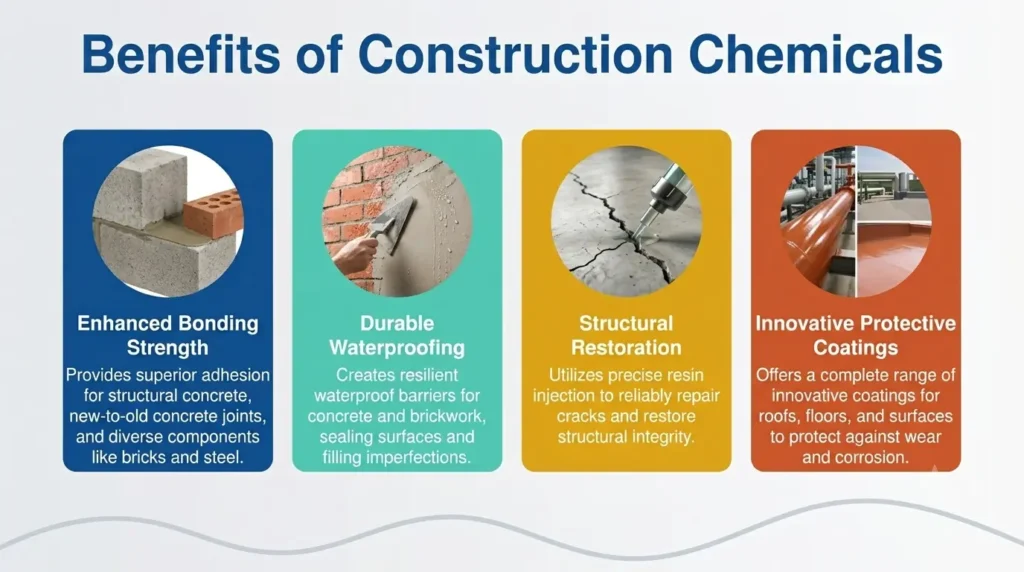
Depending on the application, contractors may use bonding agents, sealants, waterproofing materials, waterstops, or injection chemicals.

Common Chemicals Used for Construction Joints
1. Epoxy Bonding Agents
Epoxy bonding agents are used when a strong connection is required between existing concrete and new concrete. They provide good adhesion when the concrete surface has been properly prepared.
They are commonly used for:
- Concrete repair
- Old-to-new concrete bonding
- Structural repair work
- Precast concrete connections
The selected epoxy should be suitable for the specific temperature, moisture, and structural conditions of the site.
Also Read:Chemical Resistant Construction
2. Polymer-Based Bonding Agents
Polymer-based products, including certain acrylic and SBR-based systems, can improve the adhesion of cement-based repair materials to existing concrete.
They are often used for:
- Repair mortars
- Concrete resurfacing
- Floor repairs
- Cementitious applications
- Plaster and mortar work
The exact product should be selected according to the required bond strength and exposure conditions.
3. Polyurethane Sealants
Some construction joints need to accommodate movement caused by temperature changes, vibration, or structural movement. Polyurethane sealants are commonly used in these situations because they remain flexible after curing.
Typical applications include:
- Concrete floors
- Parking structures
- Basements
- External concrete joints
- Movement and construction joints
4. Polysulfide Sealants
Polysulfide sealants are flexible joint-sealing materials that can provide good resistance to weathering and certain environmental conditions.
They may be suitable for concrete joints in industrial buildings, water-related structures, and exposed areas where movement needs to be accommodated.
5. Hydrophilic Waterstops
Water can be a major concern in underground and water-retaining structures. Hydrophilic waterstops are installed at concrete joints and expand when they come into contact with water, helping restrict water movement through the joint.
They are commonly considered for:
- Basements
- Tunnels
- Water tanks
- Sewage treatment facilities
- Underground concrete structures
6. PU Injection Chemicals
Polyurethane injection resins are often used when an existing concrete joint or crack is allowing water to enter. Certain PU formulations react with water and expand, helping seal the leakage path.
They can be used in leaking:
- Basements
- Tunnels
- Concrete tanks
- Underground structures
- Construction joints
Injection work should be performed by trained professionals because the material and injection method need to match the leakage condition.
Construction Joint Chemicals at a Glance
| Chemical or Material | Main Purpose | Common Applications |
| Epoxy bonding agent | Strong concrete bonding | Old-to-new concrete |
| Polymer bonding agent | Improve adhesion | Repair and resurfacing |
| Polyurethane sealant | Flexible sealing | Moving joints |
| Polysulfide sealant | Joint sealing | Industrial and external areas |
| Hydrophilic waterstop | Control water passage | Basements and tanks |
| PU injection resin | Seal water leakage | Cracks and leaking joints |
How to Choose the Right Chemicals Used for Construction Joints
The best construction joint chemical depends on the conditions of the project. Before selecting a product, consider:
- Type of joint: A fixed construction joint may need different treatment from a joint that experiences regular movement.
- Water exposure: Underground structures and water tanks need effective water-control measures.
- Movement: Flexible sealants are generally more suitable where expansion and contraction are expected.
- Structural requirements: Strong bonding systems may be required for certain repair applications.
- Chemical exposure: Industrial floors may need materials that can withstand specific chemicals.
- Surface condition: Dust, oil, laitance, loose concrete, and other contaminants can reduce adhesion.

Why Joint Treatment Important For Chemicals Used for Construction Joints ?
Poorly treated construction joints can lead to water leakage, surface deterioration, cracking, and costly repairs. Chemical treatment can help address these problems, but it should not be viewed as a substitute for proper joint design and construction.
Good results also depend on surface preparation, correct application, suitable curing conditions, and following the manufacturer’s technical instructions.
Conclusion
Chemicals Used for Construction Joints Used for Construction Joints play an important role in concrete work, but they need to be planned and treated correctly. Epoxy bonding agents, polymer systems, polyurethane sealants, polysulfide sealants, waterstops, and PU injection materials each have different applications.
Rather than choosing a chemical simply because it is commonly used, contractors should consider the type of joint, expected movement, water exposure, structural requirements, and site conditions. Correct product selection, surface preparation, and application can make a significant difference to the durability and performance of a concrete structure.
Also Read:Mortar in Construction
Frequently Asked Questions
1. What chemicals are commonly used for construction joints?
Common options include epoxy bonding agents, polymer-based bonding materials, polyurethane and polysulfide sealants, hydrophilic waterstops, and PU injection resins.
2. Which chemical is best for bonding old and new concrete?
Chemicals Used for Construction Joints and Epoxy bonding agents are commonly used when a strong bond between existing and new concrete is required. The product should be selected according to the specific application and site conditions.
3. How can construction joint leakage be stopped?
Depending on the cause and location of the leakage, solutions may include waterstops, flexible sealants, or PU injection systems.
4. Are construction joint chemicals necessary for every project?
Not necessarily. The treatment depends on the joint design, exposure conditions, movement, structural requirements, and project specifications.
5. Can polyurethane be used for construction joints?
Yes. Polyurethane sealants can be used for suitable Chemicals Used for Construction Joints where flexibility and resistance to movement are important. PU injection resins are also used for certain leaking joints and cracks.
6. Why is surface preparation important?
A joint surface contaminated with dust, oil, loose concrete, or laitance may prevent the chemical from bonding properly. Proper preparation is therefore an important part of joint treatment.