Silicone-Based Lubricants: Smooth Performance, Simple Maintenance
Component longevity, durability, and continuous equipment functioning are very important factors on the majority of current construction sites and with any kind of machinery operations. Friction between moving surfaces exposed to high loads and environmental influence may cause early wear and tear, noise, binding, and additional equipment downtime.
Silicon-based lubricants can be used as an effective solution for such a problem, creating a durable and low-friction layer between the compatible surfaces. Compared to common petroleum-based lubricants that could damage specialized seals and collect abrasive dust on construction sites, silicon-based lubricants have a special chemical structure designed to provide protection of rubber seals, plastics, architectural hardware, and metals. Moisture resistance, waterproofing, and stability at extreme outdoor temperature changes provide an additional value of such products, but for ensuring the best component lifetime, it is necessary to consider the loads, materials, and other characteristics.
What Is a Silicone-Based Lubricant?
Silicone oil lubricant refers to a type of lubricating fluid manufactured using silicone-based products as the main ingredient used in lubrication. Silicone oils, which are mostly manufactured from silicone polymers like polydimethylsiloxane (PDMS), can exhibit low friction qualities while maintaining stability in diverse environments.
Some of the possible forms of silicone-based lubricants include:
- Oil and fluids
- Grease
- Spray aerosols
- Formulated products
The final composition can consist of other additives to achieve certain desired effects. Not all silicone-based lubricants will therefore behave the same way.
The right lubricant must be chosen based on its intended application.
Key Properties of Silicone-Based Lubricants
| Property | How It Helps |
| Low Friction | Helps reduce friction between compatible surfaces, allowing components to move more smoothly and potentially reducing mechanical resistance. |
| Water Resistance | Provides water-repellent characteristics, making silicone lubricants useful in applications where components may encounter moisture. |
| Wide Temperature Performance | Many formulations can perform across a broad temperature range, although the exact limits depend on the specific product. |
| Material Compatibility | Often considered for use with rubber and certain plastics where petroleum-based lubricants may not be appropriate. Compatibility should always be verified for the specific materials. |
| Long-Lasting Performance | Can remain on suitable surfaces for extended periods, although durability depends on heat, pressure, chemicals, contamination, and frequency of movement. |
Where Are Silicone-Based Lubricants Used?
The versatility of silicone-based lubricants allows them to be considered across several applications.
| Application Area | Potential Uses |
| Automotive | Rubber seals, weatherstripping and selected moving components |
| Industrial Maintenance | Suitable machinery and mechanical components |
| Plumbing | Compatible seals, O-rings and fittings |
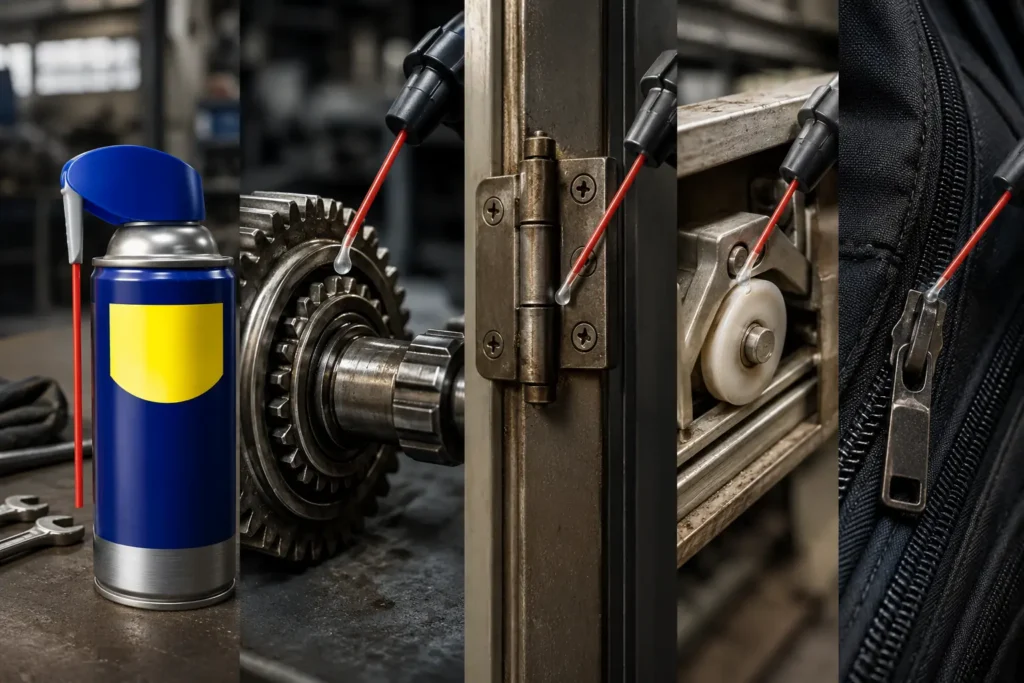
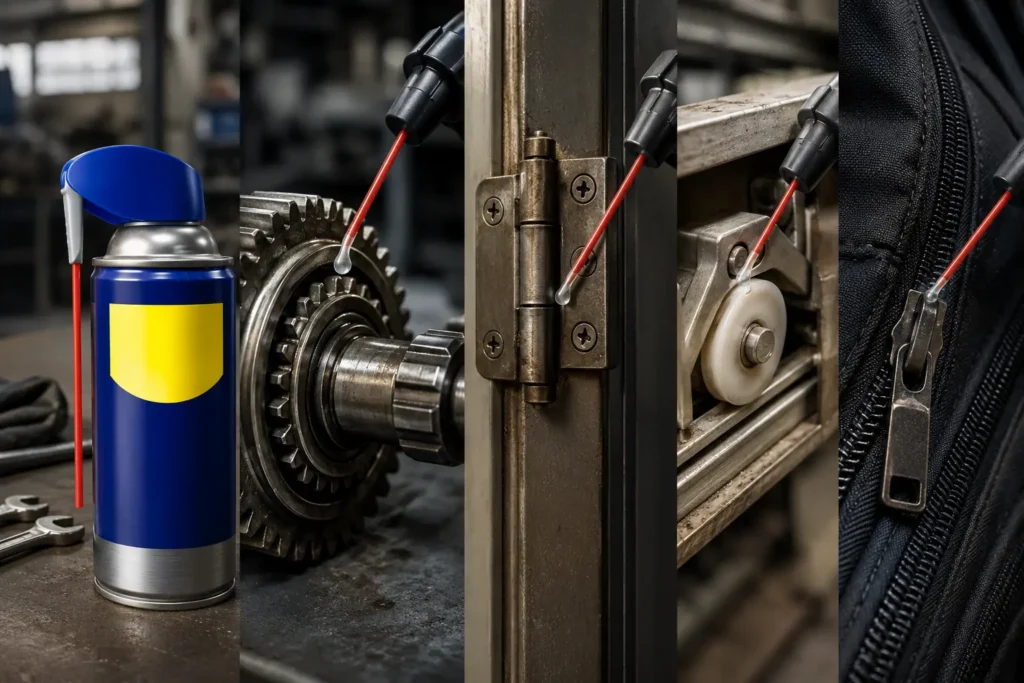
| Household Maintenance | Hinges, tracks and selected mechanisms |
| Electrical Applications | Certain components requiring moisture-resistant lubrication |
| Manufacturing | Assembly and processing applications |
| Rubber Components | Supporting movement and reducing surface friction |
The suitability of a silicone lubricant depends on the specific component and working environment.
Silicone Lubricant for Rubber and Plastic
One important application of silicone-based lubricants is the maintenance of compatible rubber and plastic components. Certain petroleum-based lubricants may adversely affect some elastomers or plastics, making material compatibility an important consideration.
Silicone formulations are often used with applications involving:
- O-rings
- Rubber seals
- Gaskets
- Plastic fittings
- Weatherstripping
- Sliding plastic components
Silicone-Based Lubricant vs Petroleum-Based Lubricant
Different lubricant families have different strengths.
| Factor | Silicone-Based Lubricant | Petroleum-Based Lubricant |
| Water resistance | Generally good | Varies |
| Rubber applications | Often suitable for compatible materials | Compatibility varies considerably |
| Temperature performance | Formulation-dependent | Formulation-dependent |
| Plastic compatibility | Often useful, but must be checked | Varies by plastic |
| Typical use | Seals, plastics, mechanisms and specialty maintenance | Machinery and applications requiring hydrocarbon-based lubrication |
| Material selection | Application-specific | Application-specific |
There is no single lubricant that is appropriate for every maintenance task. The operating environment and materials should determine the choice.
Benefits of Using Silicone-Based Lubricants
Applying the correct silicone lubricant has many benefits.
- Less friction: It can make parts work more efficiently.
- Water-resistant: Its properties that repel water can prove helpful in wet conditions.
- Versatility: Silicone lubricants have the potential to be used in a number of maintenance processes.
- Protection: Some types of lubricants have the potential to protect compatible surfaces from moisture and other forms of exposure.
- Noise reduction: Applying lubrication at the right contact points can help in reducing squeaking and noise caused by friction.
- Application convenience: Depending on the kind of product, silicone lubricants come in oil form, grease form, or even spray.
Precautions When Using Silicone Lubricants
Prior to applying a silicone-based lubricant, review the product label and instructions. There could be varying restrictions depending on the type of product.
Key factors include:
- Verify compatibility with plastics, rubber, coating, and painted surfaces.
- Do not assume that the lubricant is meant for high-pressure or heavy load application.
- Follow temperature limitations.
- Prevent contamination of the surface where lubrication is not desired.
- Wear personal protective equipment if necessary.
- Store the product following the manufacturer’s instructions.
- Do not apply a generic silicone lubricant to a specialized application unless the product specification allows for that.
The Bottom Line
Silicone-based lubricants offer exceptional versatility and protection. True operational efficiency depends on aligning the specific lubricant with the unique demands of the systemThis will reduce friction, allow smooth operation, and ensure that the materials used are compatible. It is water-repellent and has a wide range of uses, including many rubber and plastic uses. This makes it an essential choice when dealing with maintenance and in industries. However, lubrication involves much more than just the use of a silicone lubricant. Compatibility, temperature, load, movement, environment, and application should be taken into consideration.
Ready to improve the efficiency of your machinery? Let Biopol Chemicals be your partner in using industrial silicone lubricants.
FAQs
1. What is a silicone-based lubricant primarily used for?
Silicone lubricant is primarily used for reducing friction and providing ease of motion of compatible components like seals, O-rings, plastics, rubbers, hinges, and some mechanical devices.
2. Is a silicone lubricant compatible with rubber?
A silicone lubricant may or may not be compatible with rubber depending on the specific formulation of silicone and type of rubber. The manufacturer’s information must always be consulted first.
3. Is a silicone lubricant compatible with plastic?
A silicone lubricant may or may not be compatible with plastic depending on the formulation of silicone and the particular type of plastic being used.
4. How often should silicone lubricant be applied?
There is no set interval for applying silicone lubricant since this will depend on many factors.