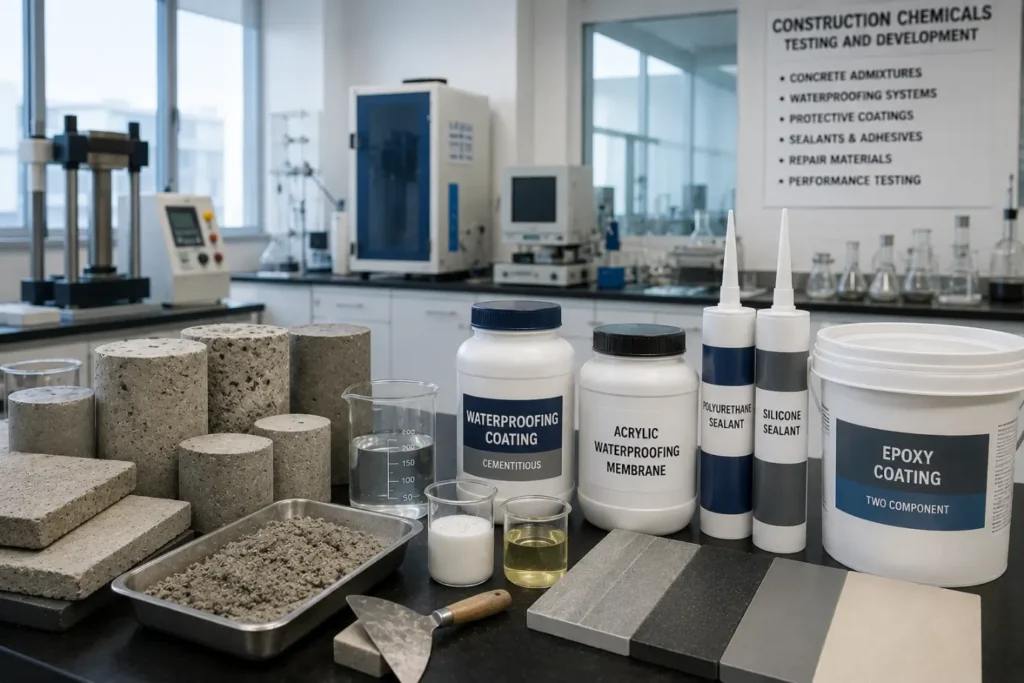
Construction is usually associated with concrete, steel, bricks, and heavy equipment. However, chemistry has an important role in how many construction materials are produced, applied, and maintained. Chemical Engineering in Construction helps develop products that improve the strength, durability, workability, and protection of buildings and infrastructure.
Key Takeaways
- Chemical engineering improves construction material performance.
- Admixtures can enhance concrete strength and workability.
- Waterproofing and coatings protect structures from damage.
- New materials can support durable, sustainable construction.
From concrete admixtures and waterproofing compounds to adhesives, sealants, coatings, and repair materials, construction chemicals are used in many different applications. Understanding their role helps explain why chemical engineering is an important part of modern construction.
What Is Chemical Engineering in Construction?
Chemical engineering in construction involves applying chemistry, material science, and engineering principles to construction materials and chemical products. Chemical engineers study how materials interact and how their properties can be changed for particular construction needs.
Their work may include:
- Developing construction chemical formulations
- Testing material performance
- Improving concrete admixtures
- Developing waterproofing products
- Creating protective coatings
- Improving adhesives and sealants
- Developing concrete repair materials
- Studying material durability
- Finding more resource-efficient material options
The objective is to develop materials that perform reliably under actual construction and environmental conditions.
Chemical Engineering in Concrete
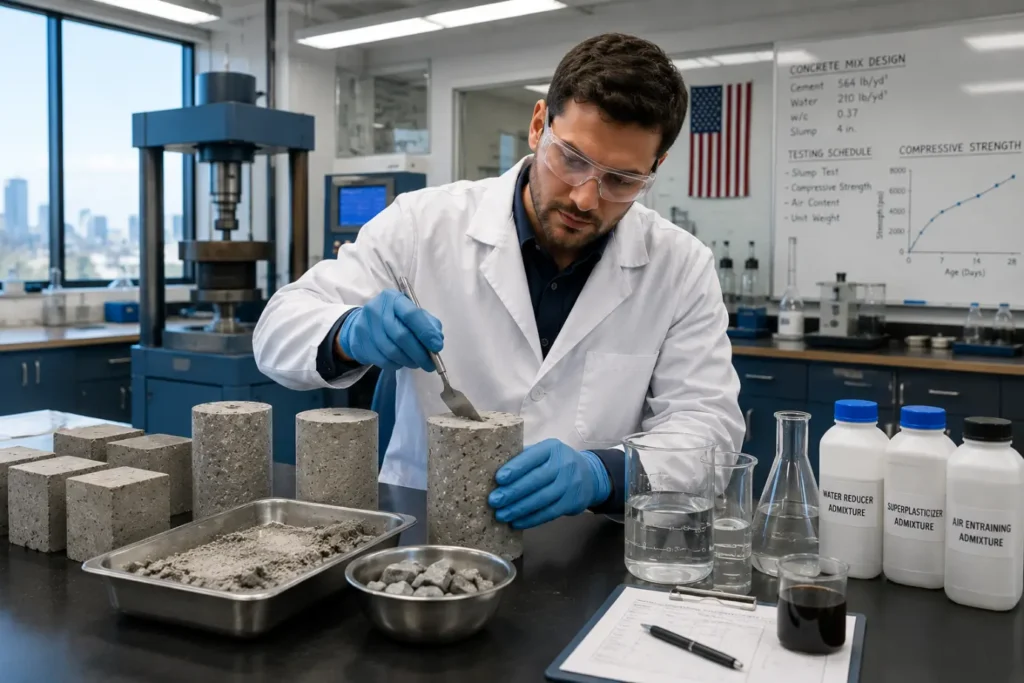
Concrete is one of the main areas where chemical engineering has a direct impact. Although concrete contains familiar ingredients such as cement, water, sand, and aggregate, chemical reactions determine how it sets and hardens.
Admixtures can be added to concrete to modify particular properties. Common examples include:
- Water-reducing admixtures
- Superplasticizers
- Accelerators
- Retarders
- Air-entraining agents
- Shrinkage-reducing admixtures
Depending on the formulation, these products can improve workability, control setting time, reduce water requirements, and support concrete durability.
Waterproofing Chemicals
Moisture can cause significant problems in buildings and infrastructure. Continuous water exposure can contribute to corrosion, surface deterioration, cracking, and other forms of damage.
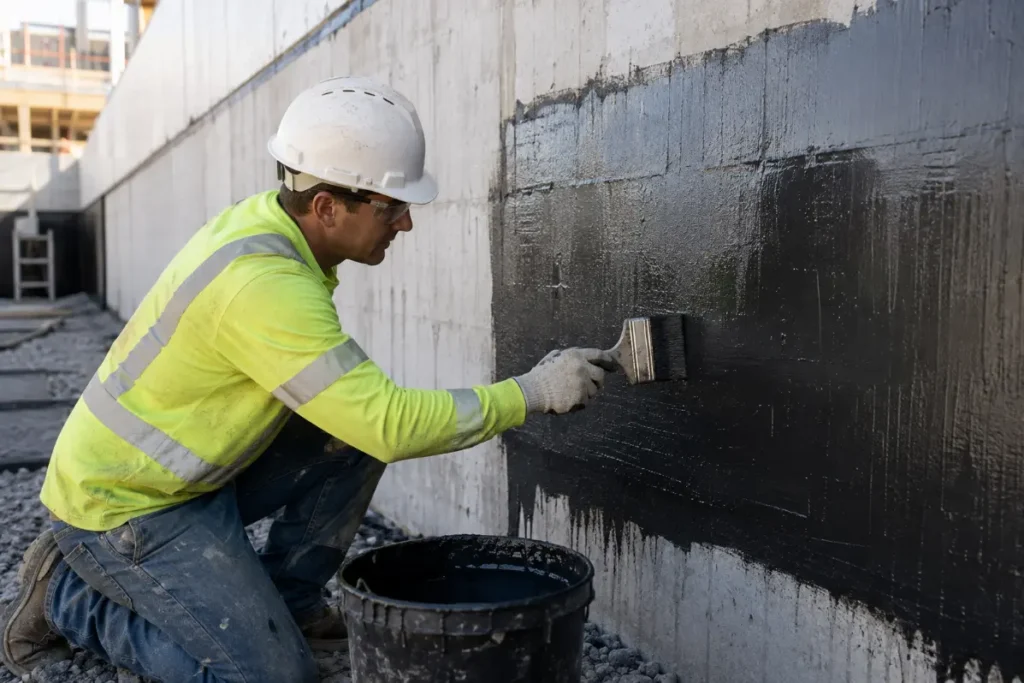
Chemical engineering has helped develop different waterproofing solutions for areas such as foundations, basements, roofs, bathrooms, tunnels, and water tanks.
Common waterproofing materials include:
| Material | Typical Application |
| Cementitious systems | Concrete surfaces and wet areas |
| Liquid membranes | Roofs and exposed surfaces |
| Bituminous systems | Foundations and below-ground areas |
| Crystalline products | Concrete structures |
| Sealants | Joints, gaps, and connections |
The appropriate product depends on the surface, level of water exposure, temperature, and project requirements.
Coatings, Adhesives, and Sealants
Construction materials often need protection from moisture, chemicals, abrasion, and weather. Protective coatings can help shield concrete and steel from these conditions.
Adhesives are used to bond different materials, while sealants help close joints and gaps. Chemical engineers develop these products based on properties such as:
- Adhesion
- Flexibility
- Curing time
- Moisture resistance
- Chemical resistance
- Temperature resistance
- Durability
These materials are commonly used in buildings, bridges, industrial facilities, floors, facades, and other structures.
Concrete Repair Materials
Existing structures require maintenance and repair over time. Cracks, damaged surfaces, water infiltration, and corrosion can affect concrete performance.
Chemical-based repair materials include:
- Repair mortars
- Bonding agents
- Crack fillers
- Injection materials
- Grouts
- Protective coatings
Selecting the right material depends on the type of damage, the condition of the surface, and the environment in which the structure operates.
Also Read: Concrete Construction Chemicals
Benefits of Chemical Engineering in Construction
Chemical engineering can provide several practical benefits to construction:
- Improved durability: Materials can be designed to withstand specific environmental conditions.
- Better workability: Admixtures can make concrete easier to mix and place.
- Moisture protection: Waterproofing products help limit water penetration.
- Longer service life: Coatings and repair materials can help protect structures.
- Specialized performance: Products can be developed for specific construction requirements.
- Resource efficiency: Some formulations can reduce water or material requirements.
- Maintenance support: Repair chemicals can help restore damaged surfaces.
Chemical Engineering and Sustainable Construction
Sustainability is becoming increasingly important in construction. Chemical engineers are working on alternative binders, lower-carbon materials, recycled inputs, durable coatings, and products that can reduce material consumption.
Longer-lasting construction materials can also reduce the need for frequent repairs and replacement. This can help lower the resources required over a structure’s lifetime.
Conclusion
Chemical Engineering in Construction plays a practical role in modern construction. Its applications range from concrete admixtures and waterproofing systems to coatings, adhesives, sealants, and repair materials.
By studying how materials behave and interact, chemical engineers help develop products suited to different construction conditions. As the industry continues to look for durable and more resource-efficient materials, chemical engineering will remain an important part of construction technology.
Frequently Asked Questions
- What is Chemical Engineering in Construction?
Chemical Engineering in Construction applies chemistry and engineering principles to develop, test, and improve construction materials and chemical products. - What are common construction chemicals?
Common examples include concrete admixtures, waterproofing compounds, adhesives, sealants, coatings, grouts, and repair materials used in Chemical Engineering in Construction. - How do chemicals improve concrete?
Admixtures used in Chemical Engineering in Construction can change properties such as workability, setting time, water demand, and durability. - Why is waterproofing important?
Chemical Engineering in Construction helps develop waterproofing solutions that protect structures from moisture-related problems such as corrosion, deterioration, and water penetration. - Does chemical engineering support sustainable construction?
Yes. Chemical Engineering in Construction contributes to alternative materials, lower-carbon products, improved durability, and more efficient use of construction resources.
Also Read:Construction Chemicals for Flooring