Concrete is one of the most widely used materials in construction, but getting the right performance from a concrete mix is not always as simple as combining cement, sand, aggregate, and water. Depending on the project, concrete may need better workability, faster strength development, a longer setting time, or improved resistance to water and harsh conditions. This is where a concrete admixture becomes useful.
Key Takeaways
- Admixtures improve specific concrete properties.
- Superplasticizers improve workability and flow.
- Proper dosage is essential for consistent results.
- Testing helps select the right admixture.
A concrete admixture is a chemical product added to concrete in a controlled quantity to change one or more of its properties. Admixtures are used in everything from residential buildings and foundations to bridges, roads, tunnels, dams, and large commercial structures.
What Is a Concrete Admixture?
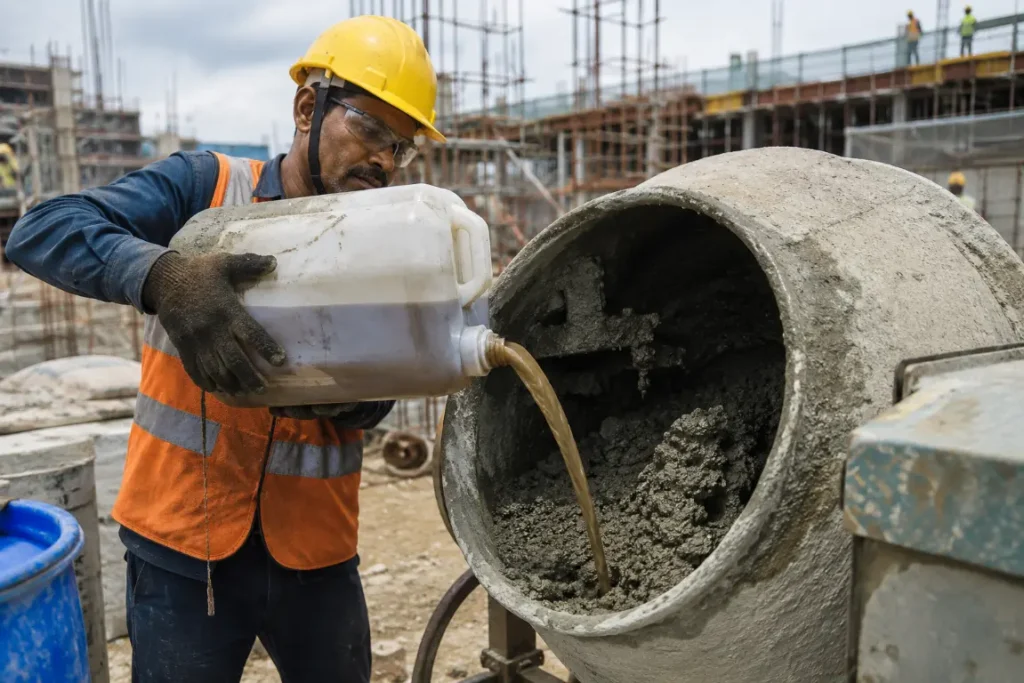
A concrete admixture is added to a concrete mix before or during mixing. Its purpose depends on the type of admixture being used. Some products reduce the amount of water needed, while others control setting time, improve workability, or help protect hardened concrete.
The right product should always be selected according to the mix design and site conditions. Using too much or choosing an unsuitable product can cause problems such as excessive setting delay, segregation, bleeding, or reduced strength.
Also Read: Admixture:Uses and Applications
Common Types of Concrete Admixtures
There are several types of admixtures, each designed for a particular purpose.
| Type of Admixture | Main Function | Common Uses |
|---|---|---|
| Water reducer | Reduces water requirement | Structural and general concrete |
| Superplasticizer | Provides high flow and workability | High-strength concrete |
| Retarder | Delays setting | Hot weather and long transportation |
| Accelerator | Speeds up setting and early strength | Cold weather and repair work |
| Air-entraining admixture | Creates controlled air bubbles | Freeze-thaw conditions |
| Waterproofing admixture | Helps reduce water penetration | Basements, tanks and foundations |
| Shrinkage-reducing admixture | Helps control drying shrinkage | Large slabs and structural work |
Water-Reducing Admixtures
Water reducers allow concrete to reach the desired consistency with less water. A lower water requirement can help improve strength and durability when the mix is properly proportioned. These admixtures are commonly used in beams, columns, slabs, foundations, and pavements.
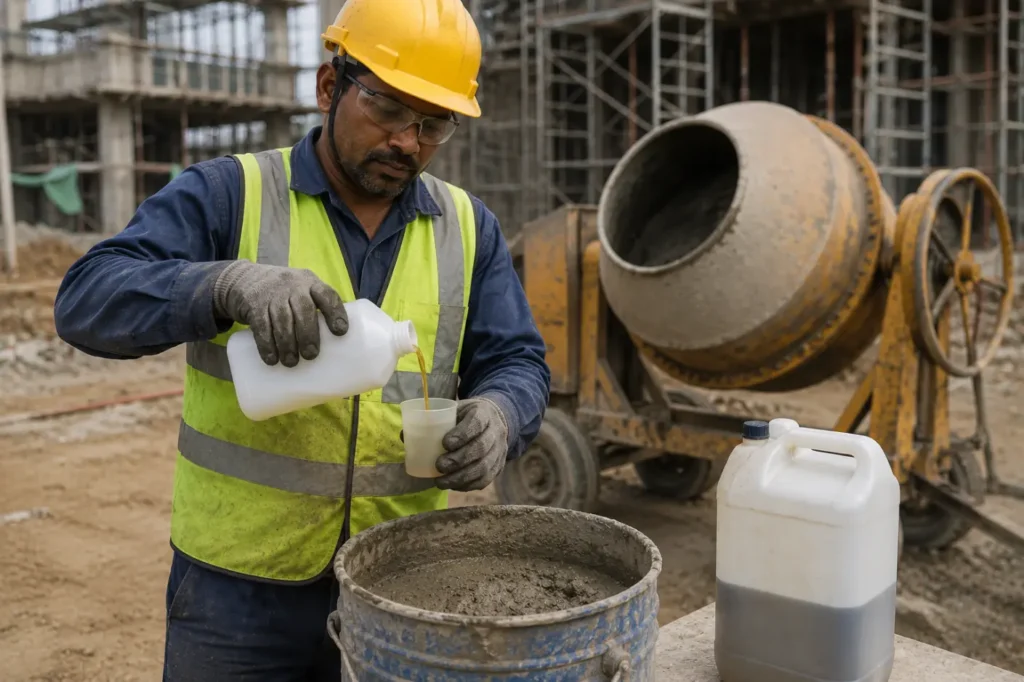
Superplasticizers
Superplasticizers provide a high level of workability without requiring excessive water. They are particularly useful for high-strength and high-performance concrete, as well as heavily reinforced sections where concrete needs to flow around reinforcement.
Retarding Admixtures
Retarding admixtures slow down the setting of concrete. They can be useful during hot weather or when concrete has to travel a longer distance before placement. The dosage needs to be controlled carefully to avoid unnecessary delays in setting.
Accelerating Admixtures
Accelerators are used when faster setting or early strength is required. They can be useful for repair projects, cold-weather construction, and applications where concrete needs to become usable sooner.
Benefits of Concrete Admixtures
A suitable concrete admixture can help contractors and engineers achieve specific concrete performance requirements.
Key benefits include:
- Better workability and easier placement
- Reduced water requirement
- Improved early or final strength
- Better control over setting time
- Reduced permeability in suitable formulations
- Improved durability in demanding conditions
- Easier pumping of concrete
- Better performance in hot or cold weather
- Support for specialized concrete mixes
Admixtures do not replace good mix design, proper curing, or quality raw materials. They work as part of the overall concrete system.
How to Select the Right Admixture
Choosing an admixture should start with the actual requirements of the project. Consider the following factors:
- Required concrete strength
- Desired slump and workability
- Transportation and placement time
- Weather and site temperature
- Type of cement and supplementary materials
- Aggregate characteristics
- Exposure to water or chemicals
- Reinforcement density
- Required setting and curing conditions
A trial mix should normally be carried out before full-scale use. This helps confirm compatibility between the admixture and other concrete ingredients.
Concrete Admixture Quality Testing
Testing is important because an admixture that performs well in one mix may behave differently in another. Common tests include:
- Slump and workability
- Setting time
- Compressive strength
- Air content
- Water reduction
- Bleeding and segregation
- Density
- Durability-related tests
Proper dosage and mixing procedures should follow the manufacturer’s technical recommendations and the approved project mix design.
Storage and Handling
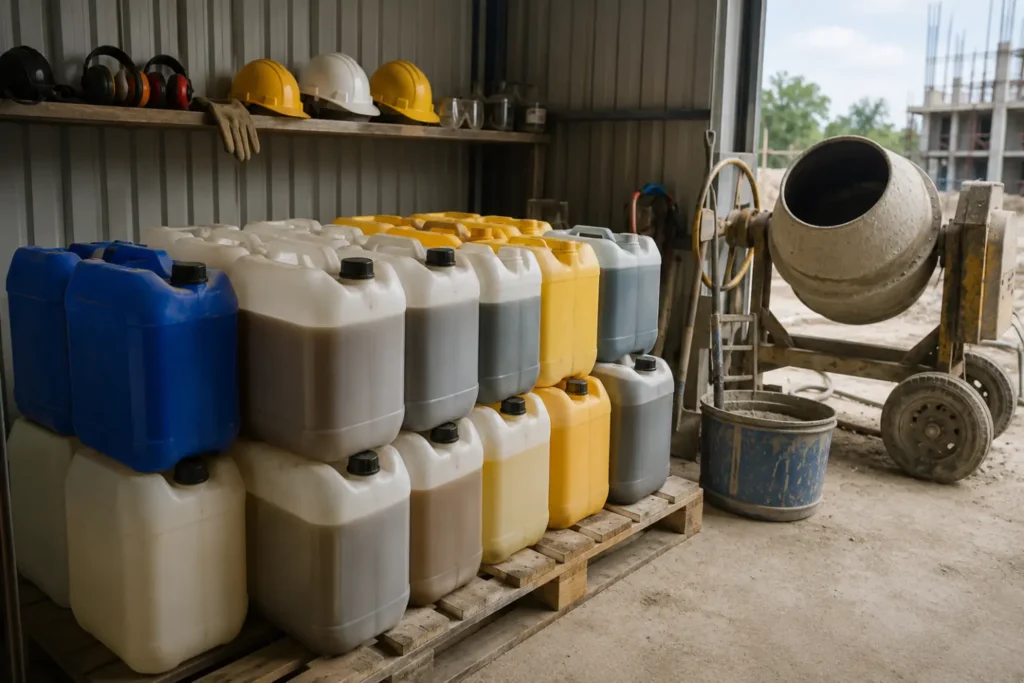
Concrete admixtures should be stored in suitable containers and protected from contamination and unsuitable temperatures. Products should remain properly sealed when not in use.
Workers should also follow the manufacturer’s safety instructions and use suitable protective equipment when handling construction chemicals.
Conclusion
A concrete admixture can make a significant difference when a concrete mix needs specific properties that cannot be achieved easily through conventional ingredients alone. Whether the goal is better workability, controlled setting, reduced water demand, or improved durability, the right admixture can help meet the requirements of the project.
The key is not simply adding an admixture, but selecting the correct type, testing it with the actual mix, and using the recommended dosage. Good concrete performance still depends on proper batching, mixing, placement, and curing.
Also Read:Construction Chemicals for Flooring
FAQs
1. What is a concrete admixture used for?
A concrete admixture is used to modify properties such as workability, setting time, water requirement, strength, and durability.
2. Which admixture is used to improve concrete workability?
Water reducers and superplasticizers are commonly used to improve workability. Superplasticizers are particularly useful when high flow is required without adding extra water.
3. Can admixtures reduce the water needed in concrete?
Yes. Water-reducing admixtures and superplasticizers can reduce water requirements while maintaining the desired workability when properly dosed.
4. Should admixtures be tested before use?
Yes. Trial mixes and appropriate laboratory tests can help confirm compatibility, dosage, setting behavior, and strength performance before large-scale application.
5. Can one admixture be used for every concrete project?
No. The suitable product depends on the mix design, materials, weather, construction method, and performance requirements of the project.