Water is one of the most common causes of damage in buildings and infrastructure. Moisture can enter through concrete pores, cracks, joints, roofs, foundations, bathrooms, basements, and exterior walls. Over time, this can lead to dampness, corrosion, mold growth, paint failure.
Key Takeaways
- Waterproofing chemicals help prevent water seepage.
- Different areas require different waterproofing solutions.
- Proper surface preparation improves performance.
- Correct application supports long-term protection.
Waterproofing construction chemicals help protect structures by reducing water penetration and creating a durable barrier against moisture. They are used in both new construction and repair projects, depending on the location, surface condition, and level of water exposure.
What Are Waterproofing Construction Chemicals?
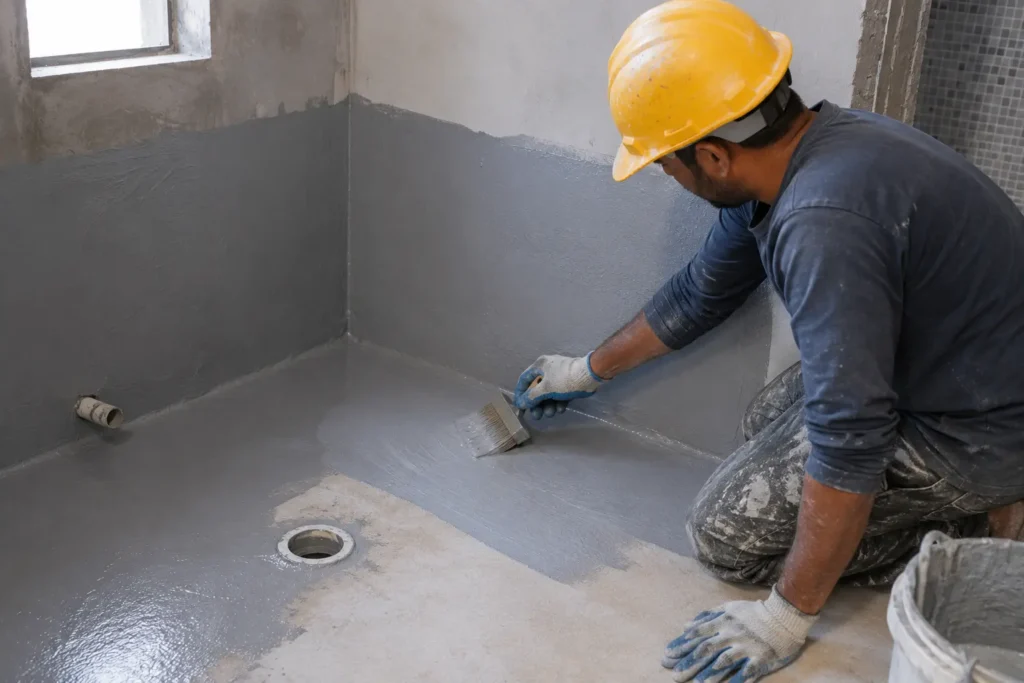
Waterproofing construction chemicals are specialized products designed to prevent or control the movement of water through construction materials. They can be applied to concrete, masonry, roofs, foundations, walls, floors, and other surfaces.
These products work in different ways. Some form a protective membrane on the surface, while others penetrate concrete pores, seal cracks, improve cement-based materials, or create flexible barriers that can accommodate minor movement.
Choosing the right product is important because waterproofing requirements differ between a basement, terrace, bathroom, water tank, and foundation.
Also Read: Post Construction Cleaning Chemicals
Common Types of Waterproofing Construction Chemicals
| Type | Common Application | Main Purpose |
|---|---|---|
| Cementitious waterproofing | Basements, bathrooms, tanks | Creates a water-resistant cement-based layer |
| Acrylic coatings | Walls, roofs, exterior surfaces | Provides surface protection against moisture |
| Polyurethane coatings | Terraces, roofs, wet areas | Forms a flexible waterproof barrier |
| Bituminous coatings | Foundations and underground structures | Protects against soil moisture and water |
| Integral waterproofing compounds | Concrete and mortar | Reduces water permeability |
| Silicone-based treatments | Masonry and exterior walls | Repels surface water |
| Epoxy coatings | Industrial floors and tanks | Provides waterproofing and chemical resistance |
| Waterproofing sealants | Joints, cracks, openings | Seals water entry points |
How Waterproofing Construction Chemicals Work
Different waterproofing systems use different mechanisms.
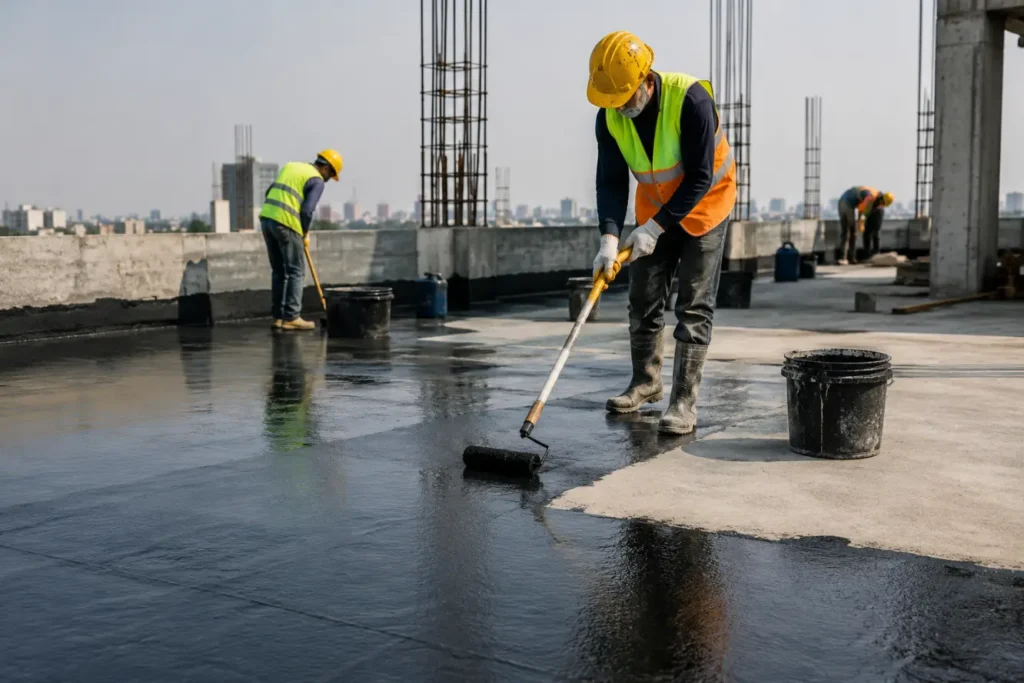
Surface coatings create a continuous protective layer over concrete or masonry. They are commonly used on roofs, walls, balconies, and wet areas.
Integral waterproofing chemicals are mixed into concrete or mortar. They can reduce permeability and help limit water movement through the material.
Sealants are used around joints, cracks, pipe penetrations, and construction gaps. These areas often become vulnerable because different materials may move or expand at different rates.
Penetrating treatments enter the pores of concrete or masonry and help reduce water absorption without creating a thick surface film.
Where Are Waterproofing Chemicals Used?
Waterproofing construction chemicals have applications across residential, commercial, and infrastructure projects.
1. Roof and Terrace Waterproofing
Roofs and terraces are exposed directly to rain, temperature changes, and standing water. Waterproofing coatings and membranes can help prevent water from entering the slab and protect the underlying structure.
2. Basement Waterproofing
Basements can experience water pressure from surrounding soil. Bituminous coatings, cementitious systems, membranes, drainage solutions, and joint sealants may be used depending on site conditions.
3. Bathroom and Wet Areas
Bathrooms, kitchens, balconies, and utility areas require protection because regular exposure to water can cause seepage into adjoining walls and floors.
4. Foundation Waterproofing
Foundation waterproofing helps reduce moisture penetration from surrounding soil. Proper treatment can also help protect reinforcement and concrete from long-term moisture-related deterioration.
5. Water Tanks and Swimming Pools
Water-retaining structures require waterproofing systems that can withstand continuous contact with water. Cementitious coatings and suitable protective systems are commonly considered for these applications.
6. Concrete Structures
Concrete is naturally porous. Waterproofing chemicals can reduce water absorption and help protect structures such as parking areas, tunnels, bridges, retaining walls, and treatment facilities.
Benefits of Waterproofing Construction Chemicals
Using an appropriate waterproofing system can provide several practical benefits:
- Reduces water and moisture penetration
- Helps prevent damp patches and seepage
- Protects concrete and reinforcement
- Reduces the risk of mold and mildew caused by persistent dampness
- Improves durability of construction surfaces
- Helps protect finishes such as paint and plaster
- Reduces maintenance requirements
- Extends the service life of buildings and structures
- Provides protection in areas exposed to rain, groundwater, or regular washing
Factors to Consider Before Choosing a Waterproofing Chemical
Not every waterproofing product is suitable for every application. Consider these factors before selecting a Waterproofing Construction Chemicals system:
Surface condition: Cracks, laitance, loose material, and damaged concrete may need repair before waterproofing.
Water exposure: Occasional rain exposure requires a different approach from continuous water pressure.
Surface movement: Roofs and terraces may experience thermal expansion and contraction, so flexible systems may be more suitable.
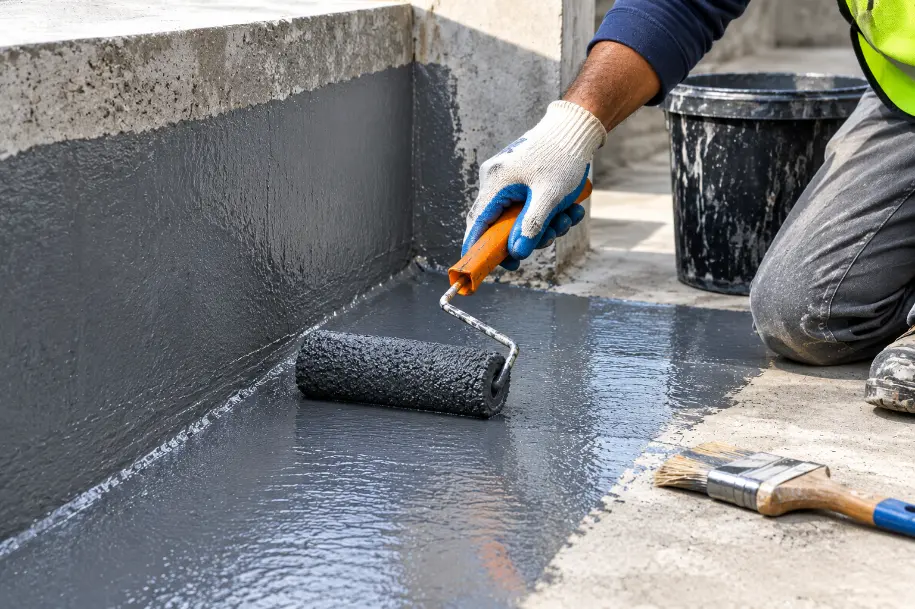
Application method: Check whether the product is designed for brush, roller, spray, or mixing into cementitious materials.
Site conditions: Temperature, humidity, drainage, and groundwater conditions can affect product selection and application.
Proper Application Matters
Even a high-quality Waterproofing Construction Chemicals may not perform properly if the surface is poorly prepared or the product is incorrectly applied.
The surface should generally be clean, sound, and free from dust, oil, loose particles, and other contaminants. Cracks and construction joints should be treated according to the waterproofing system being used. Manufacturers’ instructions regarding mixing ratios, coverage, curing, drying time, and application thickness should also be followed carefully.
For larger projects, waterproofing should be considered during the design and construction stage rather than treated only as a repair after seepage appears.
Waterproofing for Long-Term Construction Protection
Waterproofing is not simply about stopping visible leaks. It is about controlling moisture before it causes larger problems. The right combination of waterproofing construction chemicals, proper surface preparation, drainage, joint treatment, and skilled application can significantly improve the durability of a structure.
For contractors, builders, architects, and property owners, selecting a waterproofing system based on the actual site conditions is essential. A product that works well on a bathroom floor may not be appropriate for a basement exposed to hydrostatic pressure.
Also Read: Anti-Termite Chemicals for Construction
Frequently Asked Questions
1. What are waterproofing construction chemicals used for?
They are used to reduce water penetration and protect concrete, masonry, roofs, foundations, basements, bathrooms, and other building components from moisture-related damage.
2. Which waterproofing chemical is best for roofs?
The choice depends on the roof condition and exposure. Flexible coatings such as polyurethane or suitable acrylic systems may be considered where resistance to weather and minor movement is required.
3. Can waterproofing chemicals be used on concrete?
Yes. Several waterproofing products are specifically designed for concrete, including integral admixtures, cementitious coatings, penetrating treatments, and protective coatings.