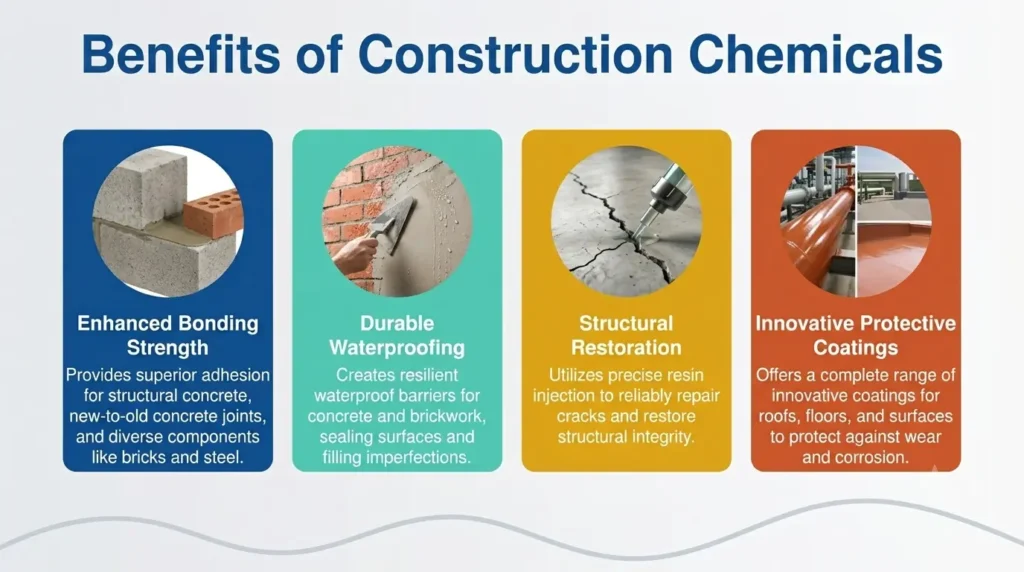

Construction today involves more than concrete, steel, bricks, and other basic materials. Specialty construction chemicals are used to solve specific problems such as water leakage, concrete deterioration, surface damage, corrosion, and poor bonding.
Key Takeaways
- Specialty chemicals solve specific construction problems.
- Waterproofing helps protect structures from moisture.
- Admixtures can improve concrete performance.
- Proper product selection and application matter.
These products are used in residential buildings, commercial projects, factories, roads, bridges, tunnels, basements, water treatment facilities, and other structures. When the right chemical is selected and applied correctly, it can improve the performance and service life of construction materials.
Also Read: Construction Chemicals for Flooring
What Are Specialty Construction Chemicals?
Specialty construction chemicals are products developed for specific construction applications. They may be added to concrete or applied directly to a surface.
Their main purposes include:
- Improving concrete workability
- Reducing water penetration
- Repairing damaged concrete
- Protecting surfaces from chemicals and moisture
- Sealing joints and cracks
- Improving bonding between materials
- Supporting faster or more controlled construction work
The product should always be selected according to the material, site conditions, and intended application.

Major Types of Specialty Construction Chemicals
| Type | Main Purpose | Common Applications |
| Concrete admixtures | Modify concrete properties | Foundations, slabs, columns, roads |
| Waterproofing chemicals | Reduce water penetration | Basements, roofs, bathrooms, tanks |
| Concrete repair materials | Repair damaged concrete | Cracks, spalling, damaged surfaces |
| Sealants | Seal joints and gaps | Windows, doors, expansion joints |
| Protective coatings | Protect surfaces | Bridges, factories, parking areas |
| Tile adhesives | Bond tiles to surfaces | Floors, walls, bathrooms |
| Grouting chemicals | Fill gaps and provide support | Equipment bases, foundations, repairs |
1. Concrete Admixtures
Concrete admixtures are added during the mixing process to change specific properties of concrete.
Depending on the formulation, they can:
- Improve workability
- Reduce water requirements
- Control setting time
- Support strength development
- Improve resistance to certain environmental conditions
- Help concrete perform better in specific applications
Common examples include water reducers, superplasticizers, accelerators, retarders, and air-entraining admixtures.
2. Waterproofing Chemicals
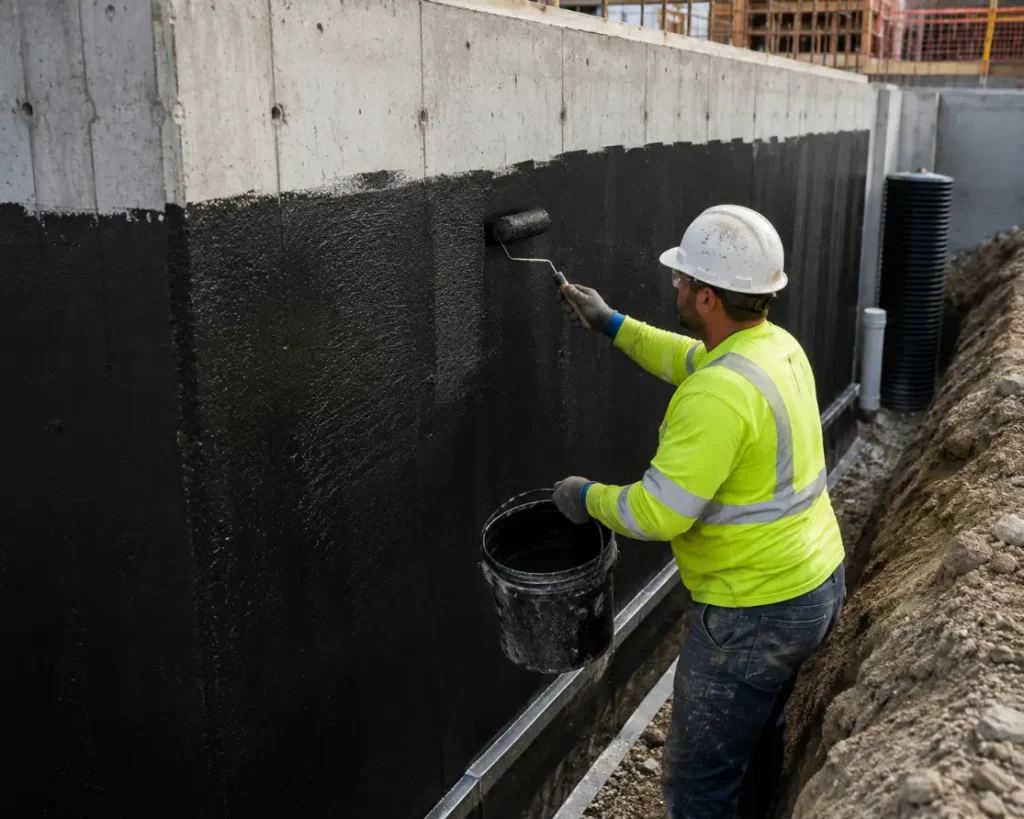
Waterproofing is important wherever a structure is exposed to rain, groundwater, humidity, or regular water contact.
Waterproofing chemicals are commonly used for:
- Basements
- Roofs and terraces
- Foundations
- Bathrooms
- Water tanks
- Swimming pools
- Tunnels
- Underground structures
They can help reduce problems such as leakage, dampness, corrosion, and deterioration caused by moisture.
3. Concrete Repair Chemicals
Concrete can become damaged because of aging, moisture, corrosion, heavy loads, temperature changes, or construction defects.
Repair products may include:
- Polymer-modified repair mortars
- Epoxy compounds
- Crack fillers
- Bonding agents
- Injection materials
- Grouting products
Before choosing a repair chemical, it is important to identify why the damage occurred. Simply filling a crack without addressing its cause may not provide a lasting repair.
4. Sealants
Sealants are used to close joints, gaps, and cracks where water, air, dust, or movement could become a problem.
They are commonly used around:
- Windows and doors
- Expansion joints
- Concrete joints
- Building façades
- Roofing systems
- Plumbing connections
Silicone, polyurethane, acrylic, and polysulfide sealants are available for different construction conditions.
5. Protective Coatings
Protective coatings help shield construction surfaces from moisture, chemicals, abrasion, and corrosion.
They are often used in:
- Industrial facilities
- Parking structures
- Bridges
- Wastewater plants
- Warehouses
- Concrete floors
- Steel structures
The coating needs to be compatible with the substrate and the environmental conditions in which the structure operates.
Benefits of Specialty Construction Chemicals
Using the right specialty chemical can provide several practical benefits:
- Better durability: Helps construction materials withstand environmental exposure.
- Moisture protection: Reduces water penetration and related damage.
- Improved concrete performance: Certain admixtures can modify workability and setting behavior.
- Surface protection: Coatings can protect concrete and metal from harmful exposure.
- Effective repairs: Specialized materials can address cracks, damaged surfaces, and other defects.
- Lower maintenance needs: Proper protection can reduce some future repair requirements.
- Application flexibility: Different formulations are available for different substrates and construction conditions.
How to Choose the Right Construction Chemical
Price should not be the only factor when selecting a construction chemical. Consider the following:
- Identify the problem: Determine whether the requirement is waterproofing, repair, bonding, protection, or concrete modification.
- Check the substrate: Understand whether the product will be applied to concrete, masonry, metal, tile, or another surface.
- Consider site conditions: Look at moisture, temperature, chemical exposure, traffic, and other environmental factors.
- Check compatibility: Make sure the product is suitable for the existing material and construction system.
- Follow technical instructions: Use the recommended mixing ratio, coverage, thickness, and curing time.
- Consider professional advice: For structural or technically difficult applications, consult a qualified construction professional.
Why Proper Application Matters
Even a good-quality product may fail when it is used incorrectly. Common application problems include:
- Poor surface preparation
- Incorrect mixing
- Applying too much or too little material
- Using the product in unsuitable weather
- Ignoring curing requirements
- Applying incompatible products
Following the manufacturer’s technical data and project specifications is therefore important.
Also Read: Concrete Construction Chemicals
Conclusion
Specialty construction chemicals help address specific challenges that conventional construction materials cannot always handle on their own. Waterproofing products, concrete admixtures, repair materials, sealants, adhesives, grouts, and protective coatings each have different roles.
The best results come from matching the product to the application and using it according to the recommended procedure. Proper selection and application can help protect structures, improve material performance, and reduce avoidable maintenance problems.
Frequently Asked Questions
1. What are specialty construction chemicals?
Specialty construction chemicals are products designed for specific construction needs such as waterproofing, concrete modification, repair, bonding, sealing, and surface protection.
2. What are the most common types?
Common types include:
- Concrete admixtures
- Waterproofing chemicals
- Concrete repair materials
- Sealants
- Protective coatings
- Tile adhesives
- Grouting chemicals
3. Are specialty construction chemicals necessary for every project?
No. Their use depends on the project’s design, materials, environmental exposure, and performance requirements.
4. Can these chemicals improve concrete performance?
Yes. Certain admixtures can improve workability, reduce water demand, control setting time, and support desired concrete properties.
5. What should be considered before buying a construction chemical?
Consider the application, substrate, environmental conditions, product compatibility, required performance, application method, and manufacturer’s technical specifications.
6. Can waterproofing chemicals stop all water leakage?
Not necessarily. The result depends on the source of the leakage, surface condition, waterproofing system, product selection, and quality of application. Identifying and addressing the underlying problem is essential.