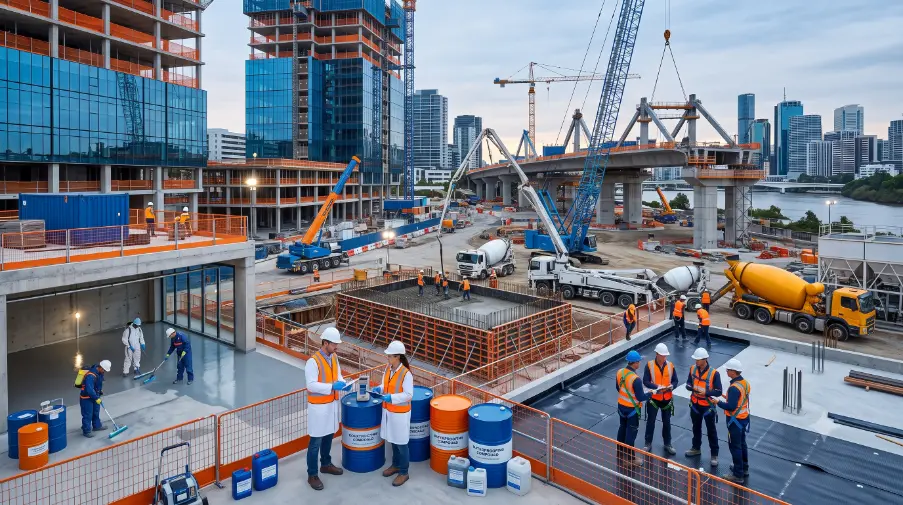
Concrete and masonry do not stay in perfect condition forever. Cracks, broken edges, holes, honeycombing, and surface damage can appear because of moisture, weather, corrosion, impact, poor construction practices, or regular wear and tear. When these problems are limited to specific areas, repair mortar can be used to restore the damaged surface and protect it from further deterioration.
Key Takeaways
- Repair mortar restores damaged concrete and masonry surfaces.
- Different types are available for different repair conditions.
- Proper surface preparation is essential for strong bonding.
- Correct mixing and curing help achieve a durable repair.
Repair mortar is different from ordinary mortar. It is specially formulated to bond with existing concrete or masonry and provide the properties needed for repair work. The right product depends on the type of damage, repair depth, substrate condition, and environment.
Also Read:Mortar in Construction
What Is Repair Mortar?
Repair mortar is a cement-based or polymer-modified material designed for repairing damaged concrete and masonry. Depending on its formulation, it may contain additives that improve adhesion, workability, strength, shrinkage control, and resistance to environmental conditions.
It is commonly used for:
- Repairing damaged concrete surfaces
- Filling holes and cavities
- Rebuilding broken corners and edges
- Treating concrete honeycombing
- Repairing spalled concrete
- Patching damaged masonry
- Restoring localized areas of concrete beams, columns, and slabs
For serious structural damage, the cause of the problem should be identified before any repair material is applied.
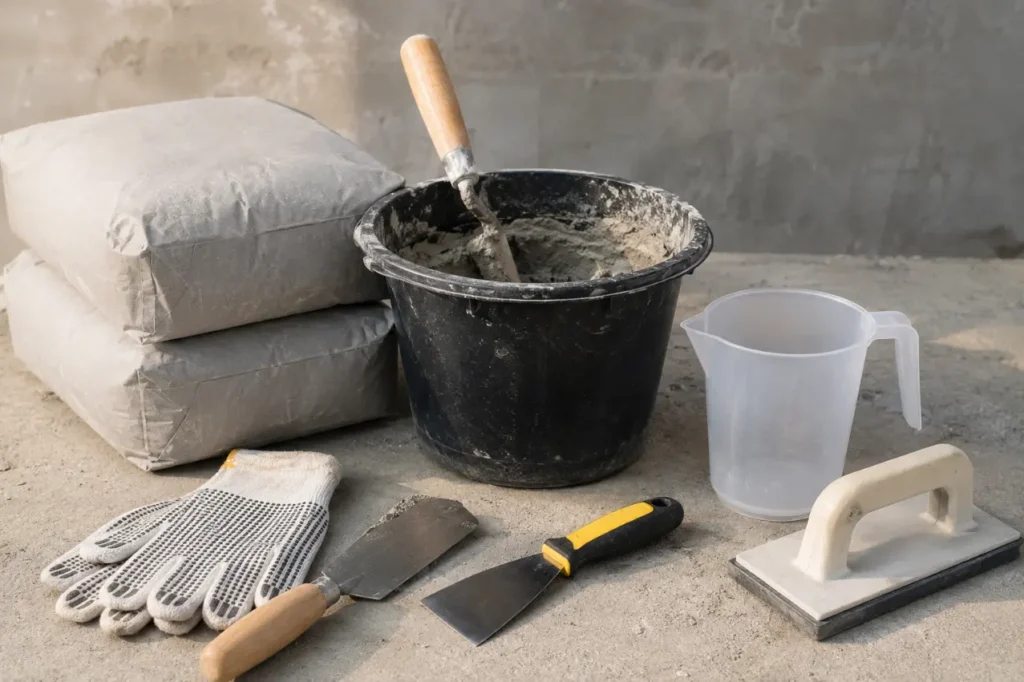
Types of Repair Mortar
Different repair situations require different types of mortar. Some common options include:
Cement-Based Repair Mortar
This is suitable for many general concrete and masonry repairs. It is commonly used for patching, filling, and rebuilding damaged sections where a cementitious repair material is appropriate.
Polymer-Modified Repair Mortar
Polymer-modified products contain polymers that can improve bonding and flexibility. They are often selected when better adhesion and resistance to moisture or environmental exposure are required.
Non-Shrink Repair Mortar
This type is formulated to reduce shrinkage as the material sets and hardens. It can be useful for filling gaps and repairing areas where dimensional stability is important.
Rapid-Setting Repair Mortar
Rapid-setting formulations are designed for situations where repairs need to harden quickly. They can be useful for maintenance work in areas where extended downtime is difficult.
How to Apply Repair Mortar
Good surface preparation is one of the most important parts of a successful repair. Even a high-quality mortar can fail if it is applied over weak or contaminated concrete.
A typical repair process includes:
- Inspect the damaged area: Identify loose concrete, cracks, exposed reinforcement, and other defects.
- Remove unsound material: Take away weak or deteriorated concrete until a firm substrate is reached.
- Clean the surface: Remove dust, oil, dirt, laitance, and loose particles.
- Prepare exposed reinforcement: Where reinforcement is visible, remove corrosion and follow the specified repair procedure.
- Prepare the substrate: Bring the surface to the moisture condition recommended for the selected product.
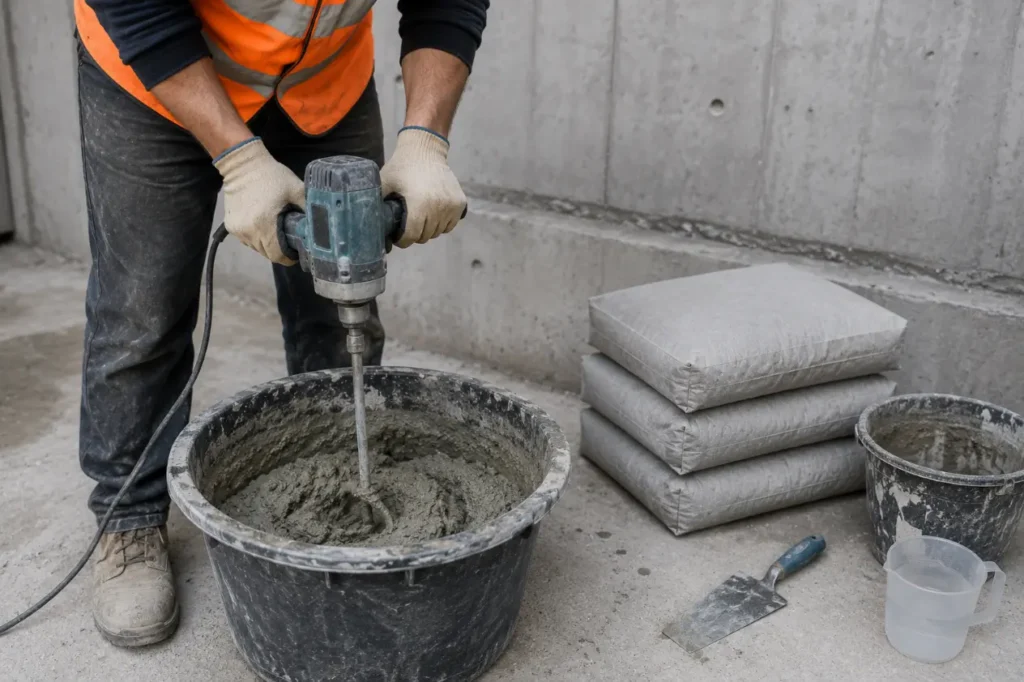
- Mix correctly: Use the manufacturer’s specified water-to-mortar ratio. Adding extra water can affect the final performance.
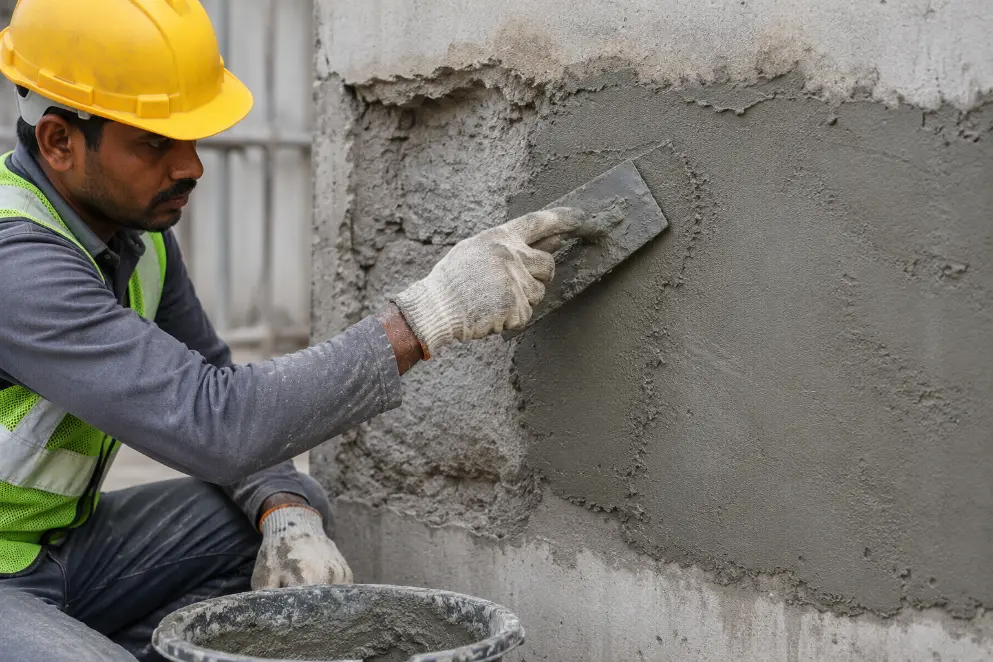
- Apply the mortar: Press the material firmly into the repair area and maintain the recommended thickness.
- Finish and cure: Finish the surface as required and follow the recommended curing method.
Benefits of Repair Mortar
The main benefits include:
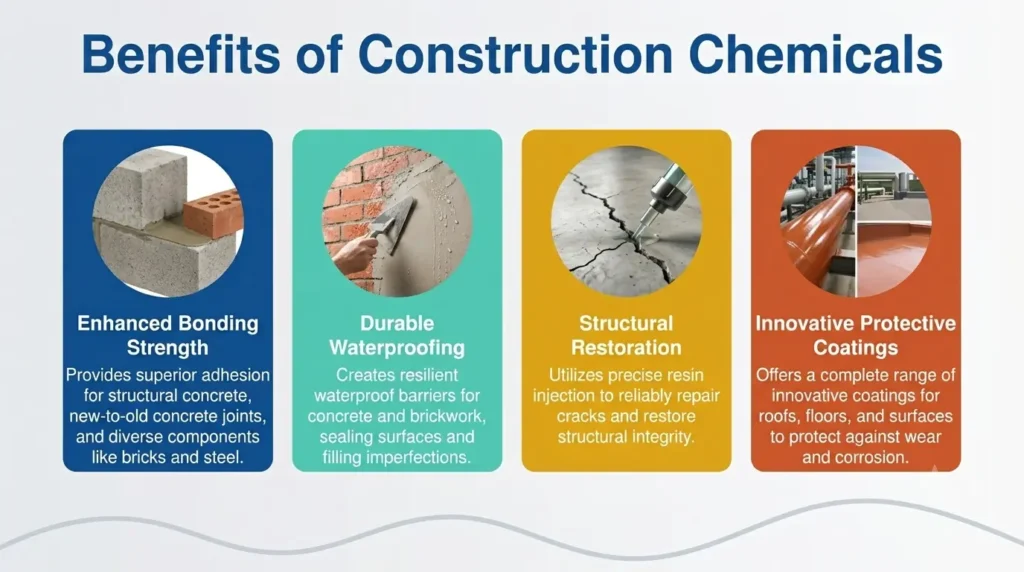
- Effective surface restoration: Damaged sections can be rebuilt without replacing the entire element.
- Good substrate adhesion: Specialized formulations are designed to bond with properly prepared surfaces.
- Improved durability: Suitable products can provide resistance to moisture, weathering, and normal service conditions.
- Versatile use: Different formulations are available for shallow patches, deeper repairs, and specific site requirements.
- Reduced maintenance problems: Proper repairs can help prevent small defects from developing into larger issues.
Repair Mortar vs Ordinary Mortar
| Feature | Repair Mortar | Ordinary Mortar |
|---|---|---|
| Primary use | Repairing damaged concrete and masonry | Brick and block masonry |
| Formulation | May include polymers and specialty additives | Usually a simpler cementitious mix |
| Adhesion | Designed for bonding to existing substrates | Primarily designed for masonry units |
| Shrinkage control | Often included in product formulation | Depends on the mix |
| Application | Patching, rebuilding, and restoration | Bedding and jointing masonry |
| Selection | Based on repair conditions | Based mainly on masonry requirements |
Choosing the Right Repair Mortar
Before selecting a repair mortar, consider the condition of the existing surface and the type of repair required. Important factors include:
- Repair depth and area
- Required compressive strength
- Bonding requirements
- Exposure to water and weather
- Setting and curing time
- Application method
- Compatibility with the existing concrete or masonry
Always check the manufacturer’s technical data sheet for mixing instructions, application thickness, curing requirements, and limitations.
Also Read:PS Sealant: Buying Guide
Conclusion
Repair mortar is a practical material for restoring damaged concrete and masonry when the repair is properly assessed and carried out. Choosing the correct formulation, preparing the substrate carefully, following the mixing instructions, and allowing adequate curing are all important for a lasting repair.
The goal is not simply to cover the damaged area. A good repair should bond properly with the existing surface and address the conditions that caused the damage in the first place.
Frequently Asked Questions
1. What is repair mortar used for?
It is used to repair localized damage in concrete and masonry, including holes, honeycombing, spalled areas, broken edges, and surface defects.
2. Can repair mortar be used on concrete?
Yes. Many repair mortars are specifically developed for concrete repair. The surface must be sound, clean, and properly prepared before application.
3. Is repair mortar the same as cement mortar?
No. Ordinary cement mortar is mainly used for masonry work, while repair mortar is formulated with properties suited to repairing existing concrete or masonry.
4. Can repair mortar repair structural cracks?
It depends on the cause and severity of the crack. It may be suitable for certain non-structural repairs, but significant structural cracks require proper inspection and an appropriate repair method.
5. How long does repair mortar take to cure?
The setting and curing period varies by product and site conditions. Temperature, humidity, repair thickness, and the specific formulation can all affect curing time. Follow the manufacturer’s recommendations.