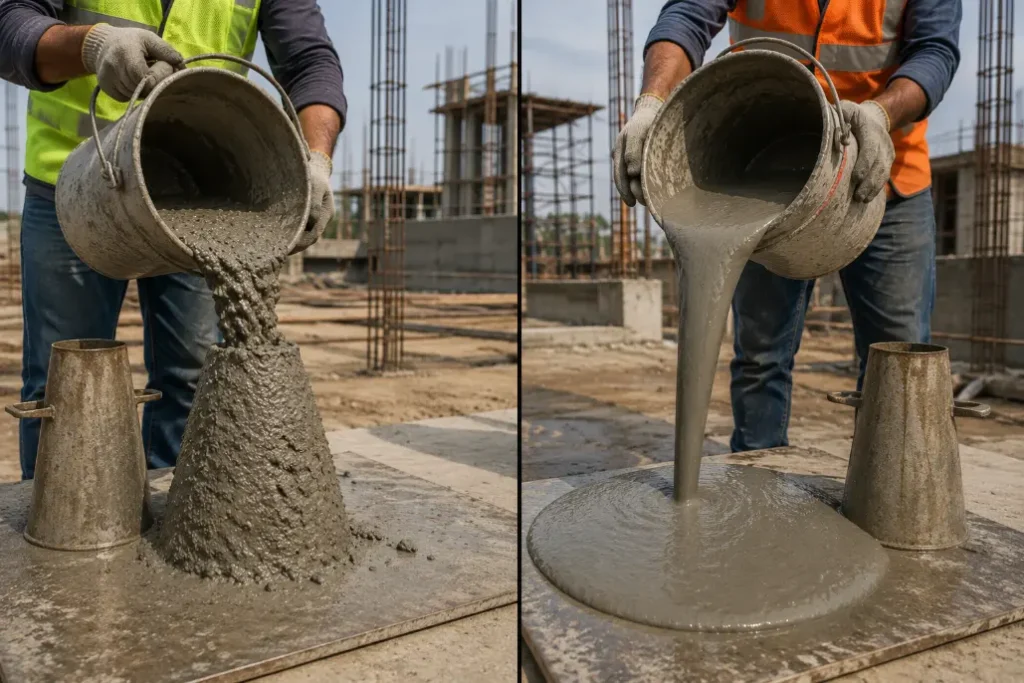
Concrete needs water to remain workable during mixing, placing, and finishing. However, adding more water than necessary can increase the water-cement ratio and may reduce the strength and durability of the finished concrete. A water reducing admixture makes concrete easier to work with while helping reduce the amount of water needed in the mix. This can make the concrete more workable without compromising the desired mix performance.
Key Takeaways
- Reduces water demand while maintaining required concrete workability.
- Supports strength development by helping lower the water-cement ratio.
- Improves placement in structural, ready-mix, and heavily reinforced concrete.
- Requires proper selection and dosage based on the concrete mix and project needs.
These admixtures are commonly used in ready-mix concrete, precast concrete, structural construction, infrastructure projects, and high-strength concrete, where good workability, strength, and durability are important.
When selected and used correctly, they can make concrete easier to handle without compromising its required performance.
Also Read:Superplasticizer: Applications in Concrete
What Is a Water Reducing Admixture?
A water reducing admixture is a chemical additive added to concrete to reduce the amount of water needed to achieve a specific level of workability.
Cement particles tend to form clusters when mixed with water. Cement particles tend to stick together in a concrete mix, which can make it harder for the cement paste to move freely. As a result, more water may be needed to achieve the required consistency. A water reducing admixture helps separate these particles, making the mix smoother and easier to work with without adding unnecessary water.
In practical terms, it can help you achieve:
- The same level of workability with less water
- Better flow and workability without increasing the water content
- A lower water-cement ratio
- Better strength and durability when the mix is properly designed
The actual performance depends on the admixture type, dosage, cement, aggregates, and overall mix design.
How Does It Work?
Water reducing admixtures work mainly by dispersing cement particles within the concrete mix. Once the particles are better distributed, the cement paste becomes more workable.
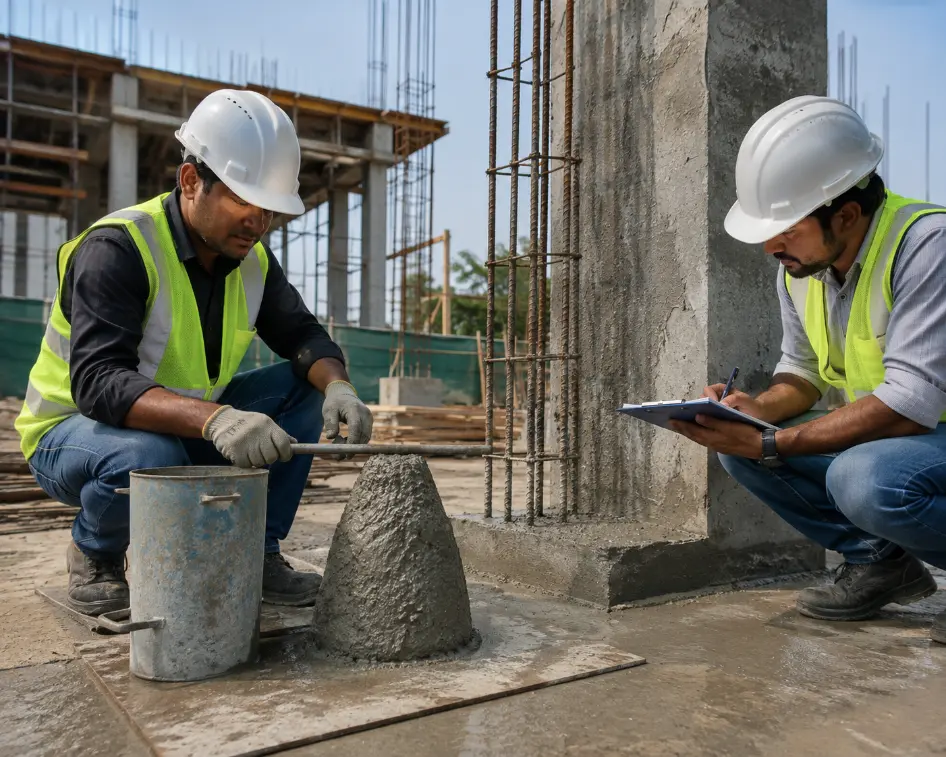
This gives concrete producers greater control over the mix. For example, if a concrete mix needs a particular slump, the required slump can sometimes be achieved with less water. Alternatively, the water content can be reduced while maintaining similar workability, which can help lower the water-cement ratio.
Types of Water Reducing Admixtures
Different types are available depending on the level of water reduction and workability required.
| Type | General Characteristics | Common Applications |
| Conventional water reducer | Provides moderate water reduction and improved workability | General and structural concrete |
| Mid-range water reducer | Offers greater workability and water reduction | Ready-mix and structural applications |
| High-range water reducer | Provides high water reduction and significant flow improvement | High-strength concrete, precast concrete and SCC |
High-range water reducers are also commonly called superplasticizers. They are particularly useful where concrete needs to remain highly workable despite having a relatively low water-cement ratio.
Also Read:Construction Chemicals for Flooring
Benefits of Water Reducing Admixture
The main benefits depend on the concrete mix and how the product is used. Common advantages include:
1. Lower Water Requirement
The admixture can reduce the amount of mixing water needed for a particular level of workability. This can help control the water-cement ratio.
2. Improved Workability
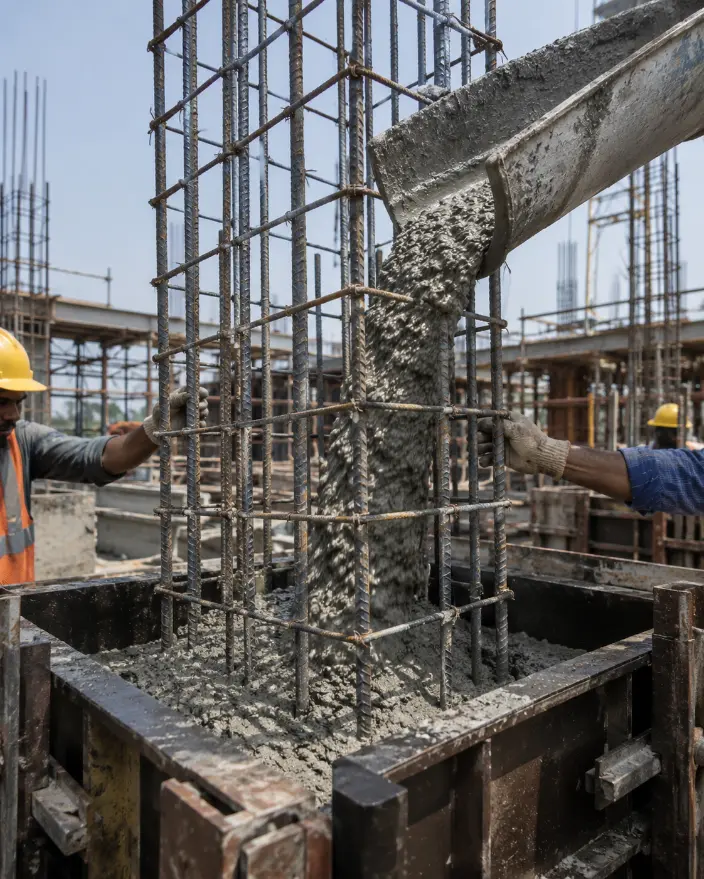
Concrete can become easier to place and compact. This is useful in structures with congested reinforcement or complicated formwork.
3. Strength Development
When water is reduced without losing the required workability, the lower water-cement ratio can contribute to higher concrete strength.
4. Better Concrete Finish
Improved consistency and workability can make finishing easier and may help produce a more uniform surface.
5. Reduced Permeability
A well-designed concrete mix with a suitable water-cement ratio can have fewer connected pores. This can reduce the movement of water and other substances through the hardened concrete.
Where Are Water Reducing Admixtures Used?
Water reducing admixtures have applications across different areas of construction, including:
- Ready-mix concrete
- Precast and prestressed concrete
- Columns, beams, slabs, and foundations
- Bridges and other infrastructure
- Heavily reinforced structures
- High-strength concrete
- Concrete pavements
- Commercial and industrial construction
- Self-compacting concrete when a high-range water reducer is required
How to Select the Right Admixture
Choosing an admixture should be based on the complete concrete mix rather than the product alone. Important factors include:
- Required slump or flow
- Cement type and content
- Water-cement ratio
- Aggregate size and grading
- Required concrete strength
- Setting time
- Temperature during mixing and placement
- Required slump retention
- Compatibility with other admixtures
- Transportation time
Trial mixes are useful for checking how the admixture behaves with the actual cement, aggregates, water, and other materials that will be used on the project.
Frequently Asked Questions
1. What is the main purpose of a water reducing admixture?
Its main purpose is to reduce the amount of mixing water needed to achieve the required concrete workability. It can also help maintain workability while lowering the water-cement ratio.
2. Does a water reducing admixture increase concrete strength?
It can contribute to higher strength when it allows the water-cement ratio to be reduced while maintaining suitable workability. Strength also depends on cement content, aggregates, curing, compaction, and the overall mix design.
3. Is a water reducer the same as a superplasticizer?
Not exactly. Both reduce water demand, but superplasticizers are high-range water reducing admixtures that generally provide greater water reduction and flow improvement.
4. Can water reducing admixtures be used in ready-mix concrete?
Yes. They are commonly used in ready-mix concrete to control water content and maintain the required workability during transportation and placement.
5. Can too much admixture cause problems?
Yes. Excessive dosage can affect setting time, workability, segregation, bleeding, or other concrete properties depending on the specific product and mix. The recommended dosage should be established through product guidance and trial mixes.